
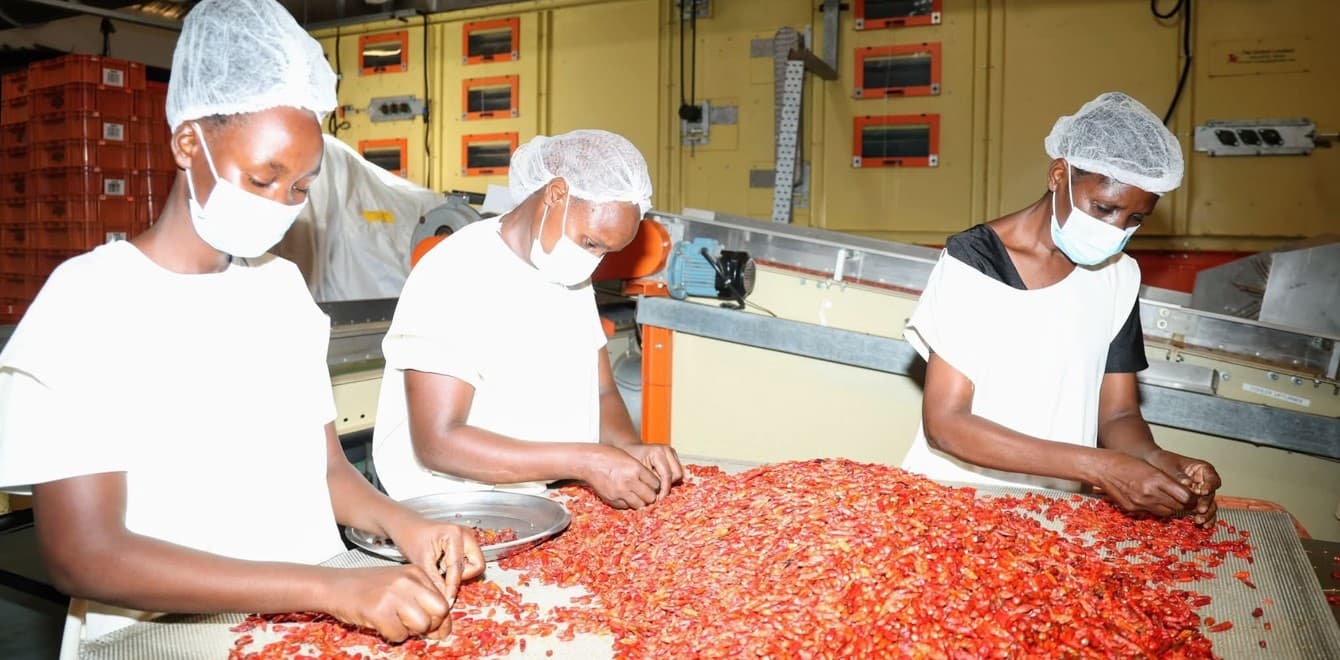
Kenya secures new export market to China for dried chillies

However, businesses must first meet stringent food safety and plant health requirements before they can begin shipping their produce to China.
Kenyan farmers and traders have secured access to China’s market for dried chillies, opening a new export opportunity that could help diversify agricultural trade.
However, businesses must first meet stringent food safety and plant health requirements before they can begin shipping their produce to China.
The Kenya Plant Health Inspectorate Service (KEPHIS) announced the development, urging farmers, processors, packers, exporters and producer organisations to prepare their operations for the Chinese market before shipments begin.
Exporters seeking to tap the opportunity must register their processing and packing facilities with China’s General Administration of Customs (GACC) through KEPHIS, which will inspect and approve the facilities before registration.
Farms, production sites, drying facilities and packhouses must also be registered with KEPHIS and comply with the applicable export certification requirements.
Every consignment destined for China must be accompanied by a phytosanitary certificate issued by KEPHIS to confirm compliance with prescribed plant health requirements.
Latest Stories
- Photos & Videos: Multi-storey building collapses in Eastleigh, several people trapped
- Waititu loses bid to overturn law barring corruption convicts from office
- Kenya invites public to name country’s crude oil ahead of first commercial production
- Kenyans to protest proposed changes to IEBC livestreaming rules
Exporters must also establish traceability systems, adopt Good Agricultural Practices and Integrated Pest Management, and retain pest monitoring records for at least two years.
The requirements extend to food safety, with consignments expected to comply with pesticide residue limits, heavy metal restrictions and aflatoxin B1 thresholds.
Sudan dyes are prohibited, while shipments must meet microbiological standards, including the absence of Salmonella.
Dried chillies must also have a moisture content of no more than 13 per cent and meet prescribed packaging and labelling standards, including the use of clean and appropriate packaging materials.
China has further specified quarantine pests and plant pathogens that must not be present in export consignments.
These include the khapra beetle, cowpea weevil, common bean bruchid and several plant diseases affecting crops such as tomatoes and potatoes.
Failure to meet the requirements could prevent exporters from accessing the market, making compliance a key consideration for businesses seeking to benefit from the new trade channel.
KEPHIS says the opening would allow Kenyan producers and exporters to diversify their markets and increase trade in dried chillies.
The agency thus encourages interested farmers, exporters, processors, aggregators and industry associations to contact it for guidance on registration, certification and compliance procedures.



Comments
No comments yet. Be the first to share your thoughts.