
Kenya is set to tighten control over the gold trade as the government moves to stop the export of unprocessed gold and push for more mineral refining within the country.
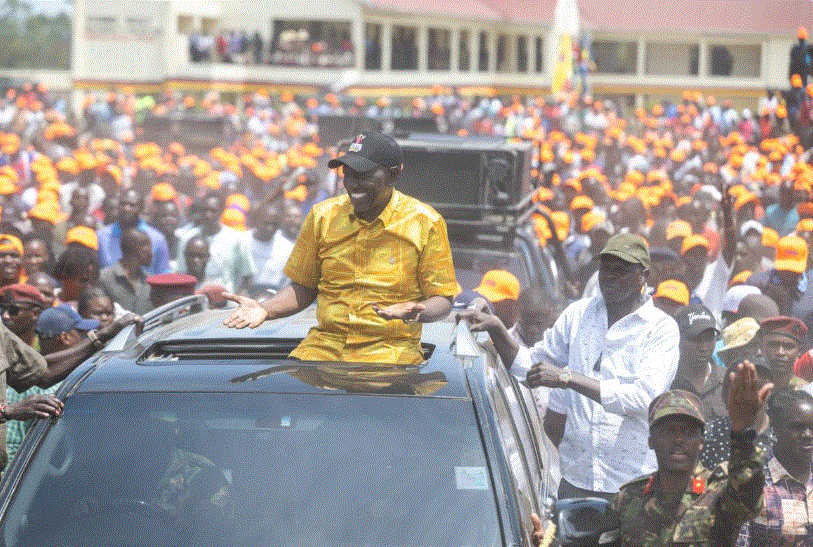
President William Ruto announced the plan on Monday, September 14, during a media engagement at Kisumu State Lodge, saying the government wants to reorganise the mining sector and ensure Kenya earns more from its mineral wealth.
“There is a lot of gold being exported out of Kenya through all manner of corners. We are going to stop the export of gold from Kenya unless it is processed,” Ruto said.
The proposed changes will require gold produced in Kenya to go through approved processing and refining channels before it can be exported.
Ruto said the move would also help address the informal trade in gold, which he said allows mineral wealth to leave the country without Kenya receiving its full economic benefit.
CBK to become key gold buyer
The Central Bank of Kenya (CBK) is expected to play a bigger role in the new system, with Ruto saying it would become the primary point of sale for gold produced and refined locally.
The arrangement is intended to create a formal market where miners can sell their gold at transparent prices instead of relying heavily on brokers and middlemen.
Ruto said this would give miners a better return while allowing the government to keep closer track of the country’s gold production and trade.
He also pointed to the growing refining capacity in the country. According to the president, three gold refineries are either operational or under development, including facilities in Kakamega and Nairobi.
The government has been pushing for greater value addition in the mining industry, arguing that Kenya should not simply extract minerals and send them abroad for processing.
The policy is expected to extend beyond gold. Ruto said the government would also focus on minerals such as coltan and rare earth minerals, which have become increasingly important because of their use in electronics, energy storage and other industries.
Kenya has deposits of several minerals, but the sector remains relatively small compared with agriculture, manufacturing and other major parts of the economy. The government has been trying to formalise artisanal and small-scale mining while improving revenue collection and reducing mineral smuggling.
The push for local processing comes as Kenya seeks to position itself as a regional centre for mineral value addition. Processing minerals locally can create additional businesses and jobs around mining, including refining, transport, equipment supply and other services.
The government, however, will also have to address concerns around access to formal markets and the ability of small-scale miners to comply with new requirements.
The latest announcement comes days after questions were raised over the continued closure of the Moyale (Hillo) Gold Mines in Marsabit County. Nyandarua Senator John Methu questioned why the mines had not reopened four months after Ruto directed that operations resume.
The government is now expected to work through the Ministry of Mining to establish how the new gold trading and refining system will operate.
For miners, traders and investors, the key issue will be how quickly the policy is turned into clear regulations. For the government, the broader goal is to ensure more of the value generated from Kenya’s minerals remains in the country rather than being lost through informal trade or the export of raw materials.



Comments
No comments yet. Be the first to share your thoughts.