
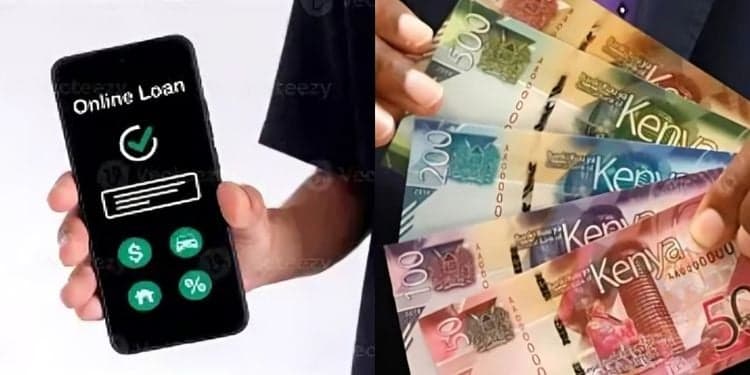
Thousands of Kenyan borrowers could find relief after the Court barred some mobile loan apps from legally pursuing debt recovery.
This follows a Nairobi Small Claims Court ruling that struck out a Ksh500,000 debt recovery suit filed by Tri-State Capital Limited against a borrower after finding the lender was not licensed by the Central Bank of Kenya (CBK) to conduct digital lending business.
“Before delving into the merits of the case, I have considered the court record and note that the claimant is not licensed as a digital credit lender by CBK. Section 3 of the Banking Act (Cap 488) requires all persons or entities carrying out banking or financial business in Kenya to be licensed by the Central Bank of Kenya. It then follows that conducting lending business without such licensing amounts to an illegality and economic risk,” the court ruling read in part.
Tri-State Capital Limited Debt Claim
According to the judgment by the Court Magistrate Gladys Kiama, Tri-State Capital Limited filed a suit seeking to recover KSh500,000 from a borrower over an alleged loan default.
The court heard that the lender had advanced the respondent a loan of KSh213,500, secured by a motor vehicle. The claimant argued that the borrower defaulted, leaving an outstanding balance of KSh85,000, which later accumulated to KSh500,000.
In the undated statement of claim, Tri-State Capital Limited sought a judgment against the respondent for the full amount of Kshs. 500,000.
The claimant detailed that the original facility of Kshs. 213,500 was intended to be repaid in a single installment of Kshs. 229,513 by April 18, 2021.
“The claimant instituted this claim vide the undated statement of claim seeking judgment against the respondent for Kshs. 500,000/= on the basis that it loaned the respondent Kshs. 213,500/= repayable as Kshs. 229,513/= in one instalment by 18/4/2021,” the court rulling read.
To secure this financial arrangement, the respondent used his motor vehicle, registration number KBZ 817X, as collateral.
However, following the alleged default, the claimant noted that while a balance of Kshs. 85,000 remained, this figure ballooned over time to reach the half-million-shilling mark.
Furthermore, the lender informed the court that the vehicle in question had a registered caveat and was consequently unavailable for sale to recover the debt.
Court Public Policy and Judicial Precedent
Before the Court could address the specific merits of whether the debt was owed or if the interest rates applied were fair, Magistrate Kiamah turned her attention to the legal status of the claimant.
Upon reviewing the Court records, the Magistrate observed that Tri-State Capital Limited was not licensed as a digital credit lender by the Central Bank of Kenya (CBK).
Magistrate Kiamah reinforced her decision by citing the case of Rei-Iman v Succeed Capital Limited (Civil Appeal E1374 of 2024).
In that precedent, the Court held that allowing unlicensed entities to operate as banks is fundamentally against public policy.
The judiciary, therefore, has a proactive duty to ensure that such unregulated activities are not legitimized through court enforcement.
The ruling made it clear that because the claimant failed to demonstrate it possessed the legal capacity and regulatory authority necessary for lending, it could not seek the court’s assistance to enforce its contracts.
“In the circumstances, it becomes unnecessary to consider the merits of the claim. As such, the claimant lacks the locus standi to institute or file a suit or in any way engage the court for redress. The upshot is that the claim is hereby struck out with no orders as to costs,” the ruling noted.
The Magistrate noted that a suit brought by an entity lacking this capacity is effectively a “nonstarter”. In legal terms, the claimant lacked locus standi, the right or capacity to bring an action or to appear in a court, to institute the suit or engage the court for redress.
Follow our WhatsApp Channel and X Account for real-time news updates.


Comments
No comments yet. Be the first to share your thoughts.