
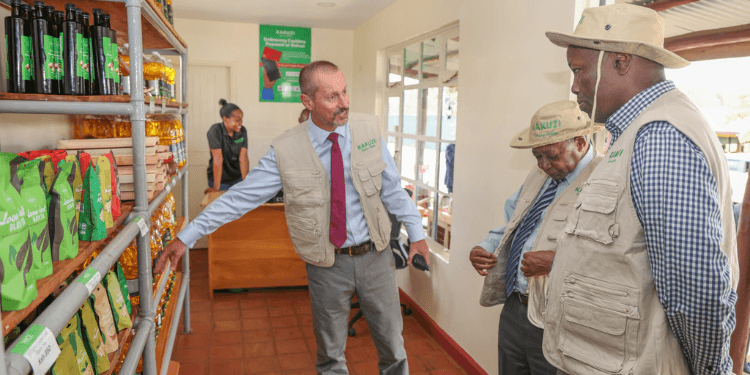
Kenyan agricultural company Kakuzi Plc has issued its second profit warning of 2026 after its half-year profit plunged 97.6 per cent to KSh7.11 million, driven by falling macadamia prices, lower avocado production, and export shipping challenges.
The company said on October 21 that its full-year net earnings would be significantly below the previous year’s results, citing a continued downturn in the macadamia market and a smaller crop.
The latest notice updates a profit warning issued on August 25, when Kakuzi told investors that its 2026 earnings could fall by at least 25 per cent compared with 2025.
“Consistent with the provisions of Paragraph 14.5.7 of the Thirteenth Schedule of the Capital Markets (Public Offers, Listing and Disclosures) Regulations, 2023, Kakuzi Plc (‘The Group’) issues this updated profit warning notice and cautionary statement to our current and potential investors as well as the general public,” Kakuzi said.
“Further to our profit warning announcement of 25th August 2026, in which we advised that earnings for the year may be at least 25% lower than the previous year, the Board in its latest review expects net earnings to be significantly below the previous year as a result of the continued downturn in the macadamia market and a lower macadamia crop.”
The warning follows a difficult first half in which the company’s profit after tax dropped from KSh295.54 million in the six months to June 2025 to KSh7.11 million in the same period this year.
Kakuzi Sales Fall as Profits Plunge
Kakuzi’s sales fell 26 per cent to KSh1.12 billion in the first half of 2026, down from KSh1.51 billion a year earlier.
Gross profit fell 82.5 per cent to KSh114.48 million, while the company posted an operating loss of KSh26.55 million, compared with an operating profit of KSh396.85 million in the same period last year.
Profit before tax fell to KSh10.42 million from KSh435.25 million, while earnings per share declined to KSh0.36 from KSh15.08.
The performance marked a sharp reversal from recent first-half results. Kakuzi recorded profit after tax of KSh341.27 million in 2022, KSh117.50 million in 2023, KSh347.51 million in 2024 and KSh295.54 million in 2025.
Although sales remained above many of the company’s historical first-half levels, the steep fall in profit showed the pressure on returns from its main agricultural operations.
Avocado Business Hit by Export Challenges
Kakuzi’s avocado business recorded an operating profit of KSh215.91 million, down 45.3 per cent from KSh394.9 million in the first half of 2025.
The company attributed the weaker performance to lower crop volumes and difficult export conditions.
According to Kakuzi, Kenyan avocado supply to Europe was 42 per cent lower than in 2025 and 62 per cent below the level recorded two years earlier.
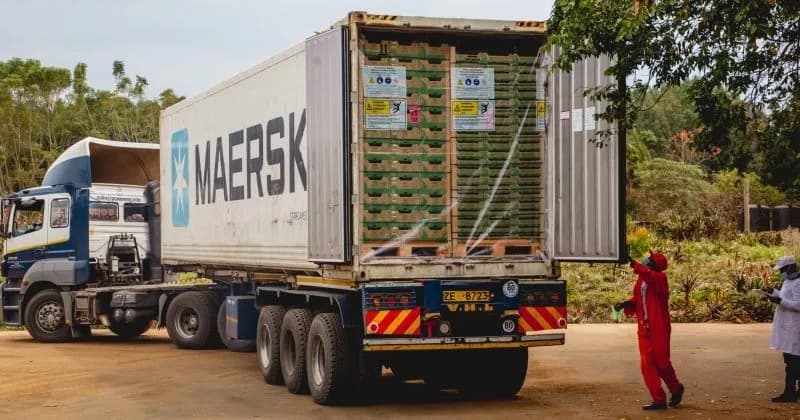
The company also noted that shipping disruptions linked to tensions in the Middle East had affected exports.
Vessels have had to sail around the Cape of Good Hope, extending transit times and pressuring fruit quality and selling prices.
Macadamia Prices Fall as Sales Volumes Decline
Kakuzi’s macadamia operation recorded an operating profit of KSh68.16 million, down 78.6 per cent from KSh318.8 million a year earlier.
Saleable macadamia kernel production increased to 428 tonnes from 413 tonnes in the first half of 2025. However, the additional production did not translate into higher sales.
Sales volumes fell to 212 tonnes from 252 tonnes, while the average net selling price dropped 16 per cent to US$9.72 per kilogram from US$11.56.
The company attributed the weaker market to increased global supply and lower demand. The combination of falling prices and reduced sales volumes cut the returns from its macadamia operations despite the increase in production.
The latest profit warning specifically identifies the continued downturn in the macadamia market and a lower crop as reasons for the expected decline in full-year earnings.
Forestry and blueberries offer some relief
Kakuzi’s other businesses posted better results in the first half, but the gains were not enough to offset the decline in its two main export operations.
Forestry operating profit rose 70.9 per cent to KSh73.33 million, while the blueberry business recorded an operating profit of KSh15.10 million.
Tea losses narrowed, while livestock and arable operations reached break-even.
The company is expanding its blueberry operations and exploring markets in China and India, as well as markets for avocados with longer shelf lives.
These businesses offer alternative income sources, but their contribution remains too small to offset the decline in avocado and macadamia earnings.
Cash flow turns negative
Cash generation deteriorated sharply alongside the decline in earnings.
Net cash flow from operating activities swung to an outflow of KSh739.67 million in the first half of 2026, compared with an inflow of KSh11.87 million in the corresponding period last year.
Cash balances fell to KSh274.59 million, while spending on property, plant and equipment rose more than fourfold to KSh240.13 million.
The figures point to increased pressure on the company’s cash position as it continues to invest in operations amid weaker earnings.
Kakuzi also recommended no interim dividend, leaving shareholders without a mid-year payout as the company faces a difficult trading period.
The October 21 announcement is Kakuzi’s fifth profit warning since 2021 and its second this year.
The company previously issued warnings for the 2021, 2023 and 2024 financial years before the two 2026 notices.
In its August warning, Kakuzi projected that full-year earnings could be at least 25 per cent below the 2025 level.
Kakuzi returned to profitability in 2025, posting a full-year profit after tax of KSh387.6 million after a KSh131.7 million loss in 2024.
Follow our WhatsApp Channel and X Account for real-time news updates.


Comments
No comments yet. Be the first to share your thoughts.