
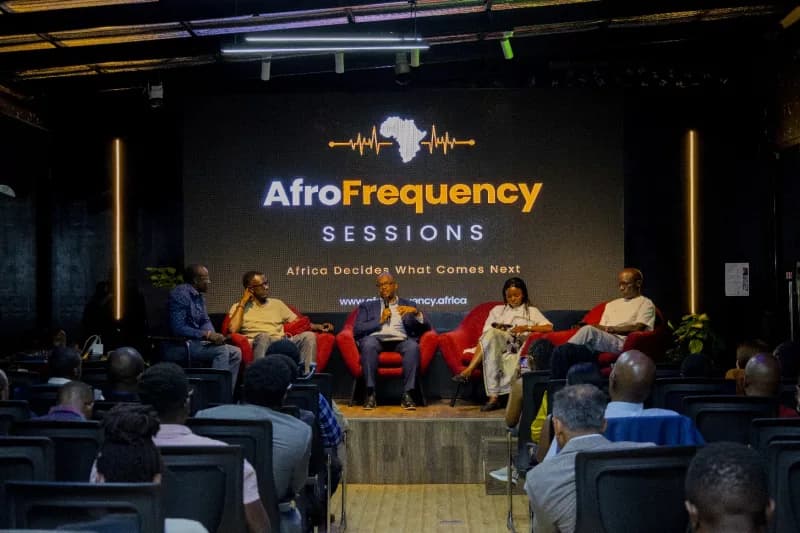
The discussion also exposed divisions over AI's emotional role. While younger generations said chatbots could comfort people in distress, Thigo cautioned against treating machines as human beings capable of genuine feelings. /HANDOUT

A woman in Nairobi asked an AI chatbot whether it was taboo for her husband to bathe in the same bathroom her parents use. The machine told her it was fine. "But in our Luo culture, it's wrong," she later told researchers.
Her experience exposed a growing concern as artificial intelligence becomes part of everyday life, technology can understand African languages without understanding the cultural values behind them.
Speaking at an AfroFrequency forum in Nairobi, Mark Kaigwa, the founder of research firm Nendo said that a recently conducted study found that roughly one in four Kenyans surveyed felt AI had given them advice that was culturally inappropriate.
“Yet the technology is also creating opportunities. Chama chairladies are photographing handwritten records to improve accountability. users should to treat AI "as a coach, not a crutch,” said Kaigwa warning against surrendering their thinking to machines.
Kenya's special envoy on technology, Philip Thigo said fluent responses in Kiswahili or Kikuyu did not necessarily mean a chatbot understood African culture.
He warned against allowing AI to replace original thinking and called for a shift from AI literacy to AI fluency, enabling people to understand the technology's direction and implications.
“The stakes extend to politics ahead of Kenya's 2027 General Election. A chatbot that answers in fluent Kiswahili or Kikuyu, has logic but no soul, and its logic may not be your culture,” said Thigo
“The danger comes when people hand over their original thinking, asking a machine to write a speech rather than to sharpen five points they drafted themselves.”
The panelists noted that for creatives, the challenge is protecting ownership and livelihoods as AI-generated content becomes more convincing.
Thigo warned that workers risk displacement by people who use AI more effectively.
The envoy wants universities to teach and adopt the technology rather than ban it and called on Africans to build solutions for underserved groups, including people with disabilities.
“Global firms do not see persons with disabilities as a lucrative market, which is precisely why Africans must build such tools themselves,” he added.
Kaigwa demonstrated how AI-generated voices, characters and locations could support advertising production, although humans had written the dialogue after the machine's version fell short.
The first AfroFrequency Session brought together artists, technologists and journalists to examine how emerging technologies are shaping Africa.



Comments
No comments yet. Be the first to share your thoughts.