
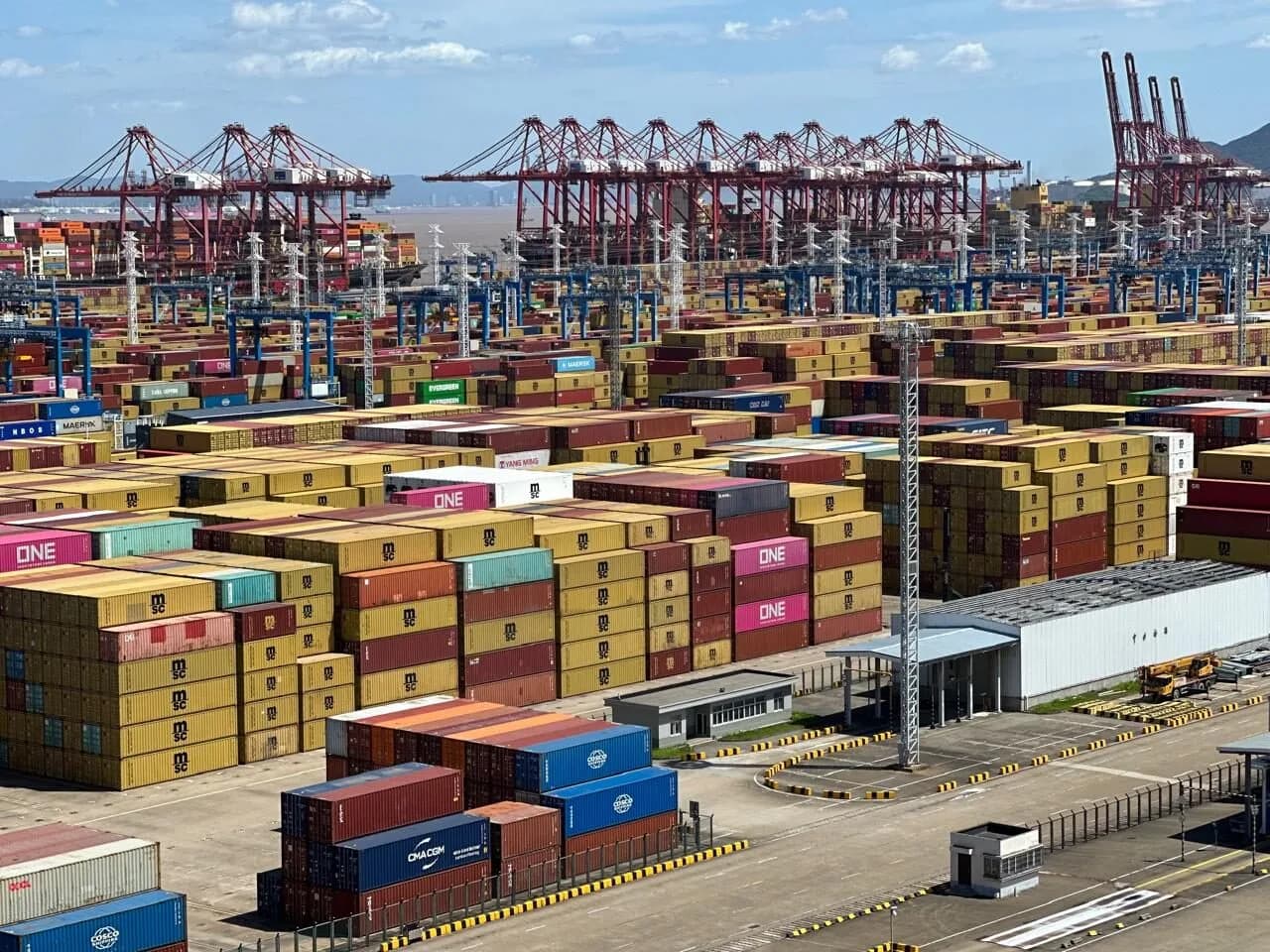
NINGBO, China, Sept 24 – From a distance, Ningbo-Zhoushan Port looks like the conventional image of a major global seaport; ships lined along deep-water berths, towering cranes moving containers and stacks of steel boxes stretching across enormous yards.
But after spending time at the port during my visit to China, I came away with a different impression.
The most striking feature was not simply the number of containers being handled or the sheer size of the facility.
It was the extent to which technology has become part of the port’s operating system.
Here, the movement of a container is increasingly connected to data, artificial intelligence, automated equipment and human decision-making.
For Kenya’s Port of Mombasa, which is experiencing rising cargo volumes and investing in its own digital systems, Ningbo-Zhoushan offers a glimpse of what the next stage of port competition could look like.
A Port Built on Scale
Ningbo-Zhoushan was formed in 2006 through the merger of the Ningbo and Zhoushan ports, bringing together a collection of terminals and facilities along Zhejiang’s coast.
Nearly two decades later, its scale is difficult to comprehend.
The port handled more than 40 million twenty-foot equivalent units (TEUs) in 2025, crossing the 40-million mark for the first time.
Its annual cargo throughput exceeded 1.4 billion tonnes, maintaining its position as the world’s largest port by cargo throughput for the 17th consecutive year, according to port authorities.
The port has more than 210 berths for vessels of at least 10,000 tonnes, including more than 135 berths capable of handling vessels above 50,000 tonnes.
Its maritime network has also expanded to more than 300 container shipping routes connecting it to more than 600 ports in more than 200 countries and regions.
During my visit, port officials described an operation capable of moving tens of thousands of 20-foot-equivalent containers through its facilities in a day.
But the numbers only tell part of the story.
Walking through the port and looking across the container yards, the more revealing question is how such a volume can be coordinated without the entire system becoming overwhelmed.
The answer increasingly lies in the data.
When the Port Starts Predicting the Future
One of the most interesting explanations I received from the port authorities was how artificial intelligence is being used to predict the arrival times of container ships.
That sounds like a relatively simple application of technology.
In a port handling millions of containers, however, knowing when a vessel is likely to arrive can influence everything from berth allocation to crane deployment, yard planning and the movement of trucks and containers.
The idea is to move away from a purely reactive system.
Instead of waiting for a ship to arrive and then deciding what happens next, digital systems can help the port anticipate what is coming.
Ningbo-Zhoushan’s smart-port systems include intelligent tallying, optical character recognition, automated gates, container identification, weighing and remote crane-control systems.
“The DeepSeek large model was successfully applied for the first time at an intelligent gate in a global port, pushing intelligent gates into the 4.0 era.”
The port has also been deploying its own operating systems and equipment-management platforms.
Its 2025 report said systems including S-TOS and S-ECS were being rolled out at scale, while an AI model was applied to intelligent gates.
“In 2025, Ningbo-Zhoushan Port’s independently developed S-TOS, S-ECS and other core systems and equipment management platforms were deployed on a large scale, building an independently controllable smart operating system.”
This is where I saw perhaps the biggest lesson for Mombasa.
The future of ports may not be determined only by who has the most cranes or the deepest berths.
It could increasingly depend on who can predict, coordinate and optimize the movement of cargo most effectively.
Automation, But Humans Still Matter
It would be easy to look at Ningbo and conclude that the future is simply about removing people from port operations.
That would be misleading.
Human beings remain central to the system, although technology is changing what they do.
At Ningbo-Zhoushan, remote crane operations allow operators to control equipment away from the immediate waterfront environment.
At the Dapukou container terminal, intelligent guided vehicles and intelligent tractors operate alongside manually driven container trucks.
The terminal has been developing an automated-driving test zone that combines artificial intelligence, the Internet of Things and big-data technologies with human-operated vehicles.
That mixed model is particularly relevant to Kenya.
Mombasa does not have to leap overnight from conventional operations to a fully automated port.
Automation can be introduced where it provides measurable gains in safety, turnaround times, reliability and cost while skilled workers are retrained to operate, supervise and maintain increasingly sophisticated systems.
The Mombasa Comparison
The comparison with Mombasa must, however, be made carefully.
Ningbo-Zhoushan operates within one of the world’s largest manufacturing economies and is surrounded by extensive industrial and transport infrastructure.
Mombasa operates on a much smaller scale but has a critical role as Kenya’s principal maritime gateway and a major entry and exit point for cargo destined for the East African region.
In 2025, Mombasa handled a record 45.45 million tonnes of cargo, up 10 per cent from 2024. Container traffic reached 2.11 million TEUs, an increase of 5.5 per cent. Transit cargo rose 19.5 per cent to 15.88 million tonnes.
These numbers matter because growth puts pressure on every part of the logistics chain.
A port can add berths and equipment, but if trucks cannot evacuate containers quickly, if railway capacity is not aligned with demand, or if information moves slowly between agencies, congestion can simply shift from one part of the system to another.
Kenya Ports Authority has acknowledged this challenge.
Its Managing Director Captain William Ruto has described efficiency in the port ecosystem as “a shared responsibility in the port ecosystem”, reflecting the fact that shipping lines, government agencies, cargo owners, transporters and other players all influence how efficiently cargo moves.
KPA is already upgrading its terminal operating system and has begun automating gates 23 and 24 to reduce manual checks and inspections at entry and exit points, with plans to replicate the pilot across the port.
That is a starting point.
From the Port to the Hinterland
Perhaps the most important lesson from Ningbo is that a port cannot be considered in isolation from the economy around it.
Ningbo-Zhoushan is connected to China’s extensive road and railway network.
Its rail-sea intermodal services extend to dozens of cities, including Yiwu, one of China’s major trading centers.
Mombasa has an important advantage of its own: Kenya has invested in inland container depots and rail connections designed to move cargo away from the coast.
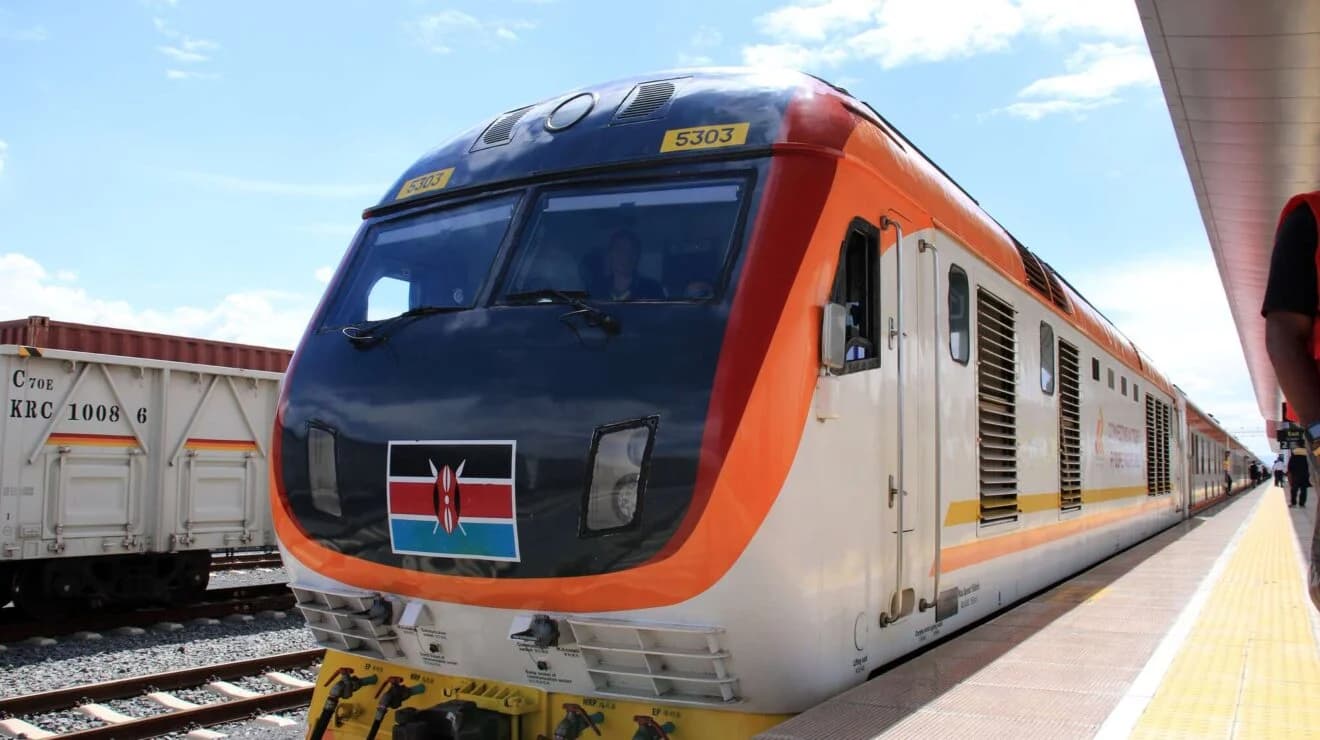
KPA operates ICDs in Nairobi, Naivasha and Eldoret, with the Nairobi facility connected to Mombasa through both the Standard Gauge Railway and Meter Gauge Railway.
Nairobi’s ICD has annual throughput capacity of more than 450,000 TEUs.
The opportunity, therefore, is to connect these pieces more intelligently.
A container arriving at Mombasa should ideally generate information that follows it through the entire journey; from vessel arrival, to berth, to yard, to gate, to rail or truck, and eventually to its destination.
That requires interoperability between systems operated by different institutions.
It also requires reliable data.
The Green Port Challenge
There is another area where Ningbo is moving beyond conventional port infrastructure: decarbonization.
The port has been developing cleaner-energy systems and green shipping initiatives, including cooperation with European ports on green shipping corridors.
Port authorities say 74 per cent of the energy used at Ningbo-Zhoushan now comes from clean sources.
In 2026, a large pure-electric intelligent container ship also began commercial operations from Ningbo-Zhoushan.
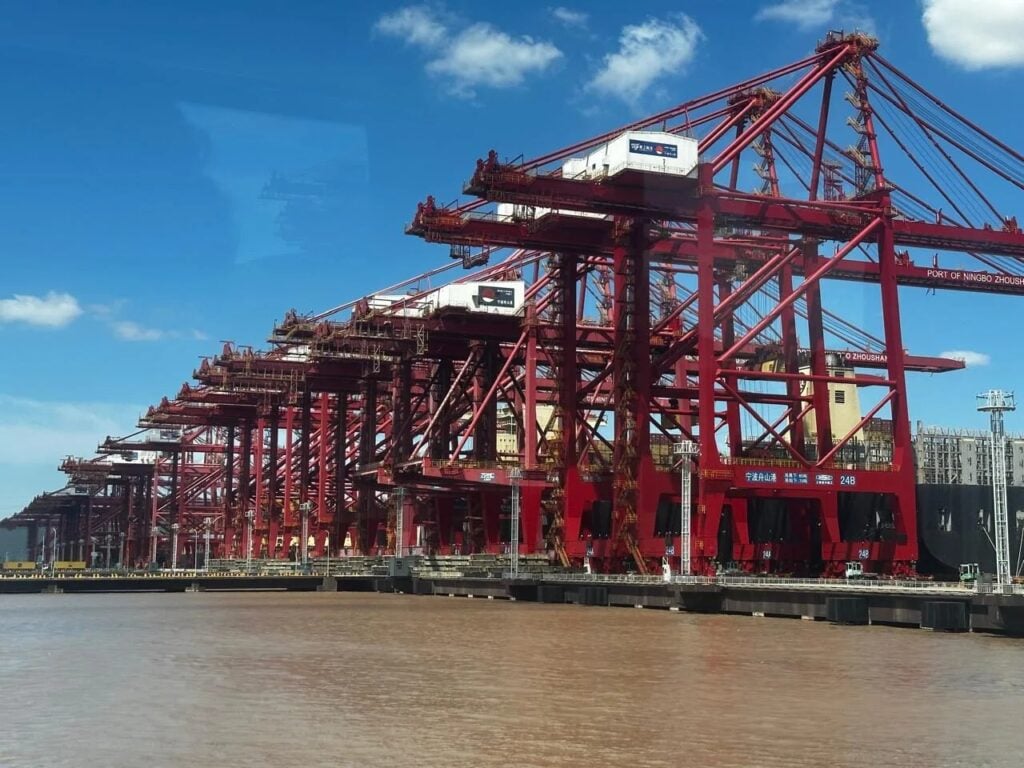
For Mombasa, the lesson is less about copying a specific Chinese technology and more about preparing early for a shipping industry that is under increasing pressure to reduce emissions.
Shore power, electric equipment, renewable energy, cleaner fuels and digital systems that reduce unnecessary truck and equipment movements could eventually become part of the competitiveness equation.
What Mombasa Can Take from Ningbo
The temptation after visiting a port like Ningbo-Zhoushan is to focus on its enormous numbers.
Mombasa cannot and does not need to reproduce a 40-million-TEU operation.
The more transferable lesson is the architecture underneath the numbers.
Ningbo shows what happens when physical infrastructure is combined with digital systems, predictive analytics, automation, multimodal transport and long-term industrial planning.
It is also a reminder that port modernization is not a single project. It is an ongoing process.
China’s own policymakers have increasingly emphasized the integration of seaports, land ports, airports and digital trade platforms, alongside multimodal transport and intelligent logistics.
For Kenya, the opportunity is to apply that thinking to its own circumstances.
Mombasa could progressively use data to predict vessel and cargo flows, allocate equipment more efficiently, automate repetitive gate processes, improve coordination between agencies and connect port information more closely with rail, road and inland depots.
The objective would not simply be to move more containers.
It would be to make the movement of every container more predictable.
Beyond the Crane
My biggest takeaway from Ningbo-Zhoushan was that the modern port is becoming something much bigger than a place where ships load and unload.
It is simultaneously a logistics platform, data system, industrial gateway and transport command centre.
The cranes remain the most visible part of the operation.
But increasingly, the competitive advantage lies behind them in the software, information, connectivity and decisions that determine where the next container goes.
For Mombasa, that may be the most important lesson from Ningbo.
Kenya does not need to build another Ningbo.
It needs to build a Mombasa that can make better use of its own infrastructure, technology and geographical position as East Africa’s maritime gateway.
The real measure of that transformation will ultimately be simple: how quickly, efficiently and predictably a container can move from a ship at the Kenyan coast to a business in Nairobi, Kampala, South Sudan,Kigali or beyond.

Comments
No comments yet. Be the first to share your thoughts.