
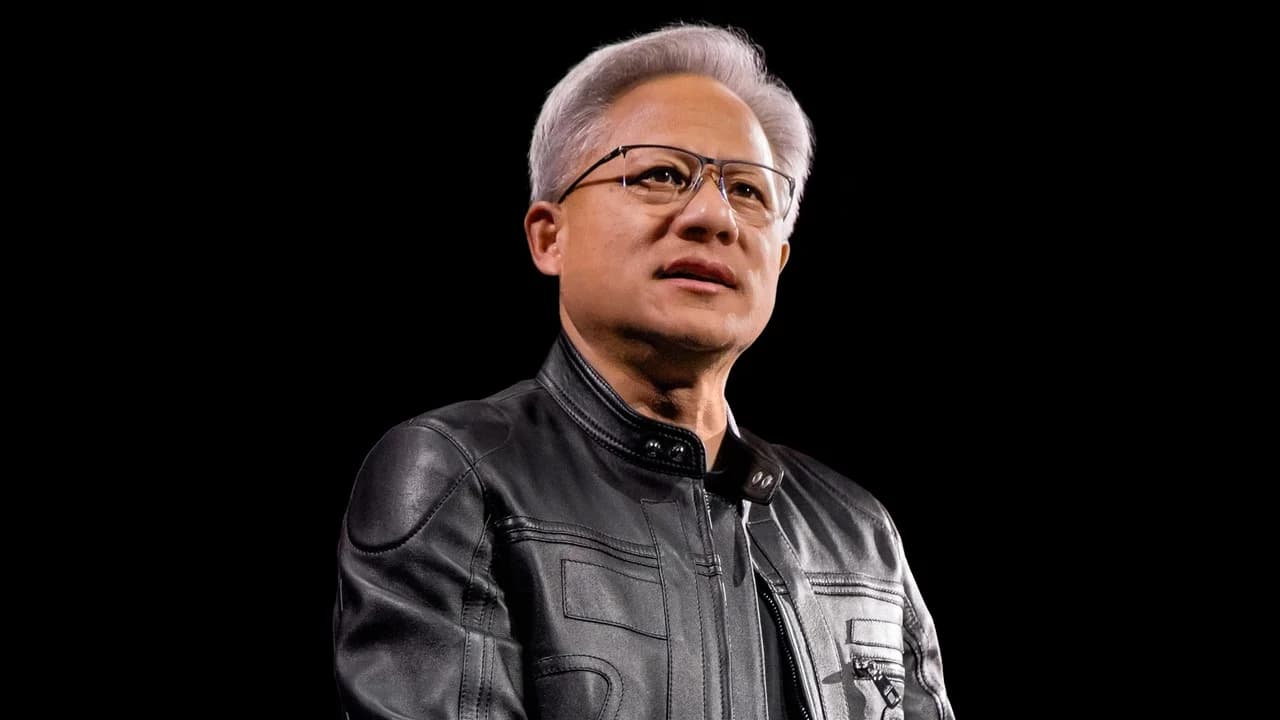
Nvidia’s board approved a further $150 billion of share buybacks on 28th September 2026. Added to what was left of the old programme, the company now has $235 billion it can spend repurchasing its own shares, and it says it expects to use all of it by the end of its 2028 financial year, which closes on 30th January 2028. In Kenyan shillings that’s about KES 19.4 trillion of new money and KES 30.4 trillion in total.
No company has ever added that much in one go. The previous record was Apple’s $110 billion top-up in May 2024. Apple added another $100 billion this April, and Nvidia’s own previous increases were $60 billion in August 2025 and $80 billion on 18th May this year. The new figure is nearly double what Nvidia itself approved four months ago.
A share buyback is a company using its own cash to buy its shares on the stock market, then cancelling them. Fewer shares exist afterwards, so each remaining share is a slightly larger slice of the same company. Unlike a dividend, no cash lands in your brokerage account. If you own Nvidia stock through a Kenyan investment app, you won’t see a payment. Each of your shares should instead represent a little more of Nvidia’s profit over time.
The $235 billion is an authorisation, a ceiling the board has set, and not a promise to spend it all. Nvidia’s filings say repurchases happen “from time to time, subject to market conditions”, in the open market or through pre-set trading plans. In practice, though, Nvidia has been spending steadily. It bought back $40.4 billion of stock in the financial year to January 2026, and another $39.8 billion in the six months to 26th July 2026.
At Monday’s closing price of $228.86, $235 billion buys about 1.03 billion shares. Nvidia had 24.1 billion shares outstanding on 21st August, so the full programme would retire roughly 4% of the company.
Kenya’s entire economy produced KES 17.6 trillion of output in 2025, according to the Kenya National Bureau of Statistics. Nvidia’s buyback pool is 1.7 times that. It’s also more than six times the KES 4.79 trillion the National Treasury plans to spend in the 2026/27 financial year, the biggest budget Kenya has ever had.
The money is there. In the quarter to 26th July, Nvidia had revenue of $96.2 billion and net income of $59.7 billion, and it generated $69.9 billion of free cash flow in the first half of the year. It held $99.4 billion in cash and marketable securities at the end of July. For the current quarter, which ends on 25th October, it has told investors to expect revenue of about $108 billion, and that forecast assumes no data centre chip revenue from China, where Nvidia remains locked out.
The numbers in the release let you work out how fast Nvidia has been buying. Its 10-Q filing for the July quarter said $99.3 billion remained under the old authorisation as of 26th July. The release says the total after the $150 billion increase is $235 billion, which means about $85 billion was left when the board met. The gap, roughly $14 billion, is what Nvidia spent on its own shares in the two months between the two dates.
Shareholders also get cash directly. Nvidia raised its quarterly dividend from $0.01 to $0.25 per share in May, and the next payment goes out on 1st October to anyone who held the stock on 10th September.
Nvidia is doing this while writing very large cheques elsewhere. Its stakes in private companies were carried at $47.9 billion at the end of July, up from $22.3 billion in January, after $31 billion of new investments in six months. It has also agreed to guarantee up to $105 billion of data centre lease and power payments on behalf of OpenAI at a 4.25-gigawatt campus in Pike County, Ohio, in exchange for the site running only Nvidia hardware. We looked at how these circular deals work, where Nvidia funds the customers who buy its chips, when the $100 billion OpenAI investment stalled in February.
Jensen Huang, Nvidia’s founder and chief executive, put both halves in one sentence in the release: “Our cash generation gives us the capacity to invest in the technologies that advance this transformation and return capital to shareholders.”
Nvidia’s shares closed at $228.86 on Monday, up 1.7% on the day, which values the company at about $5.5 trillion. The stock has still trailed AMD and Intel this year, and it trades at about 16.5 times expected earnings for the next 12 months, according to LSEG data, the lowest since January 2015 and roughly half its 15-year average of 30.
That’s the case for a buyback. A company buys its shares when management thinks they’re cheap relative to what the business earns, and a smaller share count also flatters earnings per share. Jacob Bourne, an analyst at eMarketer, said Nvidia was “signaling confidence that demand for its hardware and services has staying power”. He also said the AI build-out won’t continue at its current pace forever.

Comments
No comments yet. Be the first to share your thoughts.