
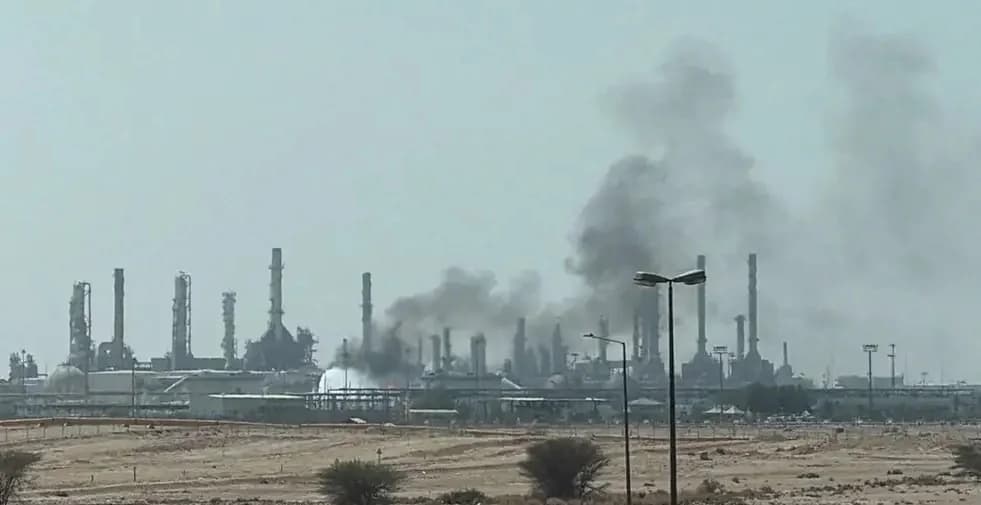
Oil prices hit five-month high amid fears of renewed US strikes on Iran

The rally came as escalating Houthi attacks on Saudi Arabia and reports of possible renewed US-Israeli strikes on Iran heightened fears of further disruptions to global oil supplies.
Benchmark oil prices climbed towards $114 per barrel on Friday, reaching their highest level in more than five months.
The rally came as escalating Houthi attacks on Saudi Arabia and reports of possible renewed US-Israeli strikes on Iran heightened fears of further disruptions to global oil supplies.
The international benchmark rose 0.5 per cent to $113.75 per barrel (Sh14,777), while US West Texas Intermediate crude gained 0.7 per cent to $100.13 per barrel (Sh13,009), reflecting renewed concerns over the security of energy infrastructure and shipping routes across the Middle East.
The rally follows attacks claimed by Iran-backed Houthi militants in Yemen on Saudi targets, including the Red Sea port of Yanbu, as the conflict increasingly threatens the world's largest crude oil exporter.
Saudi authorities reported that two people were killed by debris from an intercepted drone during an attempted attack on an oil field, while another person died following a strike at King Fahd International Airport in Dammam.
The escalating attacks prompted the United States to order some diplomats and their families to leave Saudi Arabia, while Saudi Aramco reportedly directed staff to evacuate its headquarters in Dhahran and work remotely.
Latest Stories
Oil traders are also monitoring reports that US and Israeli military officials have developed plans for renewed attacks on Iran following America's November midterm elections.
Potential targets reportedly include Iran's energy infrastructure, nuclear facilities and missile and drone capabilities.
Although no decision to launch another campaign has been confirmed, the prospect of further military action has added to uncertainty over future oil production and exports.
US President Donald Trump has previously expressed confidence that the conflict would end after the elections.
“I think the war is going to end immediately after the election. They can’t hold out any longer,” Trump said.
Notably, any renewed strikes could intensify pressure on energy markets, particularly if they damage oil facilities or disrupt shipping through the Strait of Hormuz, a critical passage for global crude supplies.
The Bab el-Mandeb Strait, which connects the Red Sea to the Gulf of Aden, is another strategic route exposed to the widening regional conflict.
However, oil flows have shown some resilience, with crude exports from the Persian Gulf reportedly recovering close to pre-war levels.
Meanwhile, attacks by Ukraine on Russian refineries and disruptions to Libyan oil production have added further uncertainty to global supply.
Despite the recovery in exports, prices remain substantially above pre-war levels.
The Brent crude spot closed at $71.32 per barrel (Sh9,267) on February 27, the last trading day before US and Israeli strikes on Iran began on February 28.
Compared with Friday's $113.75, the benchmark is now about 59.5 per cent higher, an increase of $42.43 per barrel (Sh5,510).



Comments
No comments yet. Be the first to share your thoughts.