
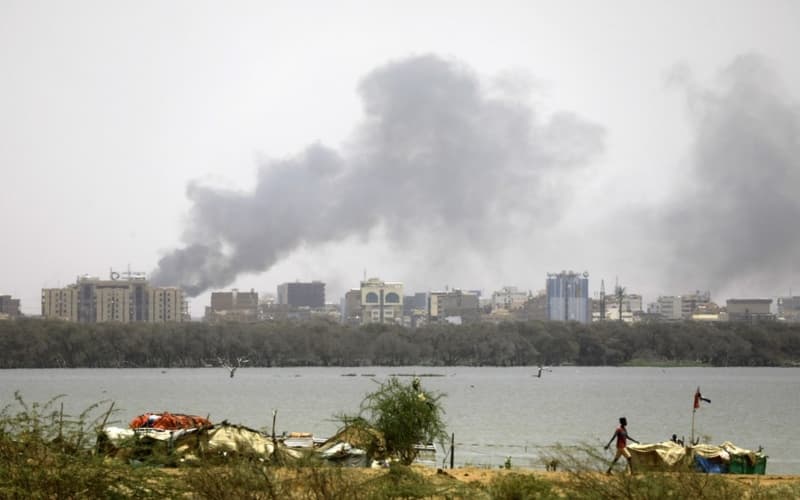
Red Cross warns Sudan drone attacks killing hundreds as homes, markets, displacement camps come under fire

Most of the attacks were likely carried out by armed drones, the organisation said on Thursday, raising concerns that the growing use of the weapons could worsen the humanitarian crisis in the country.
The International Committee of the Red Cross (ICRC) has warned that aerial attacks across Sudan have killed hundreds of people in recent weeks, with residential areas and places sheltering displaced PERSONS among the worst affected.
Most of the attacks were likely carried out by armed drones, the organisation said on Thursday, raising concerns that the growing use of the weapons could worsen the humanitarian crisis in the country.
“Residential areas, markets and areas sheltering displaced populations have been particularly affected, with hundreds of people reportedly killed,” the ICRC said.
The warning comes as United Nations (UN) figures show the scale of civilian deaths linked to drone warfare in Sudan, where fighting between the Sudanese Armed Forces (SAF) and the paramilitary Rapid Support Forces (RSF) has continued since April 2023.
The UN Human Rights Office documented more than 1,000 civilians killed in drone strikes between January and May 2026, accounting for about 80 per cent of all conflict-related civilian deaths recorded by the agency during the period.
In a briefing to the Security Council on October 16, UN Under-Secretary-General Rosemary DiCarlo reported further attacks on civilian sites, including a displacement camp in Blue Nile State and locations in North Kordofan. She also condemned an October 3 drone strike on two trucks carrying food assistance for the World Food Programme (WFP), which killed one driver.
Latest Stories
- Mekelle reopens after Ethiopian forces take control, but Tigray residents face hardship
- Sudan urges COMESA states to unite against RSF and cut external military support for armed groups
- Health progress in Africa leaves more people living with disabilities: Rehabilitation is next challenge
- Junior Starlets crash out of U17 World Cup after 6-1 defeat as DiMaria scores four
The toll on health facilities also remains high, with hospitals supported by the Red Cross recording more than 2,700 weapon-wounded patients in the first half of 2026.
According to the ICRC, the use of drones does not change the obligations of parties to the conflict under international humanitarian law, which requires those carrying out attacks to distinguish between civilians and military targets.
“The use of drones does not change the rules of war. Technology does not absolve those who use it of their obligations under international humanitarian law,” said Lorenzo Caraffi, the ICRC’s head of delegation in Sudan.
ICRC subsequently pressed the warring parties to account for the risks to civilian lives when carrying out drone strikes in towns and other inhabited areas.
“The ICRC urges all sides to take into account the foreseeable humanitarian consequences of using armed drones, particularly in populated areas,” the agency said.



Comments
No comments yet. Be the first to share your thoughts.