
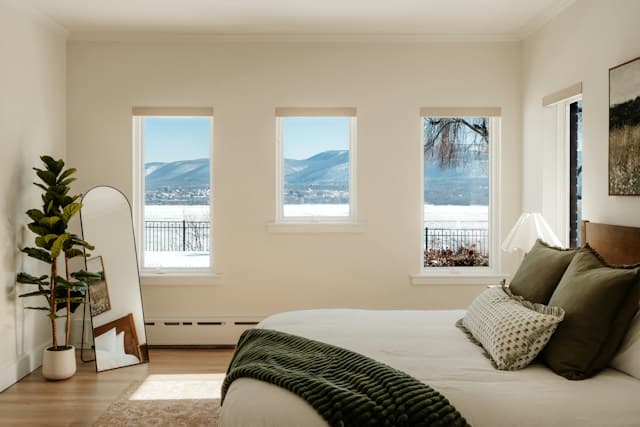
Large windows make rooms brighter and more open, but they can also make light control surprisingly inconvenient. Wide shades carry more fabric, tall windows put controls farther out of reach, and several adjacent shades can turn a simple glare problem into a repetitive chore.
That is where roller shades become especially practical. Their clean profile works well across broad areas of glass without adding visual bulk. In rooms where darkness and nighttime privacy matter more, blackout roller shades offer stronger light control with the same streamlined look. Motorization is not necessary for every large window, but it starts to make sense when size, frequent use, access, or coordinated control affects daily life.
Table of Contents
ToggleLarge Windows Make Manual Operation Less Practical
A manual shade that feels easy on a standard bedroom window can feel very different across a picture window or near a high ceiling. More fabric means more weight to move, while greater height can make a chain or pull point awkward to reach.
Motorization becomes most useful when the shade moves often. Think of a west-facing living room where afternoon sun hits the TV, a home office where glare shifts across two monitors, or a great room where shades open every morning and close every evening. Remote, app, or scheduled control can handle those repeated adjustments.
Motorization Pays Off Most in High-Use Rooms
The strongest case for a motor is not simply that the window is large. It is that the window is large and the shade matters several times a day.
In a living room, grouped control makes it easier to lower multiple shades before movie time or during late-day glare. In a bedroom, scheduled closing can support privacy at night, while a morning opening lets daylight in without pulling a heavy shade by hand. In a home office, small position changes can reduce screen glare while keeping part of the view open.
Motorization also suits older adults, people with limited reach or mobility, and anyone covering tall windows that would otherwise require stretching or climbing.
Fabric Choice Still Shapes the Room
A motor solves operation, but fabric determines whether you preserve daylight, soften glare, or create a darker interior.
Light-filtering fabrics suit living and dining areas where the goal is to reduce harsh brightness without closing off the room. Solar-style fabrics make sense on view-facing windows where glare control matters but outward visibility is still important. Bedrooms, nurseries, media rooms, and street-facing spaces usually benefit more from blackout material when stronger darkness and privacy are the priority.
This matters more on large windows because the fabric covers so much visual area. A fully lowered blackout shade changes the room dramatically, while a lighter fabric can keep a broad wall of glass from feeling closed in.
Families and Smart-Home Users Often Gain More
Homes with several large windows often benefit more from motorization than homes with one isolated opening. Instead of adjusting each shade separately, compatible shades can move together. That is useful in open-plan spaces where several windows need to stay visually aligned.
Cord-free operation is also worth considering in homes with young children. Removing a traditional operating cord makes the window area easier to manage without leaving a hanging control beside furniture or play areas.
For smart-home users, scheduled routines can be more useful than phone control alone. Shades can close before strong afternoon sun, open at a chosen morning time, or move together as part of a room routine.
Check Size, Power, and Control Before Ordering
A large motorized shade should be specified for the actual width, drop, fabric weight, and mounting conditions of the window. One very wide shade may create the cleanest appearance, but two coordinated shades can sometimes be easier to fit and control independently.
Rechargeable motors work well for many existing homes because they avoid new wiring, while hardwired systems may be worth planning during construction or a major renovation. If the motor sits high above the floor, consider charging access before installation.
Choose controls around the people who will use the room. A remote is simple for guests and family members, an app is useful for grouping and schedules, and voice control can help when hands-free access matters.



Comments
No comments yet. Be the first to share your thoughts.