
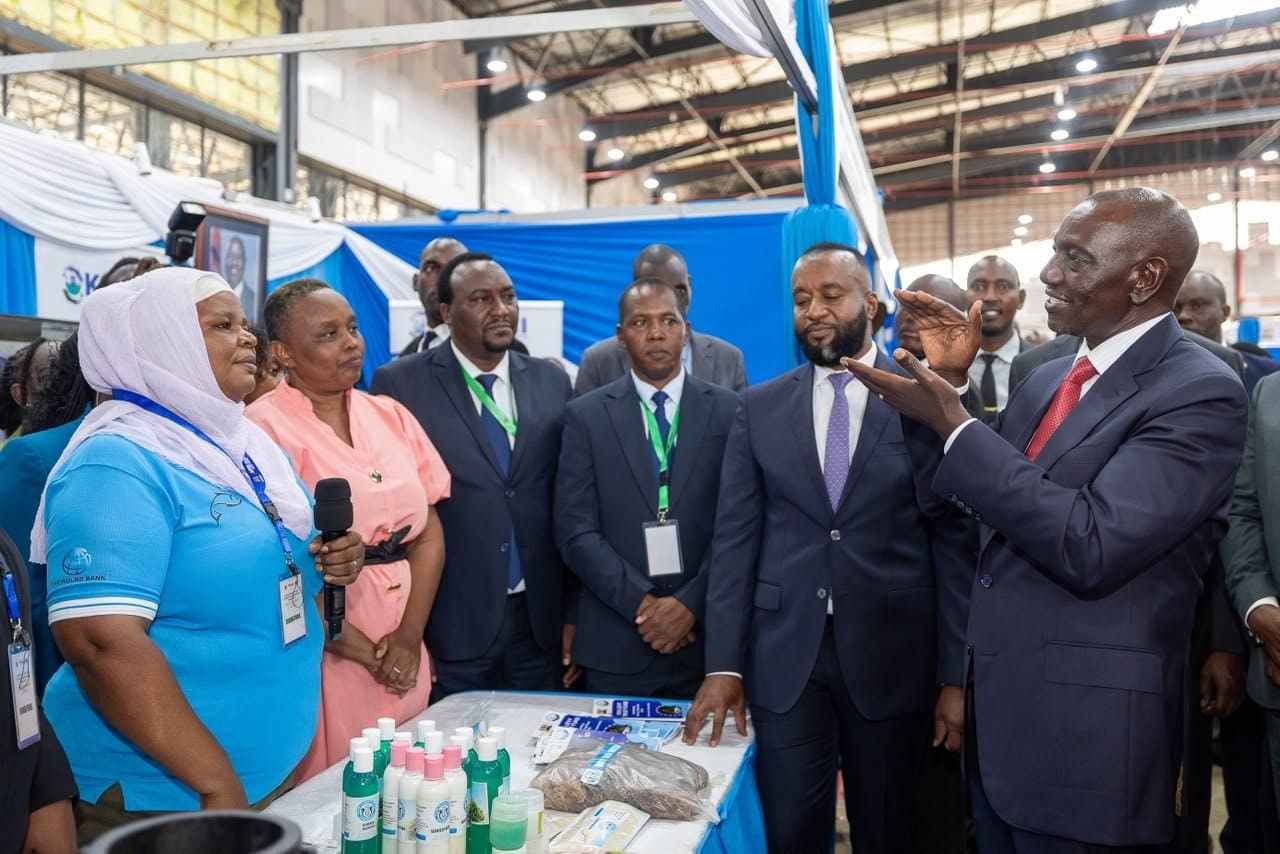
President William Ruto has outlined an ambitious plan to transform Kenya’s agricultural sector from commodity production into a fully-fledged food economy, with increased irrigation, value addition, financing and market access at the centre of the strategy.
Speaking at the Agriculture Summit in Nairobi, President Ruto said the Government had made progress in improving productivity and incomes across key agricultural value chains, but acknowledged that significant challenges remained.
The President said the livestock and leather sectors were creating more economic opportunities, with employment in leather rising from 17,000 to 35,000 jobs.
In fisheries, the value of the catch has increased from Ksh 37 billion to Ksh 54 billion, while the sector now supports 1.6 million livelihoods, up from 1.2 million.
However, Ruto noted that Kenya still faces major challenges in agriculture. Coffee production, he said, remains at only a third of the country’s target, while less than a tenth of tea is exported after value addition. Commercial banks also direct only about three per cent of their lending to agriculture, while food insecurity remains a challenge, with one in six households still considered food poor.
The President said the recent drought had reinforced the need for Kenya to reduce its dependence on rainfall by investing heavily in water infrastructure and irrigation.
“Rain is a blessing, but it cannot be our plan. Water must be our plan,” Ruto said.
He explained that reliable water supplies would make agricultural production more predictable, improve farmers’ access to finance, increase yields and lower food prices. Increased production would also attract processors, creating jobs and wealth across the country.
Ruto rejected the long-standing classification of some parts of Kenya as “high potential” and others as “marginal”, arguing that every county has a role to play in the country’s agricultural transformation. “Kenya has no marginal counties. It has unfinished investment,” he said.
The President said the success of the new agricultural agenda would no longer be measured by the number of projects launched, but by their impact on farmers and businesses.
“We will count farmers who become more productive, not farmers registered. We will count our acres made productive, not schemes constructed. We will count viable businesses created, not credit dispersed,” he said.
Ruto urged farmers to treat agriculture as a business by using certified seed, testing their soil, keeping records and joining cooperatives, while calling on the private sector and financiers to view Kenyan farmers as bankable.
He further urged young people to em brace agriculture as a modern enterprise capable of creating jobs and wealth.


Comments
No comments yet. Be the first to share your thoughts.