

Apiculture Ventures Limited Chief Executive Officer and Founder Pauline Kamara has underscored the need for affordable, accessible, and flexible financing to support the sustainable growth of small and medium-sized enterprises (SMEs) in Kenya.
Kamara said access to finance remains one of the biggest challenges facing SMEs, noting that businesses need financing arrangements that take into account their operational realities and cash-flow cycles.
“As an SME, one of the biggest challenges we face is financing,” she said.
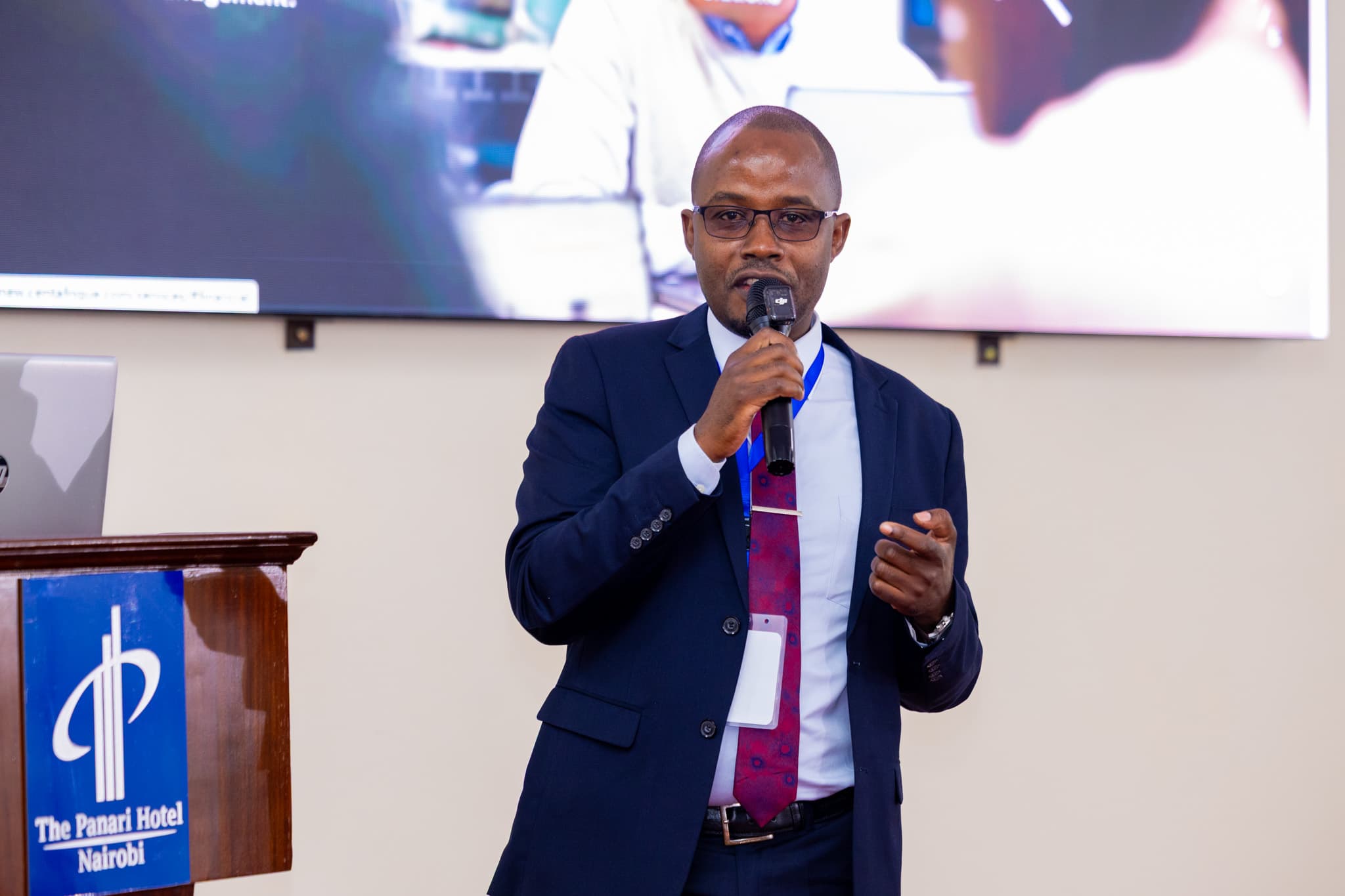
Speaking during a SME Breakfast Meeting organized by Centafrique Limited in Nairobi that brought together key players in the entrepreneurship ecosystem, Kamara said entrepreneurs should focus not only on achieving success but also on maintaining constant growth, which requires access to appropriate financial resources.

“I normally don’t call it success, but I call it constant growth. Yes, success is there, but the constant growth requires a lot of financing,” she said.
Kamara said financial institutions should consider the nature of businesses when designing financing products, particularly for enterprises operating in seasonal sectors.
She cited beekeeping, which forms part of Apiculture Ventures’ work, as an example of a business whose income and activities can fluctuate depending on the season.
“Beekeeping is a season-based business or farming activity,” she said.
According to Kamara, financing can be affordable but still fail to meet an SME’s needs if it is difficult to access or does not offer sufficient flexibility.
“For SMEs who are looking forward to growing their businesses to succeed, it is to get affordable financial resources and to be able to get accessible financial resources, because they can’t be affordable but not accessible, and above all, they have to be flexible,” she said.
She added that flexible financing enables entrepreneurs to plan their finances according to their business cycles.
“Flexibility really helps an SME to plan their businesses to the next level,” Kamara said.
She urged financial institutions and other financiers to understand the seasonal nature of businesses when structuring financing arrangements.
“If you can get a financing institution or a financier who is flexible, then it will really help you as an SME to be able to plan your finances,” she said.
Kamara cautioned entrepreneurs against viewing access to a loan as an end in itself, saying SMEs also need to develop the capacity to manage and deploy borrowed funds effectively.
“As an SME, you need to work with proper partners, because if you can have access to finance, but you do not know how to spend this finance or to dispense this finance in your business, then it will be a problem,” she said.
She advised businesses to clearly define the purpose of financing before applying for funds, whether for equipment, capacity building, research and development, working capital or expansion.
“If you apply for a $30 million loan, what are you applying this loan for? Is it for equipment? Is it for capacity building? Is it for research and development? Is it for working capital? Is it expansion?,” she posed.
Kamara said SMEs should also ensure that funds are used for the purposes for which they were secured.
“When you get this money, do you dispense this money for the intended purpose that you acquired it for?” she posed.
The CEO said poor financial management can undermine an otherwise profitable business, making financial knowledge an important component of SME growth.
“A business can be profitable, yet they have no money, because of how they are actually reinvesting the money or how they’re spending the money,” she said.
She encouraged entrepreneurs to continuously acquire knowledge on financial management, expenditure, bookkeeping, and reinvestment, adding, “Knowledge is very important.”
She said SMEs should be open to learning as they grow and should seek professional support where necessary.
“As much as you want to access this money, be flexible enough and open enough to continue acquiring more knowledge on finance expenditure, on book maintenance, and on reinvestment,” she said.
Kamara said SMEs should establish relationships with partners who can provide technical and financial advisory support because entrepreneurs cannot be expected to have expertise in every aspect of running a business.
“You cannot be a jack-of-all-trades,” she said.
She cited Apiculture Ventures’ engagement with partners, including Centafrique, as an example of how advisory support can help entrepreneurs make better financing decisions.
“When we started working with partners like Centafrique, they were able to guide us,” she said.
Kamara said such partnerships can help SMEs determine how much financing they require, what it should be used for, and how it should be managed after disbursement.
“With the right partners taking you through these advisory services, it will be very important for an SME to invest in that, and this will actually contribute to their growth,” she said.
Her remarks come as Centafrique Limited intensifies efforts to strengthen links between SMEs and financial institutions, encouraging entrepreneurs to improve their preparedness and understanding of financing options before seeking capital.
The consultancy firm continues to provide business strategy, financial advisory, fundraising, management consulting, and research services to SMSs to promote sustainable growth, economic empowerment, and business transformation across the private and public sectors.
By Ian Chepkuto

Comments
No comments yet. Be the first to share your thoughts.