
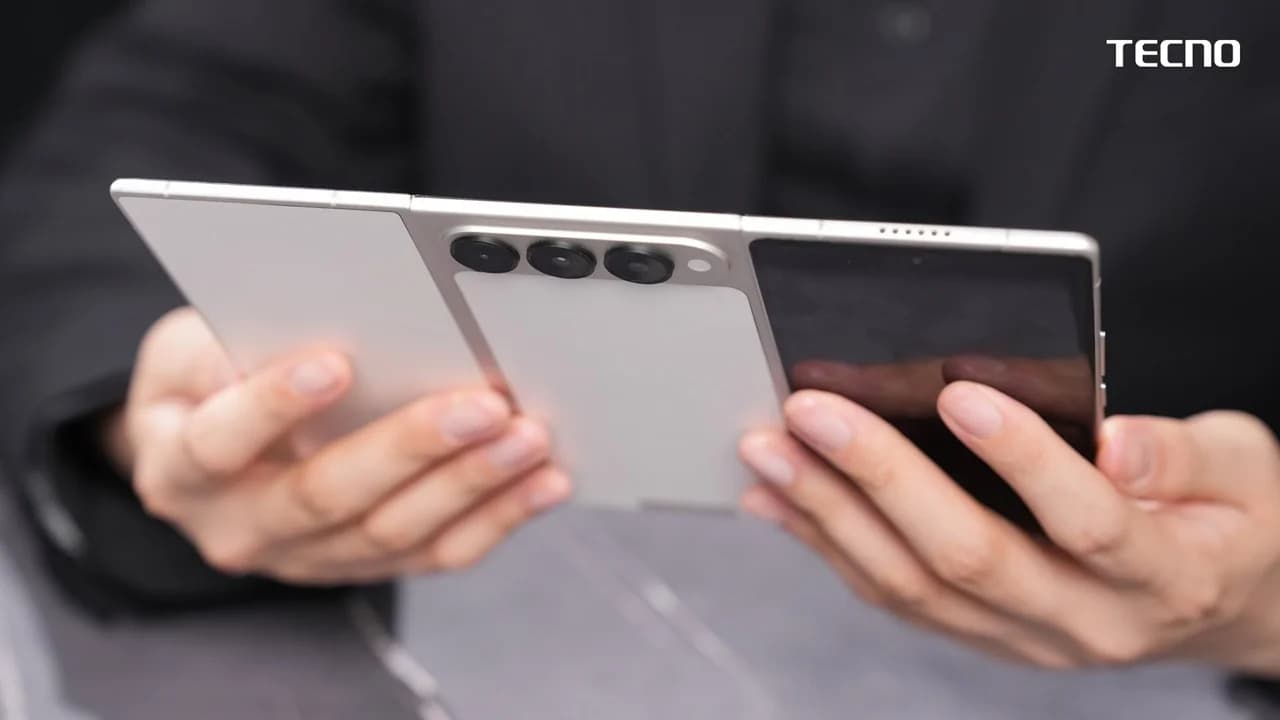
Transsion, the Chinese company that makes TECNO, Infinix and itel phones, brought in 14.85 billion yuan, or about KES 290 billion, between July and September 2026. That’s 27.45% less than in the same three months of 2025, when it made 20.47 billion yuan, about KES 399 billion. The numbers are in Transsion’s third-quarter report, published on Friday 30th October 2026, its first since the company started trading in Hong Kong two weeks earlier.
Net profit, what’s left after everything, fell 8.4% to 856.6 million yuan, about KES 16.7 billion. But Chinese listed companies also report profit with one-off items taken out, things like gains on investments and government grants, and that figure fell 47.72% to 435.8 million yuan, about KES 8.5 billion. That second figure is the closer measure of what the phone business itself earned. The gap between the two is 420.7 million yuan, about KES 8.2 billion, so roughly half of this quarter’s headline profit came from one-off items. The biggest of them, before tax, was a 464.8 million yuan rise, about KES 9.1 billion, in the value of financial assets Transsion holds. The report doesn’t say which ones. So the headline profit makes the quarter look a lot better than it was.
That’s a sharp turn from the first half of the year. Up to June, Transsion’s revenue grew 21.9% because it raised prices to cover what memory chips now cost it. In August we explained how those price rises were deliberate. Three months later, that growth is almost gone. Revenue for the nine months to September is up just 1.49%, at 50.28 billion yuan or about KES 980 billion. Nine-month net profit is still up 22.44%, at 2.63 billion yuan or about KES 51.3 billion, but that’s against 2025, when Transsion’s nine-month profit fell 45%.
Transsion says revenue fell because of “factors such as increased supply chain costs and reduced market capacity”.
The supply chain cost is mostly memory, the RAM and storage inside every phone. Chipmakers have moved factory capacity to memory for AI data centres, so there’s less for phones and the price has climbed. Transsion passed that on in the first half: its average smartphone sold for 713.4 yuan, about KES 13,900, up from 547.5 yuan, about KES 10,700, a year earlier.
Reduced market capacity is the other half of the same problem. When phones cost more, fewer people buy them. Omdia, a market research firm, counted 254.7 million smartphones shipped worldwide in the third quarter, 20% fewer than a year earlier and the lowest third quarter since 2013. Africa, where Transsion earned more of its revenue than anywhere else in 2025, fell 39%, the steepest drop of any region. Omdia’s principal analyst Sanyam Chaurasia said rising costs pushed phone makers there towards “margin protection and selective shipments”. Transsion isn’t in Omdia’s top five, so the release has no separate count for it. Still, in 2025 Transsion earned 91.5% of its revenue in Africa, emerging Asia-Pacific markets, the Middle East and Latin America, and those are the regions where Omdia saw shipments fall hardest.
Transsion still keeps about the same share of each sale as it did in the first half. By our arithmetic from the report, its gross margin, the share of revenue left after paying for the products it sold, was 22.7% in the third quarter, up from 18.6% a year earlier and level with 22.6% in the first half. It just sold far less, so gross profit fell 11.6% to 3.36 billion yuan, about KES 65.6 billion.
Costs that don’t depend on how many phones are sold stayed high. Selling and marketing, administration, research and finance costs came to 2.86 billion yuan, about KES 55.8 billion, in the quarter. That’s 19.3% of revenue, against 13.6% a year earlier. Research spending rose 8.5%, and finance costs tripled to 163 million yuan, about KES 3.2 billion, as Transsion borrowed more. In the first half it blamed exchange-rate losses for the same line. By our count, what was left after those costs dropped from about 1.02 billion yuan, about KES 20 billion, to about 500 million yuan, about KES 9.8 billion, before tax and other items. So a quarter less revenue left Transsion with half the profit from selling phones.
On 30th September Transsion was holding 17.32 billion yuan of inventory, about KES 338 billion. That’s almost double the 8.90 billion yuan, about KES 174 billion, it held at the end of 2025, and 82% more than a year earlier. It peaked at 18.94 billion yuan, about KES 369 billion, in June. At the pace Transsion used stock in the third quarter, we work that out to about 139 days’ worth, against about 52 days a year earlier.
Transsion says it “appropriately built up inventory in response to rising memory chip prices”. Buying early locks in chips before prices go higher. It also means paying now for phones that haven’t sold yet. In its half-year report, Transsion said its costs had risen more slowly than its prices because it was still using older stock bought for less. We think that cushion runs out as chips bought at this year’s prices go into phones, and the third-quarter report doesn’t address it. Omdia’s Amber Liu said in the same release that phone makers “face growing inventory risks as they balance existing stock with new product generations”.
That’s where the cash went. Over nine months, Transsion’s operating cash flow, the cash its everyday business brings in or uses up, was minus 9.87 billion yuan, about KES 193 billion. A year earlier it was plus 3.28 billion yuan, about KES 64 billion. The third quarter alone used 4.01 billion yuan, about KES 78 billion. Inventory actually fell by 1.6 billion yuan, about KES 31 billion, in those three months, so this was Transsion settling bills for stock it had bought earlier. Its accounts payable, the money it owed suppliers and hadn’t yet paid, dropped from 15.90 billion yuan, about KES 310 billion, in June to 9.31 billion yuan, about KES 182 billion.
Cash in the bank was 7.84 billion yuan, about KES 153 billion, down from 11.74 billion yuan, about KES 229 billion, at the end of 2025. Short-term loans rose from 1.86 billion yuan, about KES 36 billion, to 4.57 billion yuan, about KES 89 billion. None of this includes the Hong Kong share sale, which raised HK$2.97 billion after fees, about 2.5 billion yuan or KES 49 billion, on 15th October, after the quarter closed. Last month we explained where that money is going: mostly AI research and marketing, with none of it set aside for cheaper phones.
The report doesn’t break revenue down by country or region, so it can’t tell us whether sales fell in Kenya, or by how much. It’s silent on phone prices too, which means nothing in it points to what happens on Kenyan shelves next.
It does show the limit of this year’s plan. Fewer cheap phones at higher prices protected Transsion’s margins in the first half, while it was selling older, cheaper stock. In the third quarter, the buyers it lost cost it more than the higher prices brought in, and it’s now carrying almost twice the inventory it had in January, much of it bought at this year’s memory prices. The next full picture comes with Transsion’s 2026 annual results, due by the end of March 2027 under Hong Kong’s listing rules.



Comments
No comments yet. Be the first to share your thoughts.