
Foreign investors hold majority stakes in several companies listed on the Nairobi Securities Exchange (NSE), while local institutions and individual investors dominate ownership in other firms, according to shareholding data from the Capital Markets Authority (CMA).
The CMA Quarterly Statistical Bulletin for the third quarter of 2026 (Q3 2026), covering listed companies across sectors including banking, energy, insurance, telecommunications, manufacturing, and agriculture, shows significant differences in how shares are distributed among foreign investors, local individual investors, and local institutions.
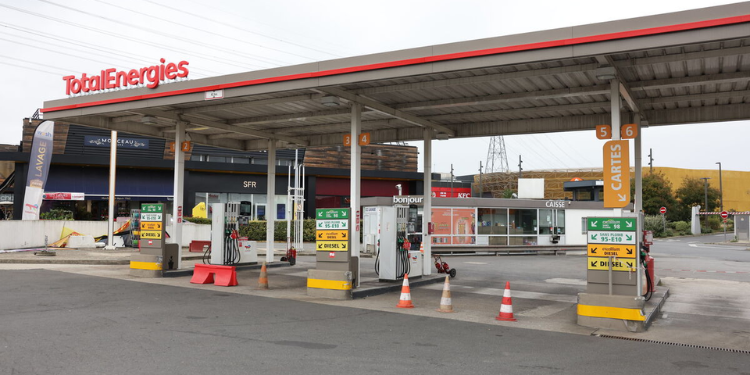
TotalEnergies Kenya has the highest foreign ownership among several prominent firms in the dataset, with foreign investors holding 94.95 per cent of its shares as of August 2026.
BK Group follows, with foreign investors controlling 92.46 per cent of its shares, while Stanbic Holdings has 81.07 per cent foreign ownership.
Other companies with substantial foreign shareholding include Standard Chartered Bank Kenya (75.01 per cent), Liberty Kenya Holdings (73.61 per cent), British American Tobacco Kenya (73.14 per cent), and WPP Scangroup (70.98 per cent).
Jubilee Holdings also has a significant foreign stake, with overseas investors holding 68.11 per cent of its shares, while Standard Group recorded foreign ownership of 69.28 per cent.
The figures are contained in Table 31 on the proportion of shareholding in listed companies, supplied from the CMA’s statistical data.
CMA Lists Companies Dominated by Local Institutional Investors
Local institutions hold substantial stakes in several major companies, including those operating in banking, energy, aviation and telecommunications.
Kenya Pipeline Company has the highest local institutional ownership among the companies listed in the supplied data, with institutions holding 98.58 per cent of its shares. Foreign investors account for 0.15 per cent, while local individual investors hold 1.27 per cent.
Bamburi Cement is entirely held under the local institutional category, which accounts for 100 per cent of its shares.
Safaricom has local institutional ownership of 89.64 per cent, compared with foreign investors at 6.13 per cent and local individual investors at 4.23 per cent.
Kenya Airways also has a strong institutional ownership structure, with local institutions holding 88.94 per cent of its shares. Foreign investors own 7.82 per cent, while local individuals account for 3.24 per cent.
Other companies with high local institutional ownership include HF Group at 87.90 per cent, NCBA Group at 88.61 per cent, Longhorn Publishers at 81.90 per cent, Co-operative Bank of Kenya at 81.30 per cent and Sameer Africa at 83.58 per cent.
KenGen recorded local institutional ownership of 75.50 per cent, while Kenya Power had 66.26 per cent.
Listed Companies with High Individual Investor Ownership
Several companies have a large shareholding by local individual investors.
Family Bank stands out, with local individual investors accounting for 99.97 per cent of its shares, while foreign investors hold 0.03 per cent.
Shri Krishana Overseas reports 97.72 per cent local individual ownership, while Flame Tree Group Holdings reports 96.19 per cent.
Local individuals hold 90.33 per cent of Homeboyz Entertainment’s shares, while Kurwitu Ventures records 99.89 per cent.
Home Afrika has local individual ownership of 78.56 per cent, while Centum Investment records 68.35 per cent.
Other companies with significant individual investor ownership include Mumias Sugar Company at 64.56 per cent, Africa Mega Agricorp at 65.58 per cent and Kakuzi at 41.16 per cent.
The figures show that shareholding structures differ considerably across the market, with some companies largely held by institutions and others dominated by individual investors.
Foreign Ownership in Kenya’s Banking Sector
The banking sector records some of the largest differences in foreign and local ownership.
BK Group has foreign investors holding 92.46 per cent of its shares, while Stanbic Holdings has 81.07 per cent foreign ownership.
Standard Chartered Bank Kenya records foreign ownership of 75.01 per cent, followed by Absa Bank Kenya at 72.34 per cent and Diamond Trust Bank Kenya at 51.10 per cent.
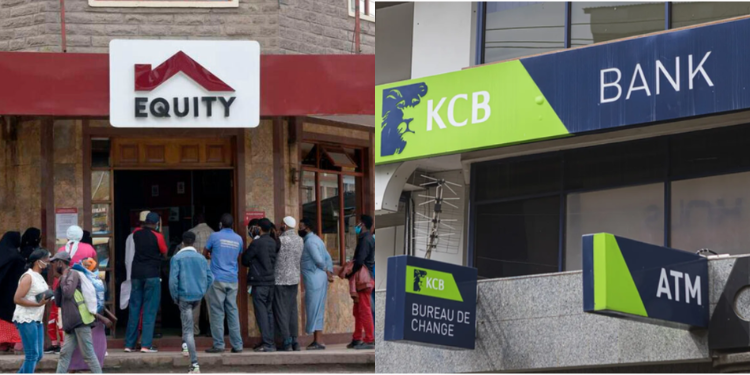
Equity Group Holdings has a more balanced ownership structure. Foreign investors hold 41.51 per cent, local institutions account for 47.65 per cent, and local individual investors own 10.84 per cent.
KCB Group has local institutional ownership of 66.73 per cent, compared with 24.85 per cent held by local individuals and 8.42 per cent by foreign investors.
Co-operative Bank has foreign ownership of just 0.25 per cent, with local institutions accounting for 81.30 per cent and local individuals holding 18.46 per cent.
NCBA Group also has low foreign ownership at 0.38 per cent. Local institutions hold 88.61 per cent, while local individuals account for 11.01 per cent.
HF Group has foreign ownership of 0.29 per cent, with local institutions holding 87.90 per cent.
Ownership in Energy and Petroleum Companies
Foreign investors hold a particularly large stake in TotalEnergies Marketing Kenya, accounting for 94.95 per cent of the company’s shares.
By contrast, local institutions hold most of Kenya Pipeline Company, accounting for 98.58 per cent of its shares.
KenGen has 9.90 per cent foreign ownership, 14.60 per cent held by local individuals, and 75.50 per cent held by local institutions.
Kenya Power has 6.36 per cent foreign ownership, 27.38 per cent held by local individuals, and 66.26 per cent held by local institutions.
Umeme records local individual ownership of 48.12 per cent, compared with 42.29 per cent held by local institutions and 9.59 per cent by foreign investors.
The two Kenya Power preference-share categories in the table also show institutional ownership above 60 per cent.
Foreign and local ownership in insurance companies
Ownership in the insurance sector is also mixed.
Liberty Kenya Holdings has 73.61 per cent foreign ownership, while Jubilee Holdings records 68.11 per cent.
Britam Holdings has 42.59 per cent foreign ownership, with local institutions holding 36.77 per cent and local individual investors accounting for 20.64 per cent.
CIC Insurance Group has 1.02 per cent foreign ownership, while local institutions hold 76.77 per cent and local individuals account for 22.21 per cent.
Kenya Re Insurance Corporation has 1.00 per cent foreign ownership. Local institutions hold 77.22 per cent, while local individuals account for 21.78 per cent.
Sanlam Kenya has 0.52 per cent foreign ownership, with local institutions holding 93.01 per cent and local individual investors accounting for 6.48 per cent.
Shareholding in manufacturing and commercial companies
British American Tobacco Kenya has 73.14 per cent foreign ownership, while B.O.C Kenya records 69.47 per cent.
East African Breweries has 9.66 per cent foreign ownership, with local institutions holding 84.05 per cent and local individual investors accounting for 6.29 per cent.
Carbacid Investments has foreign ownership of 10.41 per cent, local individual ownership of 27.67 per cent and institutional ownership of 61.91 per cent.
Unga Group has 1.89 per cent foreign ownership, while local institutions account for 83.74 per cent of its shares.
In the commercial and services sector, TPS Eastern Africa has 76.87 per cent foreign ownership, while WPP Scangroup records 70.98 per cent.
Nation Media Group has 10.98 per cent foreign ownership, 20.74 per cent local individual ownership, and 68.28 per cent local institutional ownership.
Kenya Airways, meanwhile, has local institutions holding 88.94 per cent of its shares, making institutional investors the largest ownership category in the airline.
Agriculture and investment companies
Williamson Tea Kenya has 58.05 per cent foreign ownership, while Kakuzi has 30.30 per cent.
Kapchorua Tea has 28.96 per cent foreign ownership, while local institutions hold 54.64 per cent. Sasini has 0.96 per cent foreign ownership, with local institutions accounting for 77.90 per cent.
Limuru Tea records foreign ownership of 0.92 per cent, local individual ownership of 39.45 per cent and local institutional ownership of 59.63 per cent.
Among investment companies, Trans-Century has 76.32 per cent foreign ownership, while local individuals hold 21.55 per cent and local institutions account for 2.13 per cent.
Olympia Capital has foreign ownership of 0.26 per cent, with local institutions holding 60.16 per cent and local individuals accounting for 39.58 per cent.
Follow our and X Account for real-time news updates.

Comments
No comments yet. Be the first to share your thoughts.