
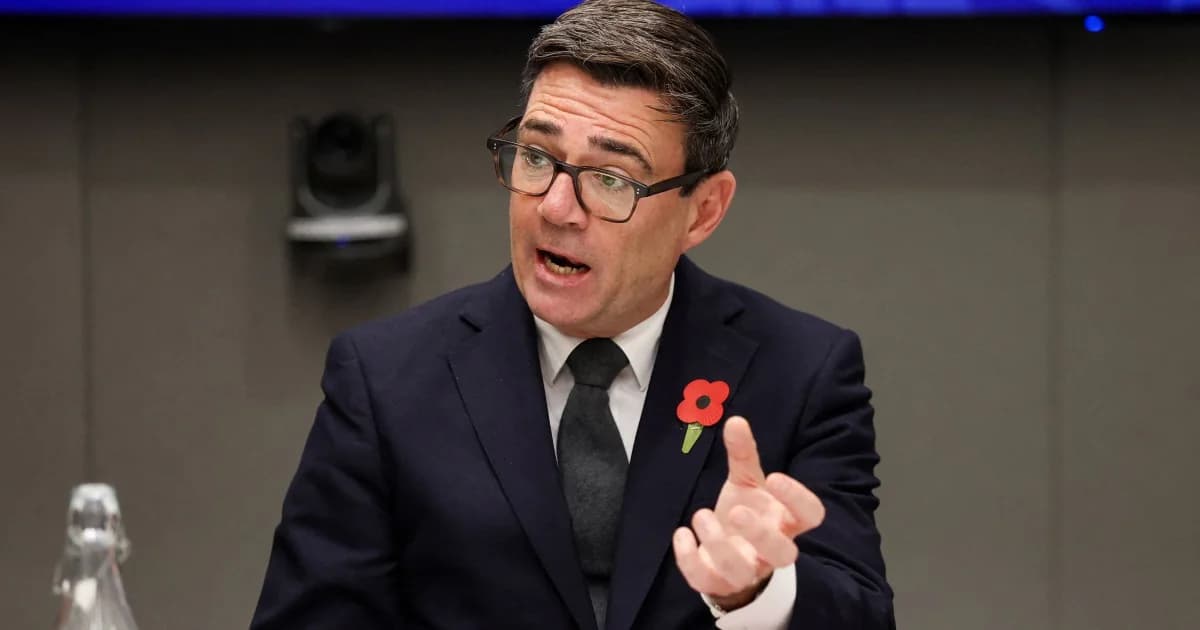
British Prime Minister Andy Burnham has expressed willingness to consider a formal apology for Britain's role in the transatlantic slave trade but ruled out financial reparations ahead of the Commonwealth Heads of Government Meeting (CHOGM) in Antigua and Barbuda.
Burnham said Britain was prepared to hold structured dialogue with countries and campaign groups affected by the slave trade, adding that listening to calls for an official apology on behalf of the British state would be an important part of the process.
“We are offering a structured dialogue with those affected by the transatlantic slave trade. Listening to calls for a formal apology on behalf of the British state will form an important part of this process, and I am open to them,” he said.
In an article published in The Guardian, he expressed “sorrow and regret” for the suffering of millions of Africans who were abducted, separated from their families and forced into slavery. He also acknowledged that the trade continues to shape the world today.
“I want to express my sorrow and regret for the pain and suffering of so many millions and to recognise the way it still shapes our world today,” he said.
However, Burnham rejected demands for financial compensation, arguing that people living in Britain today should not be held liable for historical wrongs committed by previous generations.
"I do not think that British people today can be held liable for historical wrongs, however heinous, that happened in a different age under different laws and in which they played no personal part," Burnham said.
According to the Transatlantic Slave Trade Database, Britain transported an estimated 3.2 million Africans across the Atlantic. At least 12.5 million Africans were abducted and sold into slavery during the transatlantic trade.
Caribbean countries, backed by some African nations, have called on former colonial powers, including Britain, France and Spain, to address the legacy of slavery through reparations. Their demands include compensation, debt cancellation, formal apologies and increased investment in health and education.
As an alternative, Burnham proposed a new initiative to restructure debt for vulnerable Commonwealth countries, allowing them to repay over longer periods and at more favourable interest rates.
The initiative is expected to be led by former British Prime Minister Gordon Brown, with possible involvement from the International Monetary Fund.
Caribbean leaders have cautiously welcomed the offer of dialogue and practical assistance but maintained their position on reparatory justice.
The issue is expected to feature prominently at CHOGM, running from November 1 to 4, which King Charles III will attend. During his Caribbean tour, the King said it was “only right” to acknowledge the suffering and injustices of the past.

Comments
No comments yet. Be the first to share your thoughts.