
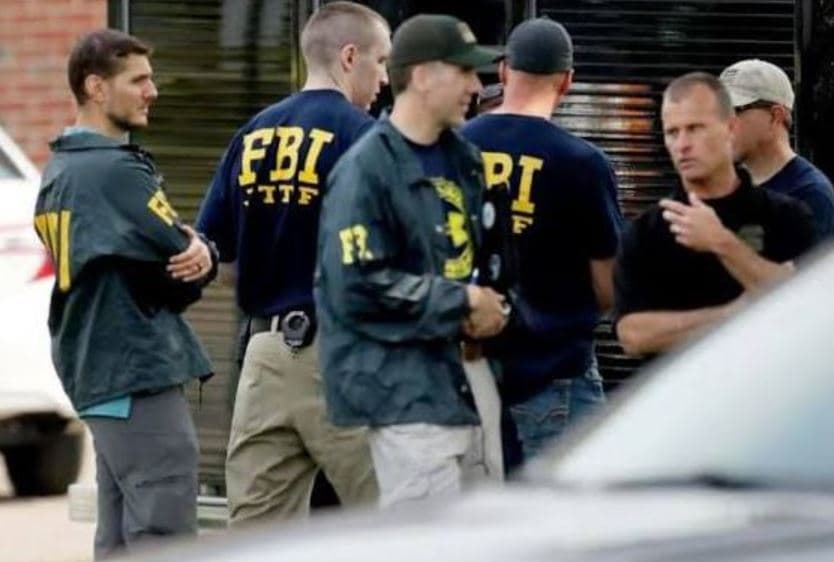
The United States government has seized more than Ksh 97 million in cryptocurrency from an account belonging to a Kenyan national as part of an investigation into a major student financial aid fraud involving stolen American identities.
The seizure followed investigations into an alleged international criminal network that obtained millions of dollars through fraudulent applications for government-funded student loans and grants.
The US Department of Justice announced the recovery under Operation Ghostbusters, a nationwide crackdown targeting individuals accused of creating fake student accounts using personal information stolen from American citizens.
The investigation has uncovered alleged connections between criminals in the United States and Kenya, with authorities accusing some individuals of helping receive, transfer and distribute the proceeds of the fraud.
Assistant Attorney General Colin M. McDonald said five defendants were being charged as investigators announced the cryptocurrency seizure.
“The Department is charging five defendants and announcing the seizure of more than $750,000 in cryptocurrency tied to this scheme through a network associated with Kenyan nationals,” McDonald said.
He described the recovery as the first international seizure of its kind in Kenya in the history of the Justice Department’s Fraud Division.
How investigators traced the money to Kenya
According to the Justice Department, the seizure followed a visit to Kenya in September 2026 by representatives of the Fraud Division and its partner agencies.
The visit focused on cooperation between the two countries in extraditing suspects, prosecuting individuals involved in the fraud and recovering money stolen from American taxpayers.
Kenyan law enforcement agencies provided intelligence and assistance that helped investigators identify and seize more than $750,000 from a cryptocurrency account belonging to a Kenyan national connected to the scheme.
The Justice Department did not identify the account holder in its announcement.
The recovery is part of a wider effort to follow money allegedly transferred through American bank accounts, wire transfers, money service businesses and cryptocurrency platforms.
Investigators say some of the suspects used American financial institutions to receive fraudulent student aid refunds before transferring the proceeds to associates in Kenya.
In one case involving a Kenyan national investigated in Virginia, more than 700 fraudulent student aid deposits worth approximately $1.44 million were received through multiple bank accounts.
The money was subsequently moved through thousands of transactions, with at least $1.3 million transferred to accounts in the United States and Kenya.
Fraud involved fake college students
The alleged criminal operation relied on stolen identities to obtain financial assistance from America’s Federal Student Aid programme.
Suspects allegedly submitted fraudulent Free Application for Federal Student Aid (FAFSA) applications using personal information belonging to unsuspecting American citizens.
The identities were then used to enrol ghost students in colleges and universities and secure government-funded education assistance.
However, the supposed students never attended the institutions where they had been enrolled.
Once the funds were released, the money was allegedly redirected to accounts controlled by the criminals and their associates.
The Justice Department estimates that the wider fraud has resulted in losses exceeding $200 million, approximately Ksh25.8 billion.
Investigators have also identified 830,840 potentially fraudulent Federal Student Aid identification records associated with nearly $130 million and recommended that the Department of Education disable them.
Kenya-US cooperation expands
Kenya’s Directorate of Criminal Investigations, Asset Recovery Agency and Office of the Director of Public Prosecutions are among the agencies assisting the American investigation.
The cooperation is intended to help investigators identify individuals operating in Kenya, recover assets and pursue criminal prosecutions.
The investigation has also uncovered several cases involving Kenyan nationals.
In Nebraska, Francis Mogambi, a Kenyan citizen, was indicted on 10 counts relating to theft of government money and aggravated identity theft.
Prosecutors allege that he worked with associates in Kenya to obtain stolen American identities, submit fraudulent student aid applications and redirect government payments.
He allegedly retained 30 per cent of the proceeds and transferred the rest to his associates.
In New Jersey, three defendants have also been arrested over allegations that they received fraudulent student aid payments before sending the money to associates in Kenya.
US warns international fraud networks
American authorities say Operation Ghostbusters will continue as investigators pursue additional suspects and trace funds believed to have been stolen from the government.
Assistant Director Heith Janke of the FBI’s Criminal Division said the agency had identified more than $32 million in losses from similar ghost student schemes, with additional losses suspected.
“The FBI, working hand-in-hand with our partners at the Department of Education and Department of Justice will follow all evidence, track every dollar, and pursue each criminal who seeks to exploit our nation’s systems,” Janke said.
The investigation remains active, with the US government working alongside Kenyan authorities to recover assets and bring those responsible to justice.
All individuals charged in the investigation are presumed innocent until proven guilty in court.


Comments
No comments yet. Be the first to share your thoughts.