
Startups failing and collapsing after a few years of operations is a familiar script today, but the growing trend is now raising more questions than answers.
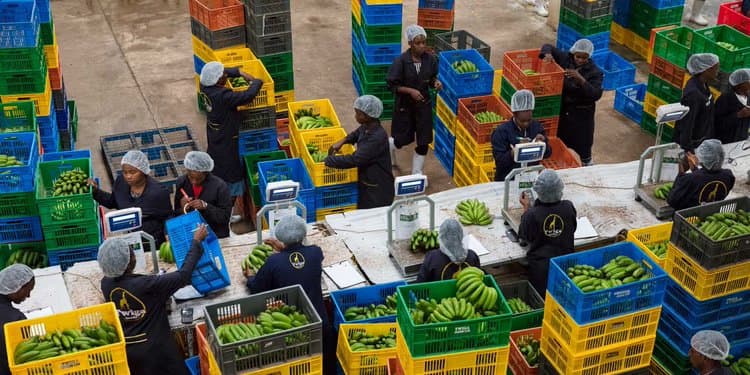
Twiga Foods is the latest start up that was once quite viable, but has received a death blow, with its main divisions, GT Flow Limited and Templar Field Limited, placed under statutory administration this year (August 2026) due to serious financial constraints.
While Mohamed A. Mohamed has been appointed administrator effective September 2026, the biggest shock is that Twiga raised almost Ksh24 billion ($185.4 million) from major international investors and development finance institutions, including Goldman Sachs, Creadev, and the International Finance Corporation.
Does it mean that despite raising millions of capital, running big money tech firm is (still) surely no easy task? Or is it a story of sharp entrepreneurs gone rogue, now doing business “wash wash” style?
“We will continue to engage with stakeholders to achieve the best possible outcome for all creditors,” Mohamed says.
Since 2014, Twiga Foods has been an excellent entity connecting smallholder farmers directly to urban micro-retailers. It was quite a viable business but now in the same WhatsApp group with other African start ups that failed such as Sendy and Copia.
As the public discovers the practical reasons behind these collapse, for example, funding challenges, high operating costs and the difficult journey from venture-backed growth to sustainable profits, the pressure gets higher.
Some start ups also wind up after years of retrenchments, management changes, disputes with creditors and repeated attempts to make the business leaner.
For Twiga, the 2023 dismissal of 283 employees and another 59 in 2024, speaks volumes. Why? It is because sometimes later in life you might find yourself in the same predicament as a start up owner. Most of the start ups collapsing today have been successful, yet the journey has not been easy. Learn something…
When promising companies like Twiga, Copia, Koko Networks, Lipa Later, Gro Intelligence, Mobius Motors, iProcure, Sendy and MarketForce shut down, it means there is still so much to be done. After 12 years in business, the market forces should align. But for Twigas, perhaps markets have taken time to align. What’s ahead? Nobody knows.
But if the trend is not stopped and companies affected not checked and owners not empowered across borders, we will get used and nothing will get better for start ups.
A business model attracts funding, and story that follows 10 years later, being loss of jobs due to restructuring, lack of money for operations, and all, it is time to out think.
Figures show that Kenya remained Africa’s leading venture capital destination in 2025 after startups raised about Ksh127.5 billion ($984 million). Perhaps the most enterprising scheme is that of fundraising through a start up, and closing down after 10 years.
Ventures that have been affected have collectively raised $717.5 million before running out of funding, struggling to reach profitability or encountering difficult market conditions.
Standards must be set so entrepreneurs would not engage in serious fundraising pus only to screw up in the end.
Here is a list of start ups that coiled and died after raising a combined Ksh93 billion, according to Business Daily paper:
Twiga Foods — Sh24.1 billion
Copia — Sh16 billion
Gro Intelligence — Sh15.3 billion
Koko Networks — Sh13 billion
Mobius Motors — Sh7.3 billion
MarketForce — Sh5.5 billion
Wefarm — Sh4.2 billion
Sendy — Sh3.2 billion
iProcure — Sh2.2 billion
Lipa Later — Sh2.2 billion
Kune Foods — Sh130 million
Zumi — Sh130 million
Notify Logistics — Sh50 million


Comments
No comments yet. Be the first to share your thoughts.