
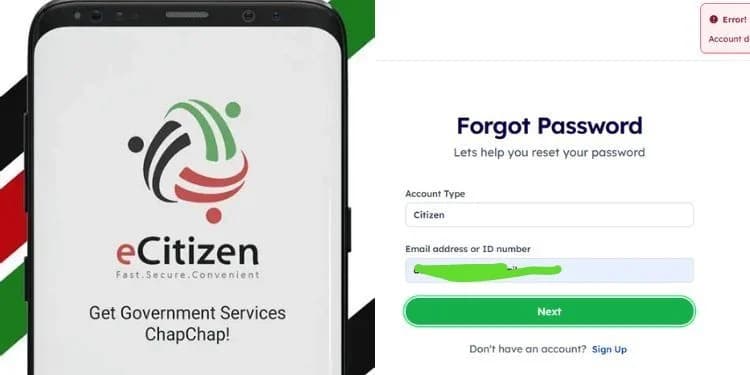
Questions have emerged over whether the government legally owns the eCitizen platform as the National Assembly’s Committee on Delegated Legislation scrutinizes proposed regulations seeking to place the system under the control of the National Treasury.
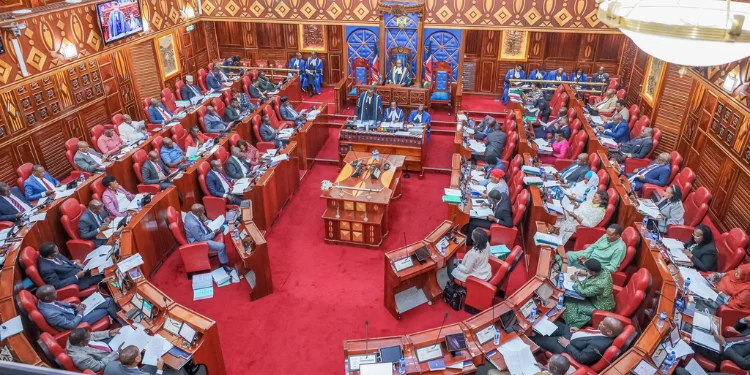
The committee, on August 27, questioned whether the proposed Public Finance Management (eCitizen System Management) Regulations, 2026 would settle the long-standing dispute over the platform.
Keiyo South MP Gideon Kimaiyo asked Treasury officials whether the regulations would resolve the matter.
“Will these regulations cure that question? Because if it’s not curing, then what is the purpose of these regulations?” Kimaiyo asked.
Treasury Explains How eCitizen Revenue Will Be Managed Under New Rules
Treasury officials present told the committee that although a private vendor developed the platform, the government took full ownership in 2023 and now operates it internally.
The proposed regulations seek to establish a legal framework for the ownership, control, hosting, administration and maintenance of eCitizen.
Additionally, they pointed out that the regulations require creating a Steering Committee and a Technical Committee to oversee the platform.
These committees will also formalize access fees, formerly called convenience fees, to help fund its operations.
The regulations would also require national government agencies to onboard the platform within 12 months, while county governments could join voluntarily.
According to Treasury, the Council of Governors would also have representation on the Steering Committee.
Powers Given to Treasury
However, MPs raised concerns over the extent of powers the proposed regulations would give the Cabinet Secretary for the National Treasury.
Likuyani MP Innocent Mugabe questioned a regulation, which allows the Cabinet Secretary to provide policy direction and prescribe standards for revenue collection under the system.
“On Regulation 14(3), where the Cabinet Secretary shall provide policy direction and prescribe standards for collection of revenue under the system, I think that is over-delegation,” Mugabe said.
He sought clarity on the standards the Cabinet Secretary could prescribe, raising concerns about the scope of delegated authority.
The committee also questioned another regulation, which allows the Cabinet Secretary to appoint members of the Steering Committee based on grounds including representation and knowledge.
Lawmakers called for the regulations to specify the qualifications required for members, warning against appointments based on vague criteria.
Treasury officials also told the committee that eCitizen operates on a T+2 settlement cycle, with funds transferred from payment providers to a central account at Kenya Commercial Bank within two days of a transaction.
They further said the National Treasury is a certified data collector and processor under the Data Protection Act and has measures in place to safeguard citizen information processed through the platform.
The proposed regulations are intended to formalize the management of eCitizen, a central government platform used to provide public services and collect payments.
The parliamentary scrutiny comes amid efforts to establish a clear legal framework for the platform and define the roles, powers, and responsibilities of the government agencies managing it.
The eCitizen platform was built by Webmasters Kenya Ltd, a technology company founded and led by CEO James Ayugi.
The company and Ayugi were recently barred by the World Bank from participating in its financed projects for at least five years over fraudulent and obstructive practices linked to a separate project in Somalia
Follow our WhatsApp Channel and X Account for real-time news updates.



Comments
No comments yet. Be the first to share your thoughts.