
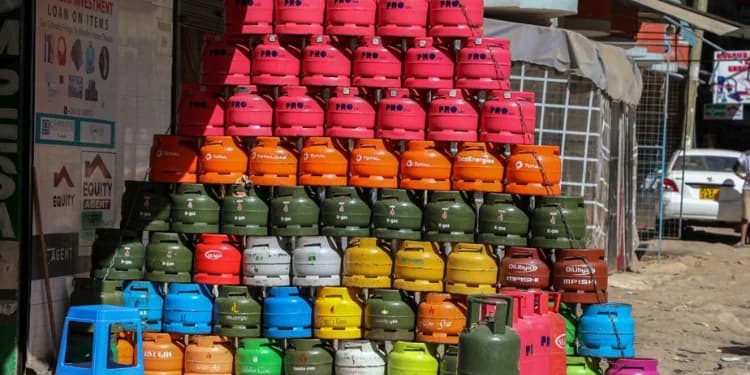
Kenyan households are facing the prospect of higher cooking gas prices after global costs of propane and butane, the main components used to produce liquefied petroleum gas (LPG), rose sharply amid supply disruptions linked to conflict in the Middle East.
The increase is expected to be reflected in local LPG prices next month, in October, adding pressure on households and businesses that depend on cooking gas as a primary energy source.
Data from Saudi Aramco, whose contract prices serve as a benchmark for LPG trading in the Middle East and Asia-Pacific markets, showed butane prices rose by 25.8 percent to $628 (Ksh81,326) per tonne in September from $499 (Ksh64,620) in August.
Propane prices increased by 23.2 percent to $494 (Ksh63,973) per tonne from $401 (Ksh51,929) over the same period.
The higher benchmark prices mean Kenyan importers sourcing LPG from international markets are likely to face higher acquisition costs, which could eventually be passed on to consumers.
Kenya’s Import Dependence
Kenya has seen growing demand for cooking gas as households continue shifting away from charcoal and kerosene.
However, most of the LPG consumed locally is sourced from international suppliers, leaving the market exposed to global supply disruptions and price fluctuations.
The latest rise in LPG prices comes amid supply disruptions in the Middle East, one of the world’s key sources of propane and butane.
The disruptions have affected the movement of petroleum products across major export routes, tightening supplies available to international buyers.
Industry data shows exports from Saudi Arabia’s Yanbu terminal have fallen sharply in recent months.
LPG exports dropped from 302,600 tonnes in June to 240,300 tonnes in July before declining further to 71,200 tonnes in August.
According to the Saudi Arabia Ministry of Energy, exports could fall to about 51,700 tonnes this month.
The export reduction has coincided with stronger international demand, pushing benchmark prices higher for LPG cargoes traded across global markets.
Households Face Higher Cooking Gas Refill Costs
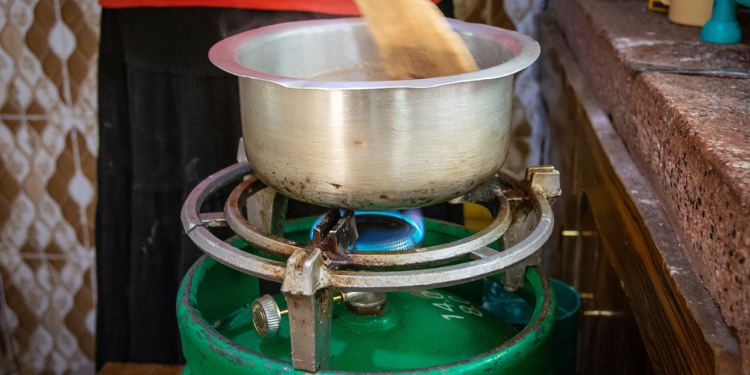
Any increase in LPG prices is expected to be felt by households, restaurants, hotels and small businesses that depend on cooking gas for daily operations.
Current refill prices vary across brands, with a six-kilogram cylinder retailing between Sh1,100 and Ksh1,600 and a 13-kilogram cylinder costing between Ksh2,200 and Ksh3,500.
Demand for LPG has continued to grow despite previous price increases.
According to EPRA, consumption increased to 248.82 tonnes in 2026 from 224.52 tonnes during the corresponding period last year, highlighting the growing role of cooking gas in Kenyan homes.
The country is investing in new LPG infrastructure to support rising demand.
Ongoing projects include large-scale import and storage facilities at the coast designed to improve supply capacity and reduce the risk of shortages.
Even with the planned expansion, Kenya will continue to depend on imported LPG supplies, so global price changes will likely remain a key factor in what consumers pay for cooking gas.
Intensified Attacks
On September 10, drone attacks damaged Saudi Aramco’s East-West Pipeline and associated pumping stations, forcing Saudi Arabia to shut the strategic export route on September 12 while damage was assessed.
The pipeline carries oil and energy products across the kingdom to the Red Sea port of Yanbu, a critical outlet that has become increasingly important as shipping through the Strait of Hormuz faces disruption.
On September 21, only 17 commodity vessels transited the Strait of Hormuz over the weekend, down from 37 a week earlier.
Attacks have also spread beyond Hormuz. Houthi forces have targeted Saudi energy infrastructure and facilities linked to Yanbu, while continuing operations around key shipping corridors in the Red Sea and Bab el-Mandeb Strait.
Follow our WhatsApp Channel and X Account for real-time news updates.


Comments
No comments yet. Be the first to share your thoughts.