
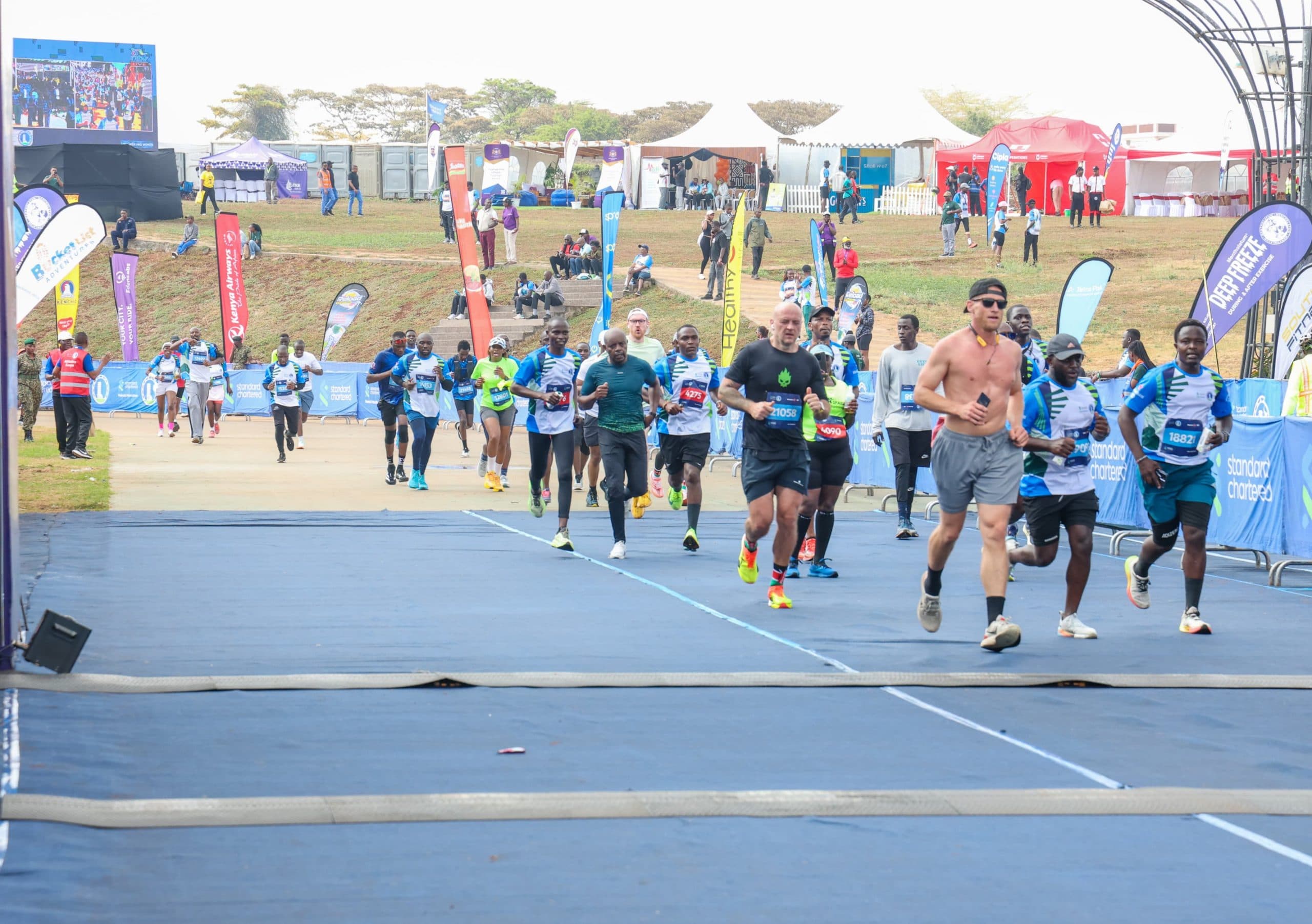
Standard Chartered marathon has raised Ksh76 million through registration fees, all of which will go to community programmes supported by the Standard Chartered Foundation.
This brings total funds raised since the marathon’s inception to Ksh 596 million. The funds will support initiatives that expand economic opportunities, particularly for young people, women and persons with disabilities.
“The funds they help raise support young people to build skills, find employment and grow businesses.
For Mr. David Mwindi, Chairman of the Standard Chartered Nairobi Marathon Local Organising Committee, focus was not only on getting right the essentials like accurate timing, medical care, hydration and recovery, but also the individual runner’s experience.
“From elite athletes chasing a podium place to recreational runners pursuing a personal goal, every participant deserves dependable support,” Mwindi said.
He added that this year’s support measures included 19 hydration stations, roaming bicycle medics, dedicated muscle relief stations, improved post-race recovery services and downloadable digital finisher certificates.
Backed by sponsorship of Ksh 273 million, the marathon combined elite racing and mass participation along Nairobi’s Southern Bypass, with views of Nairobi National Park.
Abraham Kiptum and Mercy Rotich claimed the men’s and women’s 42km titles, respectively, at the 23rd Standard Chartered Nairobi Marathon, while Nahason Kipsang and Orba Chemurgor won the corresponding 21km Half Marathon titles, Alfred Kimani and Joy Cheptoyek triumphed in the 10km race, and Samuel Kuria and Mercyline Ajenjo took the 21km wheelchair titles.
A Ksh11.24 million prize purse rewarded performances across the race programme, led by Ksh 2 million first-place awards in the 42km Full Marathon. Winners in both the 21km Half Marathon and wheelchair race received Ksh 300,000, while the 10km champions earned Ksh200,000. Team competition also shared in the rewards, with Ksh 100,000 allocated to each winning Corporate Relay and PWD team.
Additionally, every participant received a tree seedling to plant, contributing to the organisers’ target of planting 40,000 trees in partnership with Nairobi City County.
Other measures included waste segregation, recycling and efforts to reduce single-use plastics.
The 2026 registration profile showed women in the majority, with 15,796 registered runners (51.5 percent of all registrations) compared with 14,904 men (48.5 percent). Millennials accounted for 15,544 registrations (50.6 percent), Gen X accounted for 3,782 (12.3 percent), Gen Z for 10,175 (33.1 per cent) and Gen Alpha for 920 (3.0 per cent), while 86 percent of registered participants were aged 45 and below.
Demand for places emerged months before race day: registration closed in July after more than 30,700 entries filled the available slots. That early response, alongside the international field and sponsor backing, framed an event whose appeal extended beyond the contest for podium places.

Comments
No comments yet. Be the first to share your thoughts.