
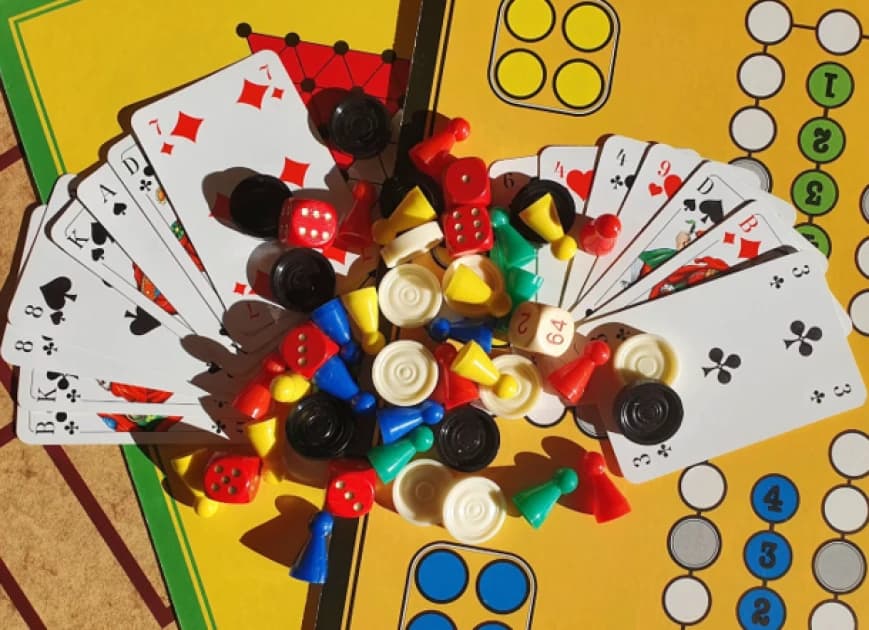
Table games are among the oldest forms of entertainment humans have created. Long before screens or even printed playing cards, people were already rolling dice or moving pieces across boards and inventing ways to compete around a table.
What makes the history especially interesting is that these games developed in very different places. Ancient Egypt had board games of its own. India helped shape chess. China developed card and tile traditions. Europe later became a major home for games such as baccarat and roulette.
Some of these games have evolved so much that their modern versions would look strange to the people who first played them.
Modern table games no longer need an actual table.
Table games can be played digitally through phones and browsers. Live dealer technology has pushed the idea even further by streaming physical tables to players online.
This has created a curious mix of very old games and very new technology. Many of the best online table game varieties have their own interfaces built to make it easier to play on modern devices. No physical table (or even opponent) required.
A game with roots stretching back hundreds of years can now be loaded on a smartphone in seconds. Chess opponents can be matched from different continents. A poker tournament may contain players who never meet face to face.
Physical play has not disappeared either. That combination makes the present day one of the widest periods in table-game history. Old games have not been replaced. They have simply gained more places to live.
Around 3000 BCE: Ancient Egypt and Early Board Games
Some of the earliest known board games come from ancient Egypt.
The exact original rules are not completely certain. The game involved moving pieces along a board. It seems there were throwing sticks or similar objects helping determine movement.
Ancient Mesopotamia produced another famous early table game: the Royal Game of Ur.
Boards dating back more than 4,000 years have been discovered in what is now Iraq.
The game involved racing pieces across a patterned board. There were small throwing pieces used to decide movement.
Players were still combining luck with decisions about where and when to move pieces. This is a formula that remains common in tabletop games today.
Ancient Greece and Rome: Dice Become Everyday Entertainment
Dice games became widespread across the ancient Greek and Roman worlds.
Knucklebones made from animal ankle bones were thrown in ways that worked rather like dice. Cube-shaped dice also became familiar. Different results carried different values.
The Romans also played board games involving strategy and movement. Ludus Latrunculorum is sometimes compared loosely with later tactical board games.
Around the 6th Century: Chess Begins Taking Shape
Chess is generally linked to an Indian game called chaturanga. It appeared around the 6th century.
The pieces represented parts of an army. The game travelled into Persia and then through the Islamic world before reaching Europe, changing along the way.
This is one of the best examples of a table game travelling across cultures rather than appearing fully formed in one place.
Chess is now played almost everywhere and has moved particularly well into online competition.
Card traditions then developed across Asia and moved west through trade and cultural exchange.
Different regions created different suits and deck styles before the suits we know became especially familiar internationally.
This was a major moment in table-game history because one deck could support dozens of completely different games.
1400s–1600s: Baccarat and Early Twenty-One Games
Baccarat has roots stretching back several centuries. We saw early versions associated with Italy and France.
The rules developed over time. The basic focus on comparing hand values eventually produced the familiar banker-versus-player structure seen today.
Games based around reaching 21 also appeared in Europe.
Spanish writing from the early 1600s refers to veintiuno. French versions such as vingt-et-un later became widely played.
These games eventually helped produce modern blackjack.
The central idea has survived remarkably well: get close to 21 without going beyond it.
1600s–1700s: Backgammon and Roulette Take Familiar Forms
Backgammon has much older ancestors. The recognisable modern game became established in Europe during this period.
It combines dice with strategic movement. This created a balance between chance and planning that has helped it survive for centuries.
Roulette also began taking shape in France during the 18th century. It later spread internationally and became one of the most recognizable casino table games.
Poker became increasingly established in the United States during the 19th century.
Early forms were played with smaller decks before the familiar 52-card deck became common.
Different versions followed. The world of poker evolved to include games like draw poker and stud.
The 20th Century: Familiar Classics Go Global
The 20th century turned many regional table games into international ones.
Poker spread through films and organized tournaments. Blackjack and roulette became major casino fixtures.
Board gaming also expanded dramatically. Commercial games became a major entertainment industry in their own right.
The history of table games stretches from ancient boards scratched into wood or stone to digital tables running on phones. The table itself has changed plenty. The appeal really has not.



Comments
No comments yet. Be the first to share your thoughts.