
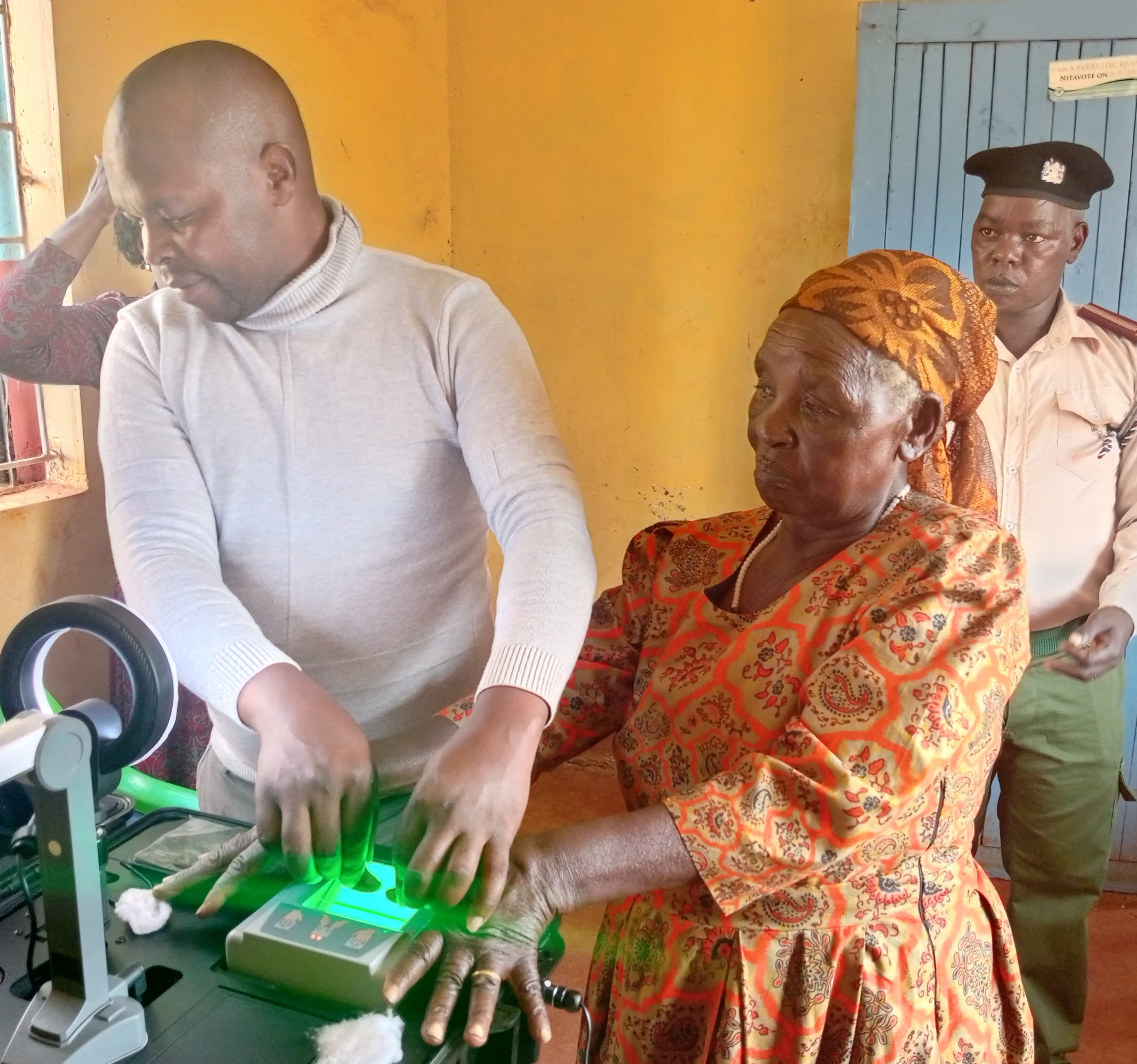
More than 60,000 Inua Jamii beneficiaries in Murang’a County are being subjected to biometric verification in a government drive aimed at eliminating ghost beneficiaries and ensuring cash transfers reach the intended vulnerable households.
The ‘Proof of Life’ exercise, which began on September 21 and is scheduled to run until the end of October, requires beneficiaries to physically present themselves for biometric capture to confirm their identities and update government records.
The County Social Services Coordinator Ms Lucy Gakere speaking to KNA said the exercise is being conducted across Murang’a’s nine sub-counties through National Government Administration Officers (NGAO) offices.
Gakere remarked that the verification was necessary because some beneficiaries who have died continue to receive government cash transfers through mobile phone lines that remain active.
“Some people have died a long time ago, but other people have continued receiving their money because the mobile phone lines are still active,” she averred.
The coordinator explained that the shift from bank-based payments to mobile phone transfers had made it difficult for the payment system to automatically determine whether a beneficiary was still alive.
“The physical verification enables us to confirm the identity of each beneficiary, remove anyone who may have been registered using false information and identify beneficiaries who have died,” added Gakere.
The exercise targets beneficiaries enrolled under various components of the Inua Jamii programme, including older persons and people living with severe disabilities, as well as caregivers of persons with severe disabilities.
Under the programme, eligible older persons receive Sh. 2,000 per month, while persons living with disabilities receive Sh. 2,000 per household.
Gakere said the programme is particularly important for vulnerable people who do not have retirement benefits or a history of formal employment, including those who have never been on the government payroll.
She urged all beneficiaries to take part in the verification before the October deadline to avoid interruptions in their payments.
“Beneficiaries should not wait until the last days of the exercise because failure to appear may affect their payments,” she cautioned.
Those who fail to present themselves for verification within the stipulated period risk being treated as ineligible or nonexistent in the government’s beneficiary records.
The coordinator further observed that said exercise had generally received a positive response, with local administrators helping elderly beneficiaries and other vulnerable groups’ access the verification points.
However, she noted that logistical challenges, particularly transport and limited resources, had slowed the movement of biometric equipment to some remote areas.
“We are working with local administrators to ensure that the equipment reaches all the targeted areas, including those that are difficult to access,” she stated.
The biometric exercise is part of a nationwide government effort to clean up the Inua Jamii beneficiary database, improve accountability in the cash transfer programme and prevent public funds from being paid to ineligible recipients.
The verification is also expected to help the government maintain accurate records of beneficiaries as it continues to use digital systems to deliver social protection payments.
Inua Jamii is one of the government’s key social protection programmes, providing regular cash transfers to vulnerable groups to help them meet basic needs and cushion them from economic hardships.
Gakere encouraged beneficiaries and their caregivers to respond to the exercise promptly, saying the verification was intended not only to detect irregularities but also to ensure genuine beneficiaries remain in the programme.
by Bernard Munyao and Ann Kendi
Comments
No comments yet. Be the first to share your thoughts.