
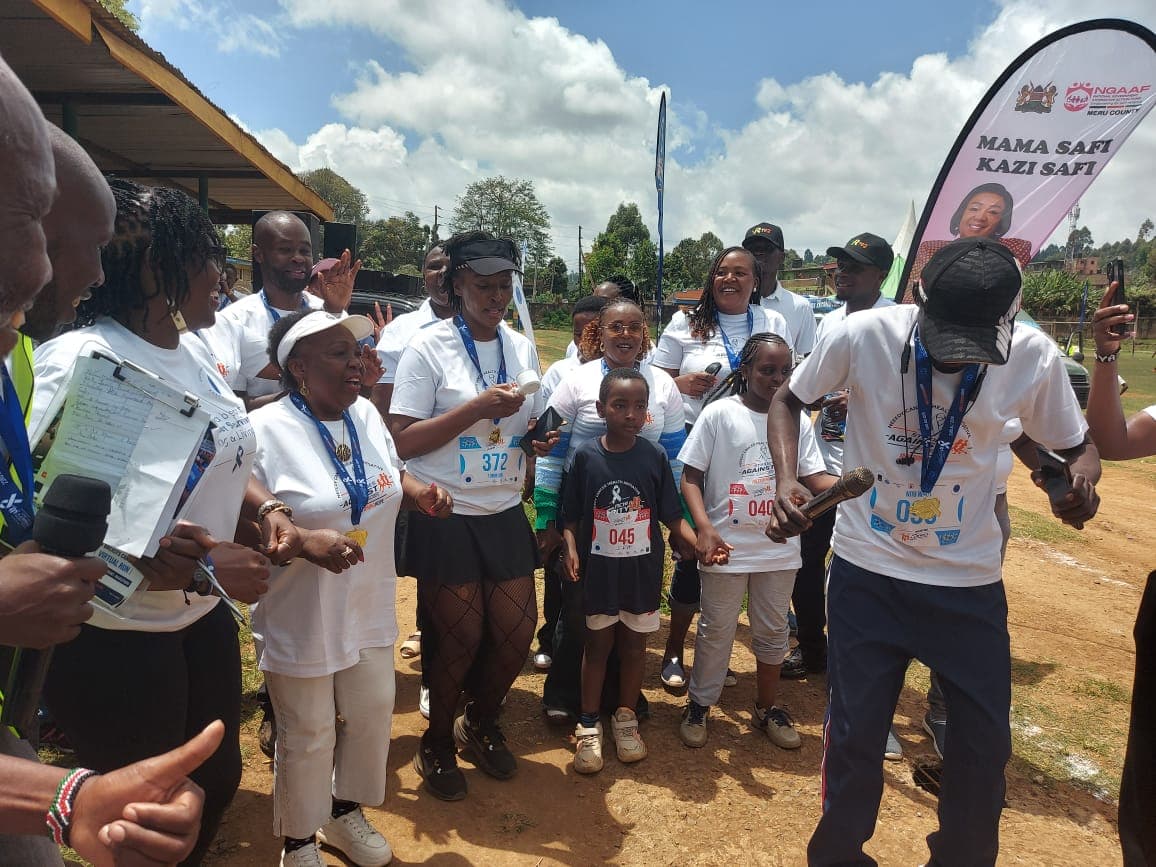
Cancer survivors and health stakeholders have called for increased investment in cancer prevention, early screening and affordable treatment to ease the burden of the disease on patients and families in Meru County.
The call was made during a cancer awareness run held at Maua Stadium in Igembe South Sub-County, where survivors shared their experiences and appealed for greater support for patients struggling to meet the high cost of treatment.
The event, organised by the Needy Cancer Health Initiative, also featured free cancer screening through Beyond Zero, with support from the Meru County Government, as part of efforts to promote early detection and improve access to preventive healthcare.
The initiative’s founder, Nana Kilemi, a breast cancer survivor who lost one breast to the disease, said her personal experience inspired her to establish the organisation three years ago after struggling to afford hospital care.
Kilemi said the initiative had paid Social Health Authority (SHA) contributions for 800 cancer patients, while also providing food, breast prostheses and financial assistance to patients seeking to establish small businesses.
She said the organisation had partnered with Maua Methodist Hospital, Nyambene Level Hospital and other stakeholders to support vulnerable patients.
“When I was sick, I had no money for hospital treatment. That experience made me realise that many patients were going through the same challenges, and I decided to start this initiative,” she said.
Kilemi urged public hospitals to ensure patients were not turned away because of their inability to pay, calling on the County Executive Committee Member for Health to address barriers preventing vulnerable patients from accessing care.
She added that the initiative had compiled a database of approximately 3,500 cancer patients, most of them from Meru County, highlighting the need for sustained support and coordinated interventions.
Cancer survivor David Wambua, who was diagnosed with stage three cancer in 2023 and subsequently lost an arm, encouraged patients not to lose hope.
Wambua said he had undergone 24 chemotherapy sessions and 14 radiotherapy sessions and was doing well, adding that his experience had taught him that cancer was not necessarily a death sentence.
Linda Athiambo, a stage four breast cancer survivor, recounted how her illness began with pus discharge from her nipple before she developed back pain years later.
Athiambo said the treatment process had been difficult, requiring repeated hospital visits and intensive treatment.
She credited the Needy Cancer Health Initiative with helping her access food and start a small business after losing her job as a chief.
“I received support when I needed it most. Cancer treatment is not easy, and patients need people who can stand with them throughout the journey,” she said.
Peter Waita, who is undergoing treatment for leukaemia, appealed for financial assistance, saying the cost of medication and continued care remained a major challenge.
Waita said he needed about Sh8,000 daily for medication, underscoring the financial pressure facing patients with prolonged treatment needs.
Meru County Executive Committee Member for Sports Elias Murega said the county government was supporting cancer awareness and screening programmes.
Murega noted that prostate cancer screening was offered free of charge through county-supported initiatives, particularly targeting men aged 40 years and above.
He urged men to overcome the fear and stigma associated with screening, noting that early detection could reduce the cost and complexity of treatment.
“Men should not fear getting tested. Cancer is not a death sentence, and early detection can make a significant difference,” he said.
Murega also called for preventive healthcare to be prioritised, urging residents to undergo regular medical examinations and support health insurance arrangements that help patients access care.
Community health advocate Dr Benjamin Kanake said fear and delayed hospital visits remained major obstacles to the early diagnosis and treatment of cancer.
He encouraged women to seek screening for breast and cervical cancer and urged men to seek medical attention when they experienced persistent urinary difficulties, frequent urination or blood in their urine.
Kanake called on Meru leaders to allocate more resources to cancer prevention and strengthen community health services to bring screening closer to residents, particularly those living in rural areas.
He said empowering Community Health Promoters to facilitate awareness and early identification of possible cancer symptoms at village level could help improve access to care.
Other speakers called for greater public education, including cancer awareness campaigns in schools, workplaces and local communities.
Mercy Kiambati, representing teachers, said schools could provide an important platform for spreading cancer awareness, while encouraging residents to seek screening without fear or shame.
Teacher Kamui Amwamba Comprehensive School cancer ambassador Akachiu Auki Kiegoi said the effects of cancer had been deeply felt in his village, where many families had lost loved ones to the disease.
He called for a cancer research centre in Maua and more medical camps in the region, saying some patients were unable to seek care because they could not afford transport to health facilities.
Businesswoman Faith Eliud said she joined the campaign because of her family’s experience with cancer, noting that her aunt died after seeking treatment when the disease was already advanced.
John Michubu said cancer affected people across social and economic backgrounds and called for sustained awareness campaigns throughout Igembe South and other parts of Meru County.
Cathy O. Twana, a pediatrician who lost her daughter to cancer, urged stakeholders to support affected families and ensure that financial difficulties did not force patients to abandon treatment.
“Cancer patients are not alone. No one should have to fight cancer alone, and no one should abandon treatment simply because they are poor,” she said.
Dr Martin Kimathi called for increased support for early detection, saying patients who received a diagnosis should be assisted to begin appropriate treatment without unnecessary delays.
Meru County Woman Representative Kailemia Karambu urged residents to seek screening early and support people affected by the disease.
She said collective action was necessary to ensure that cancer was detected early and patients received the care and assistance they needed.
The speakers also cautioned against myths linking cancer to witchcraft or curses, urging families to take people with suspected symptoms to health facilities rather than delay seeking medical attention.
They called for stronger partnerships between the national and county governments, health facilities, community organisations and private-sector players to improve access to screening, treatment and financial assistance for vulnerable patients.
By Kamanja Maeria and Brenda Gakii

Comments
No comments yet. Be the first to share your thoughts.