
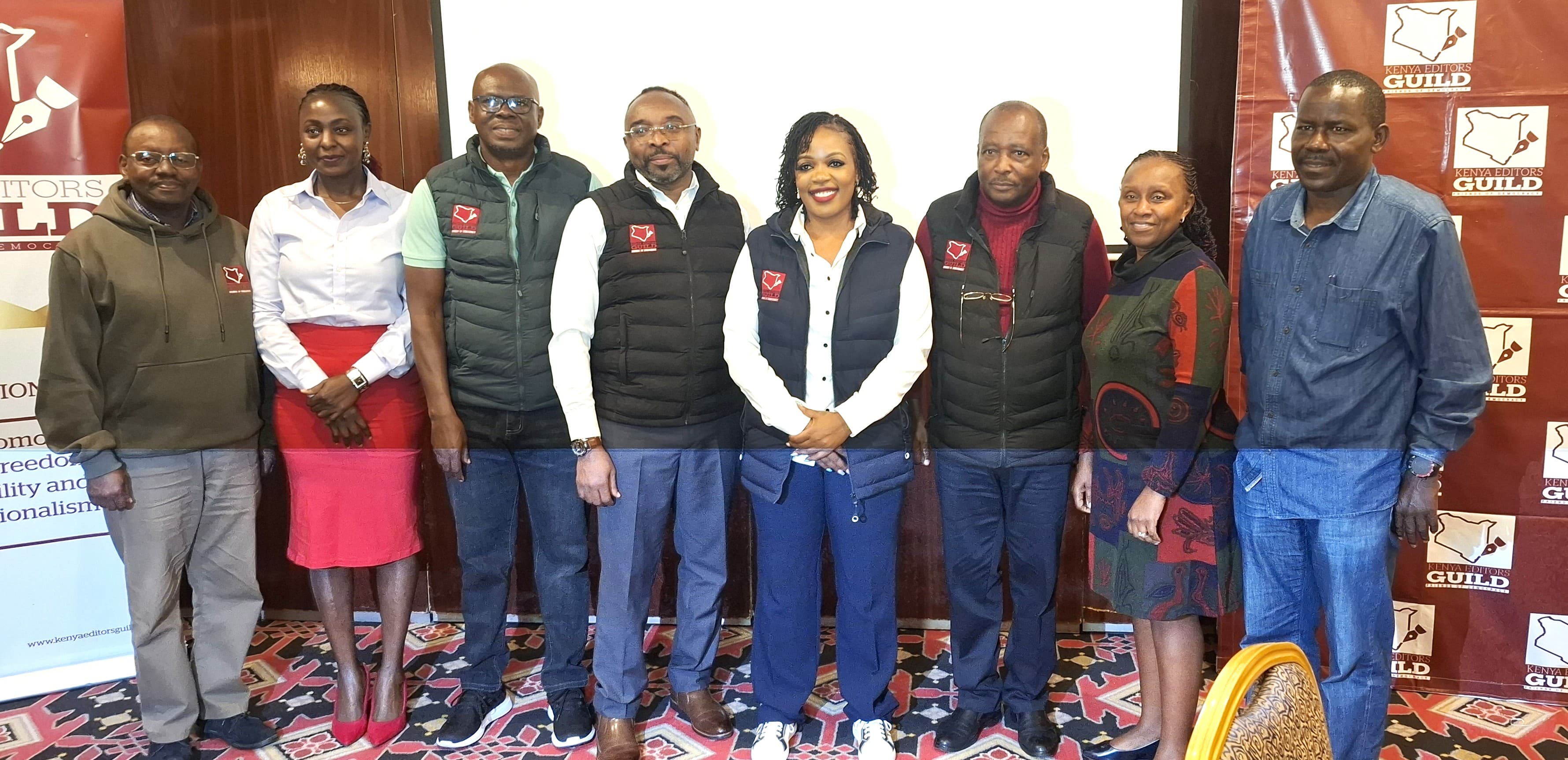
The Kenya Editors Guild (KEG) has warned of increasing pressure, misinformation and disinformation facing the media as Kenya prepares for the 2027 General Election, urging newsrooms to strengthen editorial independence, verification and journalists’ safety.
KEG President Zubeidah Kananu said journalists and media houses were already operating in an environment characterized by threats, intimidation and attempts to restrict legitimate journalism.
“As we look ahead to the 2027 General Elections, our unity as a media fraternity will matter more now than ever,” Kananu said.
She was speaking in Nairobi during the launch of the 2026 Annual Editors’ Convention, themed “Navigating the Storm: Media Resilience on the Road to 2027.”
Kananu said the political environment was expected to become more heated as the elections approached, while rapid advances in artificial intelligence (AI) and other technologies were likely to make the information environment more complex.
“Misinformation and disinformation will become more sophisticated, particularly with the rapid growth of AI and other emerging technologies,” she said.

She urged newsrooms to invest in the capacity of journalists and editors to verify information, counter false information and use emerging technologies responsibly.
Kananu said credible election coverage would depend on preparedness throughout the newsroom, from reporters gathering and verifying information in the field to editors making final editorial decisions.
“The road to the 2027 General Election is already taking shape. The political temperatures will rise. The information environment will become noisier,” she said.
She said the media must remain a reliable source of information even when political pressure intensifies, noting that restrictions on journalism could undermine the public’s ability to make informed decisions.
“An election cannot be truly credible when journalists are afraid to ask questions, when information is withheld, or when the media space is deliberately constrained,” she said.
Media Council of Kenya (MCK) Assistant Director for Training and Curriculum Development Christine Nguku said journalists and editors would play a critical role in setting the election agenda, holding leaders to account and helping voters scrutinize candidates and their promises.
Nguku said journalists should examine candidates’ pledges against their track records while providing accurate and objective information to the public.
“It is the editors, it is the journalists who will be able to tell members of the public what the candidates are promising the citizens and what has been their track record,” she said.
She urged media practitioners to uphold accuracy, accountability, independence and objectivity while contributing to a peaceful and accountable electoral process.
Nguku said MCK would work with KEG to prepare journalists for election coverage, including through an election-preparedness workshop planned. “Count on us. We’ll walk with you all the way,” she said.
KEG Convention Planning Committee Chairman Francis Openda urged media houses to remain independent and fair to all political actors, saying elections often expose journalists to pressure from both government and opposition forces seeking favourable coverage.
He called on editors to stand together when journalists face harassment or interference, saying collective support was essential to protecting press freedom.
Association of Media Women in Kenya (AMWIK) Executive Director Queenter Mbori reaffirmed the organization’s support for KEG, saying media entities needed to work together to strengthen journalism and protect women’s rights.
The 2026 convention, the ninth annual Editors’ Convention, to be held in November 25th to 29th will focus on media resilience, editorial independence, technology, misinformation and disinformation, journalist safety, public trust and media sustainability ahead of the 2027 elections.
by Wangari Ndirangu

Comments
No comments yet. Be the first to share your thoughts.