
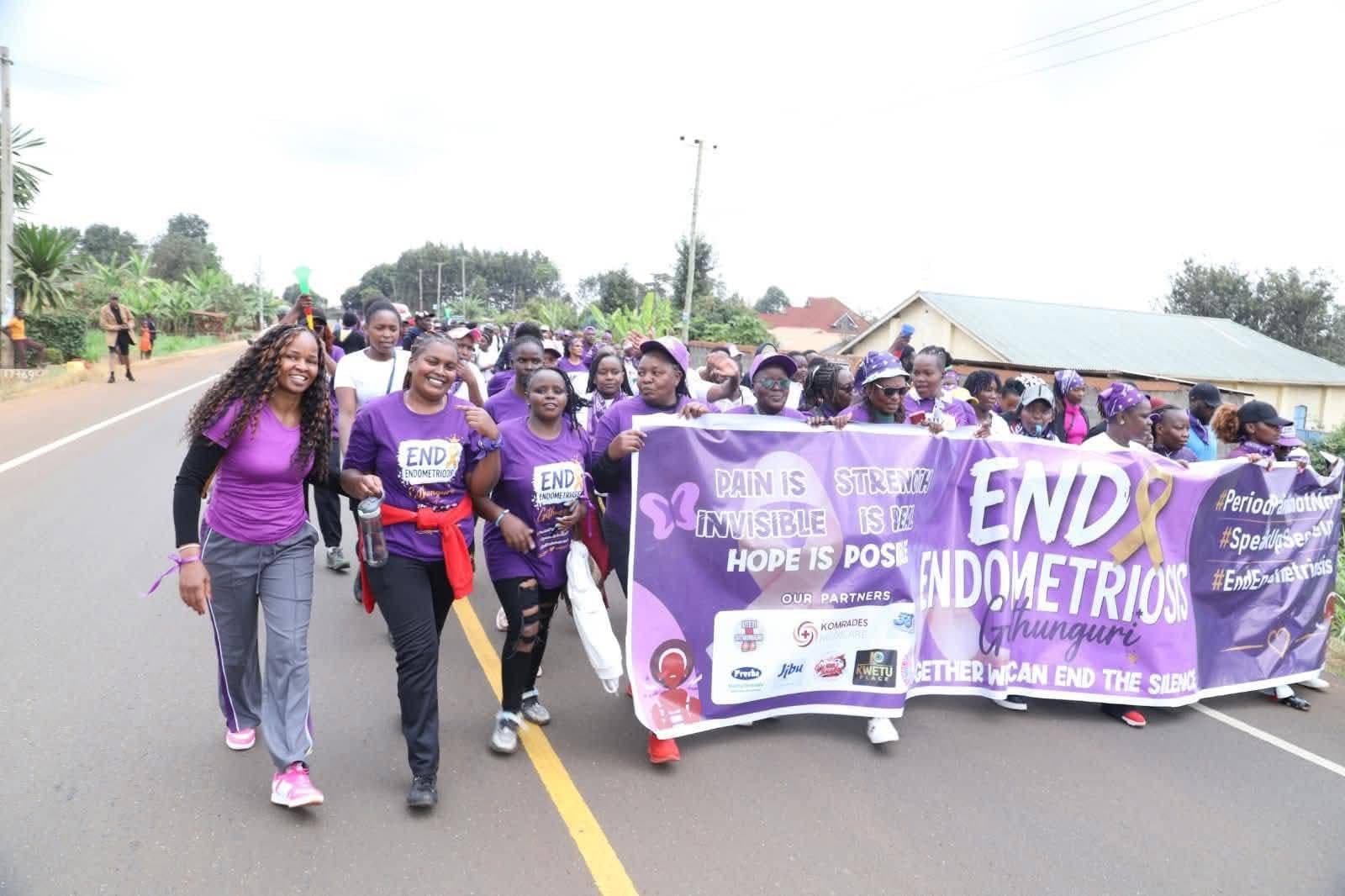
Medical experts have urged women experiencing persistent or severe menstrual pain to seek medical attention, noting that the symptoms could be linked to conditions such as adenomyosis or endometriosis.
Adenomyosis occurs when tissue similar to the lining of the uterus grows into the muscular wall of the uterus, causing it to thicken and become enlarged, while endometriosis occurs when similar tissue grows outside the uterus, including around the ovaries, fallopian tubes and other areas of the pelvis.
Dr Patrick Mwangi, a gynecologist in Kiambu County, said although the two conditions can present with similar symptoms, they are different disorders affecting different parts of the reproductive system.
“At times, both of them can cause pelvic pain and painful periods, but they affect different areas of the body,” said Mwangi.
He explained that adenomyosis affects the muscular wall of the uterus, while endometriosis involves tissue growing outside the uterus. The two conditions may cause painful menstruation, pelvic pain and heavy menstrual bleeding, making it difficult for some women to determine the cause of their symptoms without medical assessment.
Mwangi said some women with endometriosis may also experience pain during sexual intercourse, bowel movements or urination, particularly around the time of menstruation.
He noted that the severity of symptoms varies, with some women experiencing significant pain while others may have mild or no symptoms.
The gynecologist cautioned women against assuming that severe menstrual pain is a normal part of menstruation, particularly when the pain interferes with their daily activities.
He said diagnosis involves a combination of a patient’s medical history, physical examination and appropriate medical investigations before a healthcare provider determines the most suitable management.
“Women experiencing severe symptoms should seek medical assessment so that the appropriate treatment can be determined. In some cases, surgical procedures may be considered when other forms of treatment do not provide sufficient relief,” said Mwangi.
Julia Kariuki, a woman living with adenomyosis, described the condition as challenging, saying the pain interfered with her daily activities.
Kariuki said she first became aware of the condition after completing high school when she began experiencing severe pain that affected her normal routine.
She said managing the condition required her to understand her symptoms and seek medical assistance whenever the pain became difficult to control.
“I was undergoing so much pain that forced me to visit the hospital and was given a menstrual heat belt for pain management,” she said.
Kariuki’s experience highlights the challenges faced by women living with reproductive health conditions that can cause persistent pain.
Experts have continued to encourage women to speak openly about persistent menstrual pain and other reproductive health symptoms and seek medical assessment instead of assuming that severe pain is simply a normal part of the menstrual cycle.
by Mitchelle Ayuma and Grace Naishoo


Comments
No comments yet. Be the first to share your thoughts.