
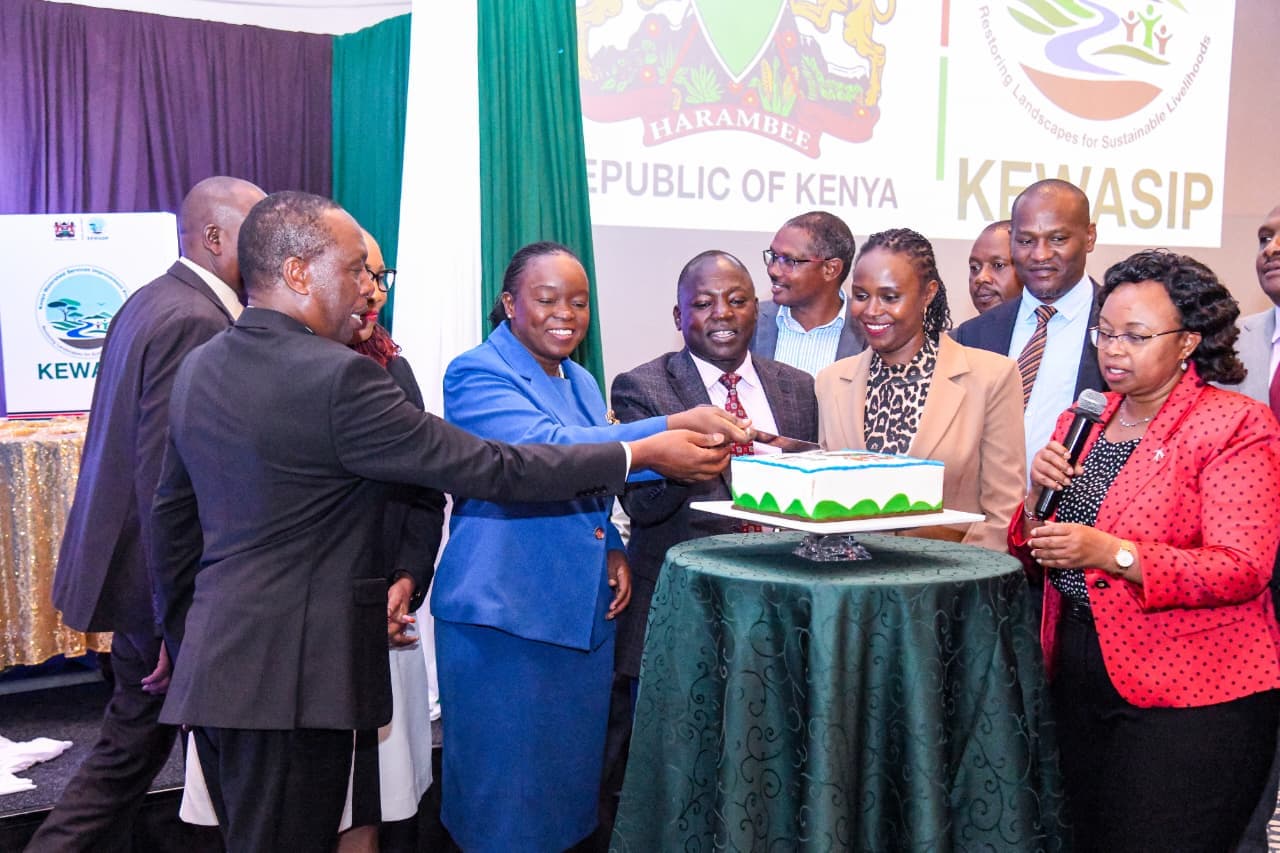
Degraded landscapes and water catchment areas across 12 counties are set to receive a major intervention under a five-year restoration programme seeking to rehabilitate 200,000 hectares of damaged ecosystems.
The US$200 million (Ksh26 billion) Kenya Watershed Services Improvement Project (KEWASIP) will focus on restoring critical water catchments, improving land management and strengthening the resilience of communities whose livelihoods depend on natural resources.
Speaking during the launch of the project on Monday, Environment Cabinet Secretary Dr Deborah Barasa said the initiative will move beyond conventional tree-planting efforts to address the underlying causes of environmental degradation through an integrated approach to landscape and watershed restoration.
“Our approach recognises that restoration must go beyond tree planting. It must address the underlying causes of degradation, improve land management, protect biodiversity and create sustainable economic opportunities for communities,” said Barasa.
The World Bank-funded programme will be implemented across five priority landscapes which include Marsabit Hills, Marmanet, Nyambene Hills, Chyulu Hills and Shimba Hills, covering 12 counties of Marsabit, Isiolo, Meru, Tharaka Nithi, Laikipia, Samburu, Baringo, Makueni, Kitui, Garissa, Tana River and Kwale.
Barasa warned that mounting pressure from unsustainable land-use practices, soil erosion and climate change was undermining the productivity of ecosystems, reducing water availability and exposing communities to droughts and floods.
She described environmental degradation as an economic and development challenge, noting that forests, rivers, wetlands and water towers sustain livelihoods while supplying water for domestic consumption, agriculture, industry and energy generation.
The Cabinet Secretary urged county governments to take ownership of the programme by incorporating its interventions into their development priorities and strengthening the protection of environmentally sensitive areas, including hilltops, riparian zones and community forests.
“Community participation, accountability and sustainability must remain central to this project. Communities must help identify priorities, implement interventions and sustain restoration efforts,” she said. 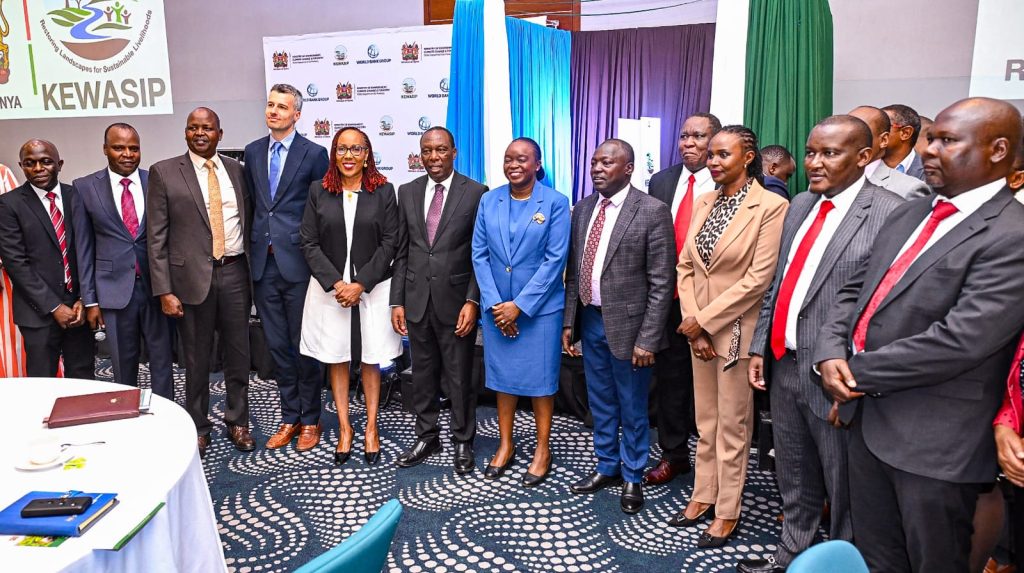
The initiative comes against the backdrop of a national restoration agenda seeking to rehabilitate 10.6 million hectares of degraded landscapes by 2032 under the National Landscape and Ecosystem Restoration Strategy.
According to the State Department for Forestry, approximately 88.6 per cent of the country’s land is at risk of degradation, while natural resources support more than 80 per cent of livelihoods.
KEWASIP is also expected to stimulate rural economies through improved agricultural productivity, employment opportunities and sustainable income-generating ventures.
Its priority beneficiaries include Community Interest Groups involved in natural resource management, Nature-Based Enterprises and vulnerable and marginalised communities.
The programme, which became effective on December 23, 2025, brings together the national and county governments alongside institutions including the Kenya Forest Service (KFS), Kenya Forestry Research Institute (KEFRI), National Environment Management Authority (NEMA) and Water Resources Authority (WRA).


Comments
No comments yet. Be the first to share your thoughts.