
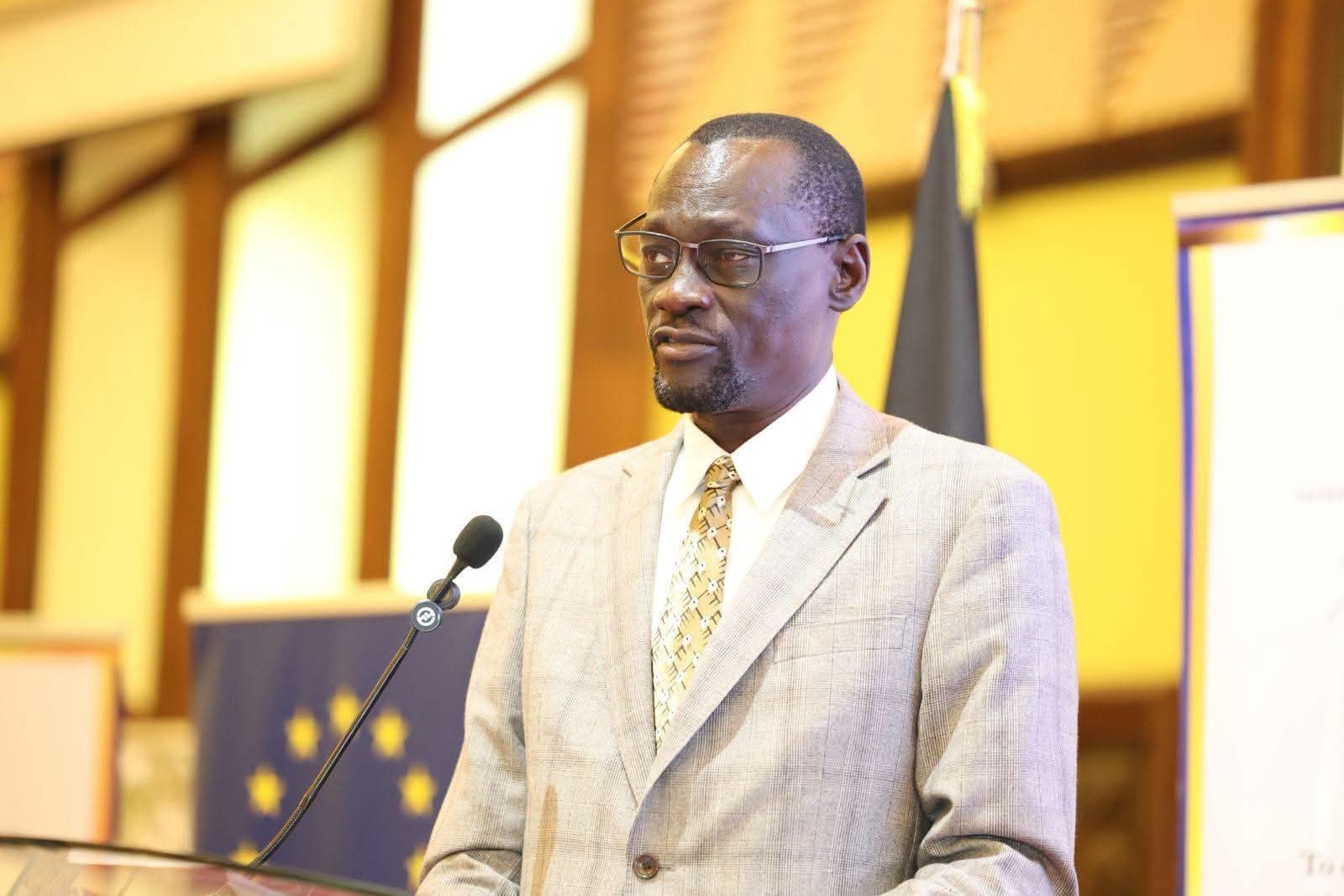
The government has reaffirmed its commitment to strengthening justice sector institutions, saying efficient and coordinated justice delivery is essential to national development, economic growth and public confidence.
Deputy Chief of Staff Josphat Nanok, representing Chief of Staff Felix Koskei, said institutional fragmentation and delays in resolving disputes continued to undermine the effectiveness of the justice system and the delivery of public services.
Speaking during the launch of three publications by the National Council on the Administration of Justice (NCAJ), Nanok called for stronger collaboration among institutions to ensure citizens receive timely and effective justice.
“The difficulty is not necessarily a lack of roads, institutions, or professional expertise, but rather it is that the institutions responsible for administering justice do not always function as one harmonious judicial system,” he said.
Nanok cited the case of a 23-year-old university graduate who lost Sh250,000 in a fraudulent overseas recruitment scheme but abandoned efforts to seek justice due to institutional barriers, saying the experience illustrated the consequences of a fragmented justice system.
He said improving the administration of justice was necessary to protect citizens, resolve disputes efficiently and strengthen the environment for economic activity.
Nanok also supported a proposal seeking NCAJ’s inclusion in the high-level team developing Kenya’s Vision 2060, saying justice sector reforms should form part of the country’s long-term development agenda.
The proposal was approved during NCAJ’s 39th statutory meeting held on October 12, 2026.
The government’s commitment to institutional reforms was underscored by the launch of the NCAJ Strategic Plan 2026–2030, which seeks to enhance accountability, strengthen coordination and improve efficiency across justice sector institutions.
The plan was unveiled alongside the Administration of Justice in Kenya Annual Report 2025/2026 and the End-Term Review Report of the NCAJ Strategic Plan 2021–2026.
Chief Justice Martha Koome, who chairs NCAJ, said effective justice delivery required institutions to work together to address systemic challenges and emerging threats, including organized crime.
She called for action against individuals financing and sustaining criminal gangs, warning that efforts to combat crime must extend beyond those directly involved to the networks supporting them.
“The goons are our children, they are brothers and sisters, they are being sustained by some who are bankrolling them,” Koome said.
The National Police Service reported that 1,827 suspects linked to criminal gangs and organized crime had been arrested and arraigned between January and August 2026, while 109 gangs had been identified during the period, up from 89 previously.
The strategic plan also prioritizes digital transformation, alternative dispute resolution and people-centered approaches to justice, with the aim of improving access to services and strengthening public confidence.
NCAJ brings together justice sector institutions to coordinate reforms, address systemic challenges and improve service delivery. The new five-year blueprint is expected to guide the sector’s reform agenda through 2030.
by Nancy Omondi and Zipporah Odionyi



Comments
No comments yet. Be the first to share your thoughts.