
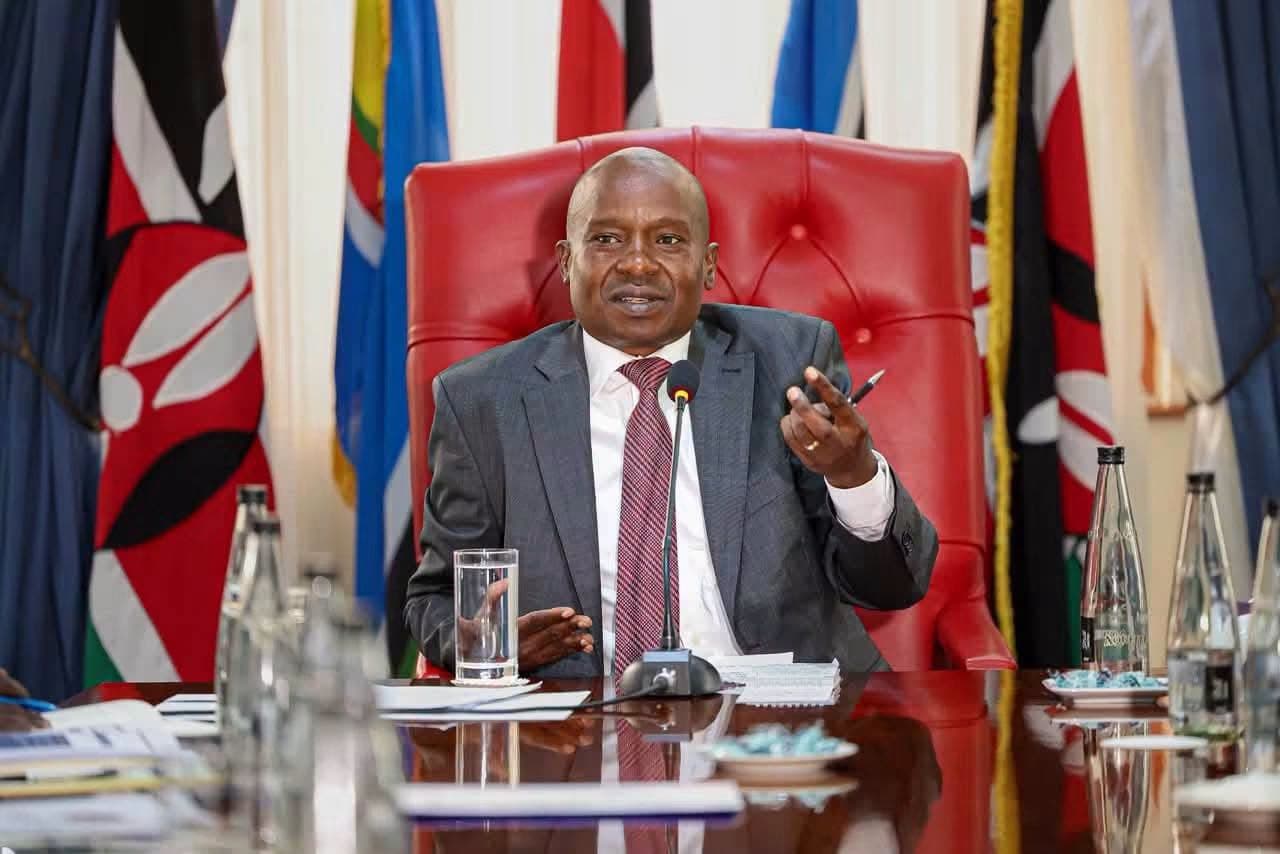
The government has intensified its crackdown on illicit alcohol and drug cartels, conducting 125 raids in the past 10 days, as it prepares tougher laws to dismantle criminal networks blamed for supplying dangerous alcoholic drinks to the public.
Deputy President Prof. Kithure Kindiki said the new laws will target manufacturers, distributors and financiers of illicit alcohol, while compliant traditional brewers will be licensed under a strengthened regulatory framework.
Kindiki said intelligence-led, multi-agency operations had resulted in nine successful raids targeting illicit ethanol and 116 other operations were conducted against illicit brews produced without adhering to public health and quality standards.
He said the government had finalized legislative proposals, aimed at tightening enforcement against manufacturers, distributors and other individuals and businesses enabling cartels to circulate chemical-laced alcoholic drinks.
The measures are intended to strengthen consumer protection, disrupt illicit supply chains and hold those responsible for endangering public health accountable.
Speaking after a high-level meeting on the illicit alcohol menace, Kindiki said coordination among regulatory and enforcement agencies had been strengthened, with a permanent mechanism bringing together State agencies and national government institutions established at Harambee House Annex.
He added that a framework for engaging local communities in the fight against illicit alcohol was expected to be released the following week.
The meeting brought together Inspector General of Police, the Director of Public Prosecutions, representatives of the Council of Governors, relevant Principal Secretaries and heads of government agencies to review progress and deliberate on additional measures.
In a further escalation of the crackdown, the government is finalizing legal measures to facilitate the forfeiture, seizure and confiscation of assets and funds linked to illicit alcohol and drug trafficking networks.
Kindiki said the proposed framework would target the financial resources sustaining the cartels, with the aim of disabling their operations and dismantling their economic networks.
Under the proposals, proceeds recovered from seized assets and funds would be directed towards the rehabilitation of people struggling with addiction.
The approach signals a shift towards targeting not only the production and distribution of illicit substances, but also the financial infrastructure that enables the criminal networks to operate.
Meanwhile, the Kenya Bureau of Standards (KEBS) has pledged to strengthen its role in ensuring alcoholic beverages sold in the country meet the required quality and safety standards.
KEBS Director-General Esther Ngari, who attended the high-level meeting chaired by Kindiki, said the Government’s measures would combine tougher legislation, improved inter-agency coordination and stricter enforcement to protect consumers.
Ngari said traditional brews that meet applicable Kenya Standards would be formalized and licensed, creating a pathway for compliant producers to operate within the law.
She noted that KEBS has standards covering opaque beers and traditional alcoholic brews, including chang’aa.
The move is intended to distinguish producers who comply with quality and public health requirements from operators manufacturing and distributing unsafe products.
Ngari reaffirmed KEBS’ commitment to working with other government agencies to enforce standards, promote compliance and safeguard public health.
The government’s strategy seeks to balance enforcement against dangerous illicit products with the formalization of traditional brewing businesses that meet the required standards.
The success of the crackdown will depend on sustained enforcement, effective coordination between national and county authorities, public cooperation and the ability to disrupt the financial networks behind illicit alcohol and drug trafficking.
Authorities are expected to continue reviewing enforcement measures as the government moves to protect consumers and dismantle criminal networks involved in the illegal trade.
By Joseph Ng’ang’a

Comments
No comments yet. Be the first to share your thoughts.