
Nearly nine out of 10 Kenyans are being forced to cut back on essential spending to meet housing costs, a new survey by Habitat for Humanity International has revealed.
The survey was contained in Habitat for Humanity’s new global housing research report titled, ‘home at what cost’? which was released on Monday in Nairobi and coincided with World Habitat Day celebrated under the theme ‘Adequate housing for All.’
The research, conducted between April and June 2026 across 22 countries, involved about 1,400 respondents in Kenya. It found that the high cost of housing is forcing many households to sacrifice basic needs to remain housed.
According to the report, 55 percent of Kenyan respondents worry that an unexpected financial shock could threaten their ability to remain housed, while a similar proportion said they have accepted housing-related safety risks because safer alternatives are unaffordable or unavailable.
“Every family deserves a safe, decent and affordable place to call home. Yet for too many Kenyans, housing affordability remains a daily challenge that forces difficult choices between shelter and other essential needs,” said Eileen Mokaya, National Director of Habitat for Humanity Kenya.
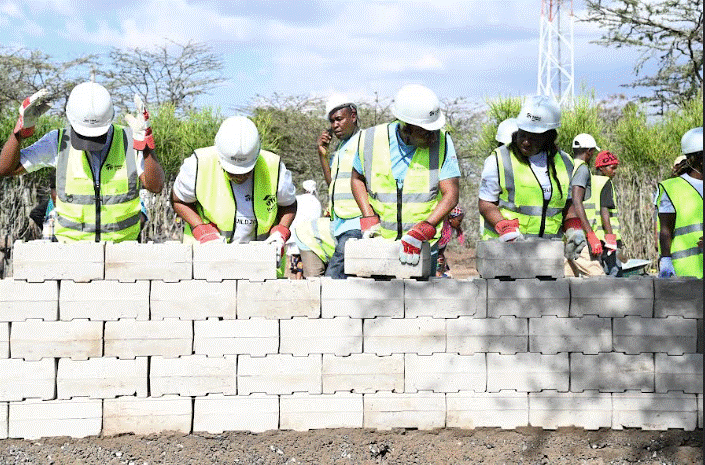
Mokaya said they were working to address the challenges through initiatives such as Building Resilient and Habitable Housing through Climate-Smart Construction Technologies and Habitability Standardizing Housing Systems.
The approach combines climate-resilient construction, improved sanitation, accessible housing designs and community participation to develop housing solutions that respond to local needs and environmental risks.
She called for greater collaboration between the government, private sector, communities and development partners to expand access to affordable, adequate and resilient housing.
The findings come as Kenya continues to grapple with a significant housing deficit. The country requires approximately 250,000 new housing units annually but produces only about 50,000, resulting in an estimated shortage of more than two million homes.
Despite the affordability challenges, Kenyans remain optimistic about their housing prospects, with 88 percent expecting their housing situation to improve within the next three years.
However, 44 percent of respondents said they were dissatisfied with their current housing situation, compared with a global average of 35 percent across the 22 countries surveyed. Only 72 percent of Kenyans said they felt secure in their right to remain in their current homes, compared with 86 percent globally.
The burden is particularly heavy among renters, with 48 percent reporting that they had cut back on food while 65 percent had taken on additional work to meet housing costs.
The survey also found that housing costs are influencing major life decisions. More than six in 10 respondents said the cost of housing makes it difficult to consider starting a family, compared with 56 percent globally.
Among parents, 61 percent said housing costs were limiting opportunities for their children, while 45 percent reported giving up personal aspirations because of their housing situation.
Housing affordability is also taking a toll on mental and emotional wellbeing, with 41 percent of respondents identifying housing as one of their biggest sources of stress, compared with a global average of 35 percent.
Globally, 75 percent of respondents said they had cut back on at least one essential expense in the past year to afford housing. Thirty percent reported spending less on food or drawing from emergency savings, while 13 percent said they had delayed or avoided medical care because of housing expenses.
Habitat for Humanity Area Vice President for Africa Abi Riak said families across the continent were showing resilience but should not be forced to choose between housing and other basic needs.
“Across Africa, families are demonstrating incredible resilience, but no family should have to choose between paying for housing and paying for food, education or healthcare,” said Riak.
She said adequate housing should be viewed as more than shelter, noting that it provides a foundation for health, economic opportunity, climate resilience and inclusive urban development.
“As African cities continue to grow, investing in decent and adequate housing must be recognized as a critical driver of sustainable development and shared prosperity,” Riak added.
by Muturi Mwangi



Comments
No comments yet. Be the first to share your thoughts.