
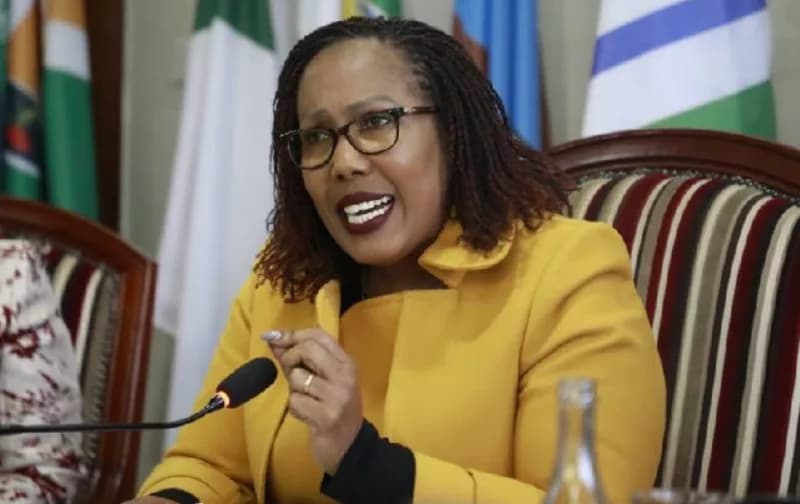
Mary Mwiti, EBS Chief Executive Officer, Council of Governors /SCREENGRAB

Kenya's digital landscape continues to expand. Platforms such as Facebook, TikTok, YouTube, Instagram, LinkedIn, X and WhatsApp have become the spaces where citizens consume information, debate public issues and engage with institutions.
As a result, government communication has changed. Gone are the days when public communication meant issuing a press release, holding a press conference or placing an advertisement in a newspaper and waiting for citizens to respond. For County Governments, this shift towards social media platforms and other forms of digital communication presents both an enormous opportunity and a significant responsibility.
Social media therefore cannot be treated simply as another noticeboard for posting photographs of meetings and speeches. It is increasingly part of the public service itself, acting as a vital tool for widespread democratic participation and catalyst for social change.
A well-managed county social media channel can explain a new health programme, tell farmers where to access extension services, alert residents about an emergency, explain a budget decision, showcase a local enterprise or direct a citizen to the office that can resolve a problem.
However, simply being online does not guarantee meaningful engagement. The greatest value of government social media is not the number of followers. It is the trust created when citizens consistently receive information that is timely, accurate, relevant and understandable. This requires County communication executives to rethink what success looks like.
First, communication must be citizen centred. The starting question should not be, "What did the Governor do today?" but rather, "What does the citizen need to know?" A commissioning of a health facility matters, but citizens are more interested in where it is, what services it offers, who can access them and how their lives will be changed.
Second, authenticity matters. Government does not have to sound like advertising. Citizens can tell genuine communication from content created simply to make an institution look good. Showing real people, real projects and real experiences can be more powerful than polished publicity.
Third, trust must be earned through accuracy. While Social media rewards speed, government communication must prioritise verification. A false post can reach far more people than the correction that follows it.
Communication teams therefore need strong systems for verifying information with technical departments before publication, particularly during emergencies and periods of heightened public interest.
Fourth, counties must listen, not merely broadcast. A social media account that only publishes announcements is only utilizing half of its potential. Citizens are asking questions, reporting problems and sharing experiences every day. Communication teams should monitor these conversations and establish clear pathways for referring legitimate service issues to the responsible departments.
Fifth, one Kenya does not mean one audience. The communication needs of a young person in Nairobi may differ greatly from those of a farmer in Turkana, a trader in Mombasa or a parent in Taita Taveta. Even within a single County, urban and rural communities may consume information differently.
This is why social media should complement, rather than replace, traditional communication channels. County governments must continue to use community radio, public meetings, local networks, websites, SMS and other appropriate channels. Kenya's County public participation framework already recognises the need to use multiple communication platforms depending on their reach, effectiveness and the diversity of the people they serve.
There are also genuine risks. Social media can amplify misinformation, deepen political tensions, expose institutions to reputational damage and create pressure for communication teams to respond before facts are established.
The answer, however, is not for government to retreat from social media. It is to become better at using it. County communication executives need clear editorial policies, rapid verification systems, crisis communication protocols, trained digital teams and regular analysis of audience behaviour.
They must also invest in compelling storytelling, data, visual communication and the capacity to produce content in formats suited to different platforms and users.
Most importantly, they must understand that digital communication is not simply about technology. It is about relationships.
The future of government communication will belong to institutions that can explain, listen, respond and build trust consistently. Social media gives County Governments an unprecedented opportunity to make Devolution more visible, understandable and accessible to the people it was created to serve.
The question is no longer whether government should be on social media, it is whether government is using that space well enough to make citizens better informed, better heard and better served.
For county governments, that is the real measure of digital communication.

Comments
No comments yet. Be the first to share your thoughts.