
Senior government officials and institutional leaders have called for stronger transparency, accountability and public engagement, to restore confidence in public institutions as Kenya prepares for the 2027 General Election.
Speaking at the inaugural Global Trust Summit 2026: ‘The Nairobi Dialogue on Global Trust,’ Head of Public Service, Felix Koskei, said rebuilding public confidence requires institutional reforms, responsible leadership and public services that respond to citizens’ needs.
In his keynote address, themed “Rebuilding Trust from the Frontline: Challenges, Prospects, and Opportunities,” Koskei emphasised that the government efforts to restore trust must translate into practical action that addresses citizens’ everyday concerns and demonstrates that public institutions serve the public interest.
He noted that regulatory authorities have a particularly important role in sustaining public confidence, because their decisions directly affect livelihoods, businesses and access to essential services.
Koskei called for fairness, transparency and consistency in setting standards and enforcing compliance, saying regulatory bodies must demonstrate integrity and accountability in carrying out their mandates.
He added that strengthening public trust requires effective oversight, measurable results and greater regional and international cooperation.
The Head of Public Service highlighted the importance of communities of practice in enabling institutions to share experiences and adopt approaches that improve service delivery.
“Ultimately, trust grows when institutions keep their commitments, take responsibility for their decisions and deliver the services citizens depend on,” he said.
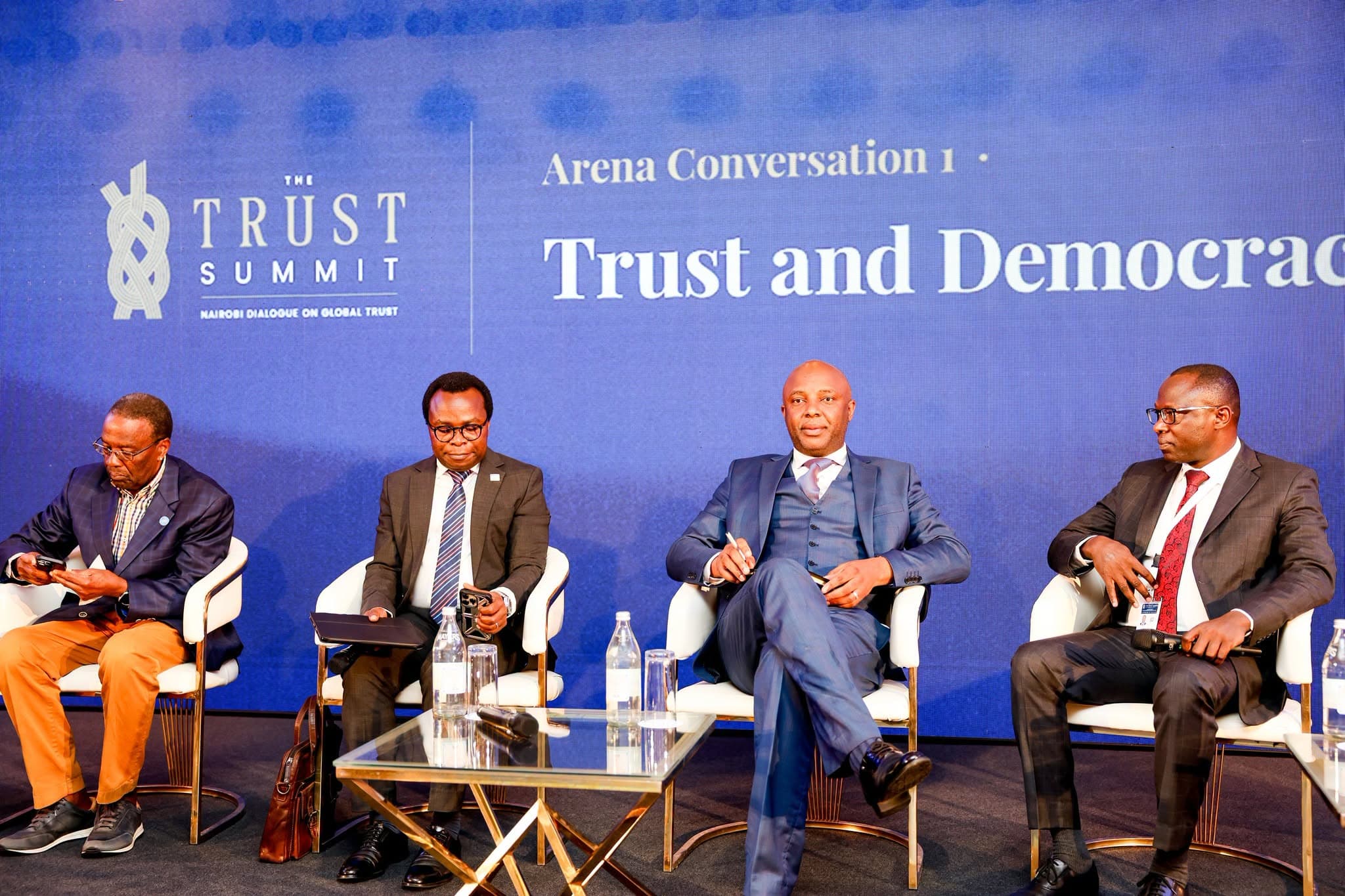
Meanwhile, Independent Electoral and Boundaries Commission (IEBC) Chairperson, Erastus Edung Ethekon, called for greater transparency, accountability and public participation to strengthen confidence in Kenya’s democratic institutions, ahead of the 2027 General Election.
Speaking during a panel discussion on Trust and Democracy, Ethekon said public confidence in electoral management depends not only on the conduct of elections, but also on transparent procedures, access to reliable information and meaningful engagement with citizens.
He said the Commission would continue working with political actors, the media, civil society organisations and the public, to promote informed participation, constructive engagement and respect for electoral processes.
“Public trust in electoral institutions is built not only through the conduct of elections, but also through transparent processes, access to reliable information, accountability in decision-making and meaningful engagement with citizens,” Ethekon said.
He added that the Constitution places sovereign power in the hands of the people, making public confidence and accountability essential to the legitimacy of democratic institutions.
“The Commission remains committed to upholding this principle and strengthening public confidence in Kenya’s electoral processes,” he said.
The Summit, held under the theme “Weaving Trust: Binding Strands for a Strong Global Order,” brought together leaders from government, the public and private sectors, civil society, academia, the media and technology, to discuss ways of strengthening institutional credibility and public confidence.
The discussions came as electoral stakeholders began preparing for the 2027 polls, placing renewed focus on transparent electoral administration, access to credible information and constructive engagement between institutions and citizens.
Among those attending the Summit were Chief Justice Martha Koome, Senate Speaker Amason Kingi, Principal Secretary for Foreign Affairs, Korir Sing’Oei, Council of Governors Chairperson and Tharaka Nithi Governor, Muthomi Njuki, and Murang’a Governor Irungu Kang’ata.
Members of the diplomatic corps and leaders from public institutions and the private sector also attended the meeting.
The Summit underscored the need for institutions to move beyond commitments and demonstrate trustworthiness through consistent performance, openness and accountability in serving the public.
By Joseph Ng’ang’a


Comments
No comments yet. Be the first to share your thoughts.