
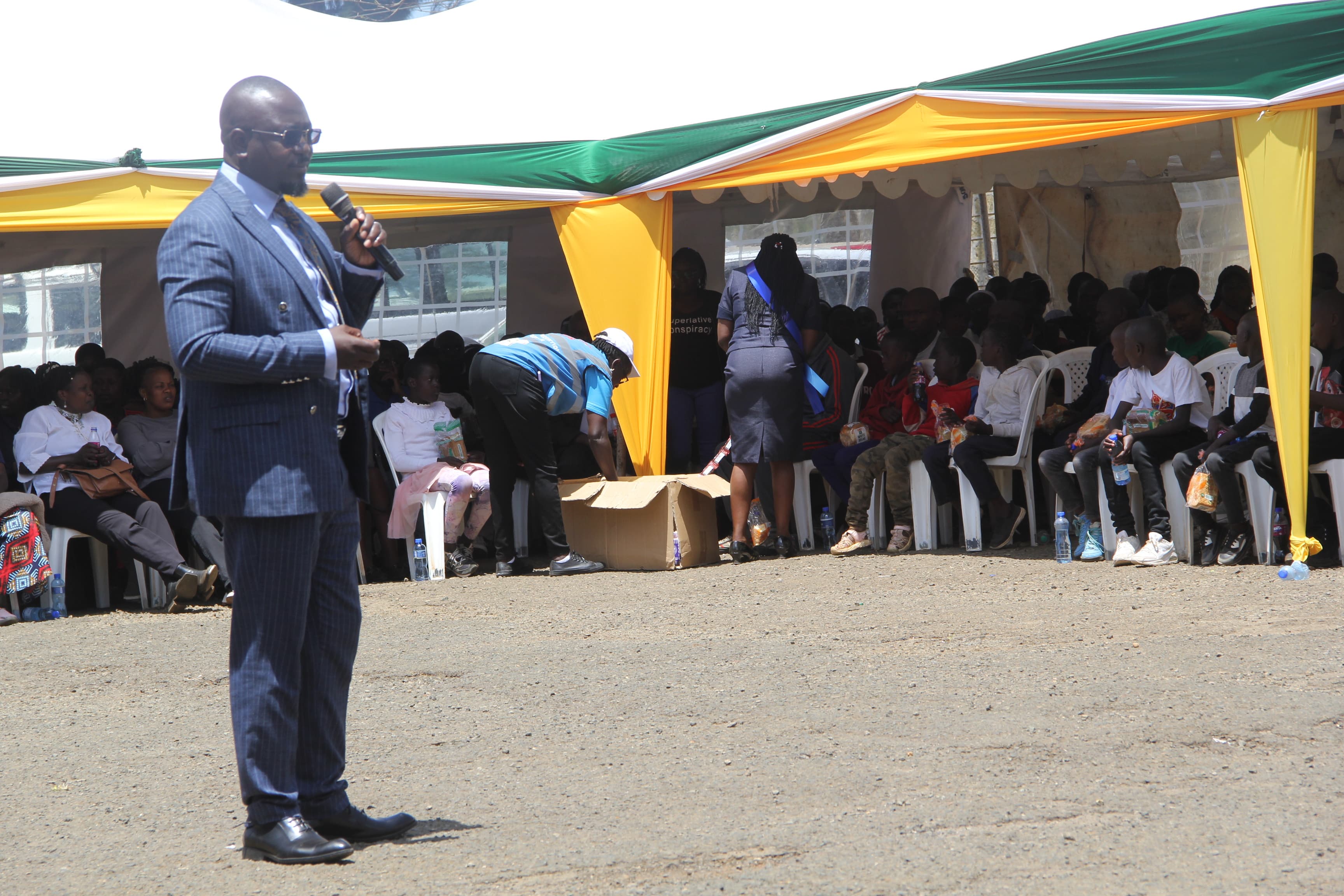
The Judiciary has stepped up efforts to strengthen the protection of children’s rights through enhanced multi-agency collaboration and faster determination of cases involving minors, as it marked the National Children’s Justice Service Month in Eldoret, Uasin Gishu County.
The month-long initiative, observed every November, seeks to strengthen coordinated action among justice sector stakeholders to safeguard childhood beyond commitments, ten years on, through multiple pathways of child-centred justice.
Speaking during the launch on Monday, The Presiding Judge High Court of Eldoret, Justice Antony Ndung’u said the initiative provides an opportunity for courts to prioritize children’s cases, review pending matters and ensure minors who come into contact with the justice system receive timely and appropriate attention.
He noted that children enter the justice system in different circumstances, including those requiring care and protection, those in conflict with the law and those who are victims of crime, all of whom require specialized handling.
The official said the Constitution requires cases involving children in conflict with the law to be determined within six months, adding that the dedicated service month was intended to address delays occasioned by resource constraints and ensure such matters receive priority.
He revealed that more than 5,000 cases involving children had been filed across the country between November last year and October this year, out of which courts had successfully concluded more than 4,600.
Only six cases involving children in conflict with the law remained pending, a development he attributed to sustained efforts by judicial officers to expedite hearings and minimize the period minors spend in custody.
The Judiciary also plans to handle more than 370 civil cases during November, largely involving child maintenance, alongside matters concerning children requiring care and protection.
He said magistrates, including the Chief Magistrate, had been assigned dedicated court sessions throughout the month to hear children’s matters and reduce the existing backlog.
The initiative brings together various stakeholders, including the Children’s Department, probation officers, remand homes, the prison department, the Office of the Director of Public Prosecutions (ODPP), the Law Society of Kenya (LSK) and the National Legal Aid Service.
Law Society of Kenya North Rift Branch Chairperson Oscar Oduor Opondo called for stronger coordination among agencies handling children’s cases, warning that weaknesses in any institution within the justice chain could undermine efforts to protect minors.
Opondo said children who come into conflict with the law should be treated as individuals requiring assistance and rehabilitation rather than being abandoned by the system.
He urged parents and guardians to seek legal assistance where children’s cases had remained unresolved, noting that matters brought forward during the month would receive priority consideration and be fast-tracked.
He also encouraged the use of mediation in appropriate family-related disputes, particularly child maintenance matters, while clarifying that criminal cases involving minors must follow established legal procedures, including diversion and plea agreements where applicable.
Meanwhile, State Counsel working with National Legal Aid Service Peris Birichi said the agency provides free legal assistance to individuals who cannot afford private legal representation, with particular attention to children’s matters.
She said the services cover custody, guardianship and maintenance disputes, as well as legal advice, mediation, preparation of court documents and assistance in securing pro bono advocates.
Birichi urged parents to take advantage of the November initiative to resolve disputes relating to school fees, custody arrangements and other parental responsibilities, particularly as families prepare for the school holidays.
He said parents could visit the agency’s Eldoret office located on the eighth floor of the Central Bank building to access the services at no cost.
On his part, Major (Rtd.) John Seii, Chairman of the Alternative Justice System in the region, called for greater involvement of parents, grandparents and community elders in addressing challenges affecting children.
He expressed concern over the weakening of family and community structures, saying inadequate parental attention and breakdowns in communication between parents and children had contributed to challenges affecting young people.
Seii said alternative justice mechanisms at the grassroots level could complement formal judicial processes by promoting dialogue, resolving appropriate family disputes and preventing children from getting into conflict with the law.
He urged grandparents and community leaders to take an active role in ensuring children receive proper care, guidance and support.
County Children’s Officer Alice Wanyonyi raised concern over declining parental involvement in the upbringing of children, saying many parents had increasingly left their children to spend time watching television at home instead of engaging with them in meaningful activities that promote moral development.
She attributed the trend to parents’ demanding work schedules and preoccupation with other responsibilities, which she said had weakened family interactions and compromised the passing of essential social values to younger generations.
Wanyonyi urged parents to deliberately create and dedicate quality time to their children, emphasizing the need to provide proper guidance, nurture positive behaviour and instill strong moral and social values from an early age.
Turbo Deputy County Commissioner Joseph Sawe, who represented the County Commissioner, urged all stakeholders to take collective responsibility in safeguarding children’s rights and ensuring that cases affecting minors receive the attention they deserve.
He cautioned parents, community members and elders against resorting to informal or kangaroo courts when handling serious offences involving children, particularly rape and defilement, urging them instead to report such cases to the relevant authorities for appropriate action through the formal justice system.
The National Children’s Justice Service Month provides an annual opportunity for justice sector institutions and other stakeholders to assess progress, address gaps and strengthen interventions aimed at ensuring every child enjoys their constitutional rights and receives justice in a timely, dignified and child-friendly manner.
By Ekuwam Sylvester

Comments
No comments yet. Be the first to share your thoughts.