
The Kenya Agricultural and Livestock Research Organization (KALRO) is advancing potato research through improved varieties, disease diagnostics and seed multiplication technologies, aimed at addressing production challenges facing farmers.
The research comes amid rising Irish potato prices, which have increased pressure on household food budgets and underscored the importance of improving productivity in the potato value chain.
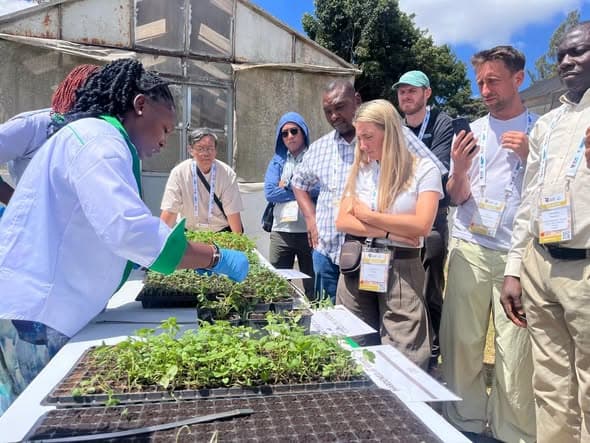
During a benchmarking visit by international delegates attending the 13th World Potato Congress, researchers at KALRO’s Horticulture Research Centre (HRC) in Tigoni, Limuru, demonstrated technologies, aimed at improving disease management and access to quality planting materials.
KALRO Director General, Dr. Patrick Ketiem, said research and innovation remained central to addressing challenges affecting potato production, particularly diseases and access to quality planting materials.
“Potato research remains critical in addressing production challenges facing farmers, particularly diseases and access to quality planting materials. Through improved varieties and innovative seed production technologies, we aim to strengthen productivity and support sustainable livelihoods,” said Dr. Ketiem.
The congress, held in Kenya from October 26 to 30, brought together approximately 1,000 delegates from 67 countries to exchange knowledge on potato research, seed production, mechanization, storage and processing. It was the first time the global congress was hosted in sub-Saharan Africa.
At the Plant Pest and Disease Diagnostic Laboratory, researchers demonstrated disease identification techniques, highlighting blackleg, as one of the potato diseases affecting farmers.
The disease can be confused with bacterial wilt, making accurate diagnosis important in determining appropriate management measures and preventing further spread.
The delegation also visited the regional potato breeding hub, where HRC Tigoni Centre Director Dr. Susan Otieno, explained how KALRO’s breeding program responds to changing market demands and consumer preferences.
The program includes developing varieties suitable for processing and export markets, as well as potatoes with red and white skins to meet different consumer preferences.
At the early-generation seed production facilities, researchers demonstrated hydroponic greenhouse production and tissue culture technologies used to multiply quality planting materials.
Delegates were also introduced to coco peat as a growing medium and the production of rooted apical cuttings. The facility produces more than sh.50,000 rooted apical cuttings monthly to support access to quality planting materials.
The research initiatives form part of KALRO’s work in developing improved potato varieties, strengthening disease management and expanding seed production, with the aim of supporting farmers and improving productivity along the potato value chain.
By Winjoy Makena and Grace Naishoo



Comments
No comments yet. Be the first to share your thoughts.