
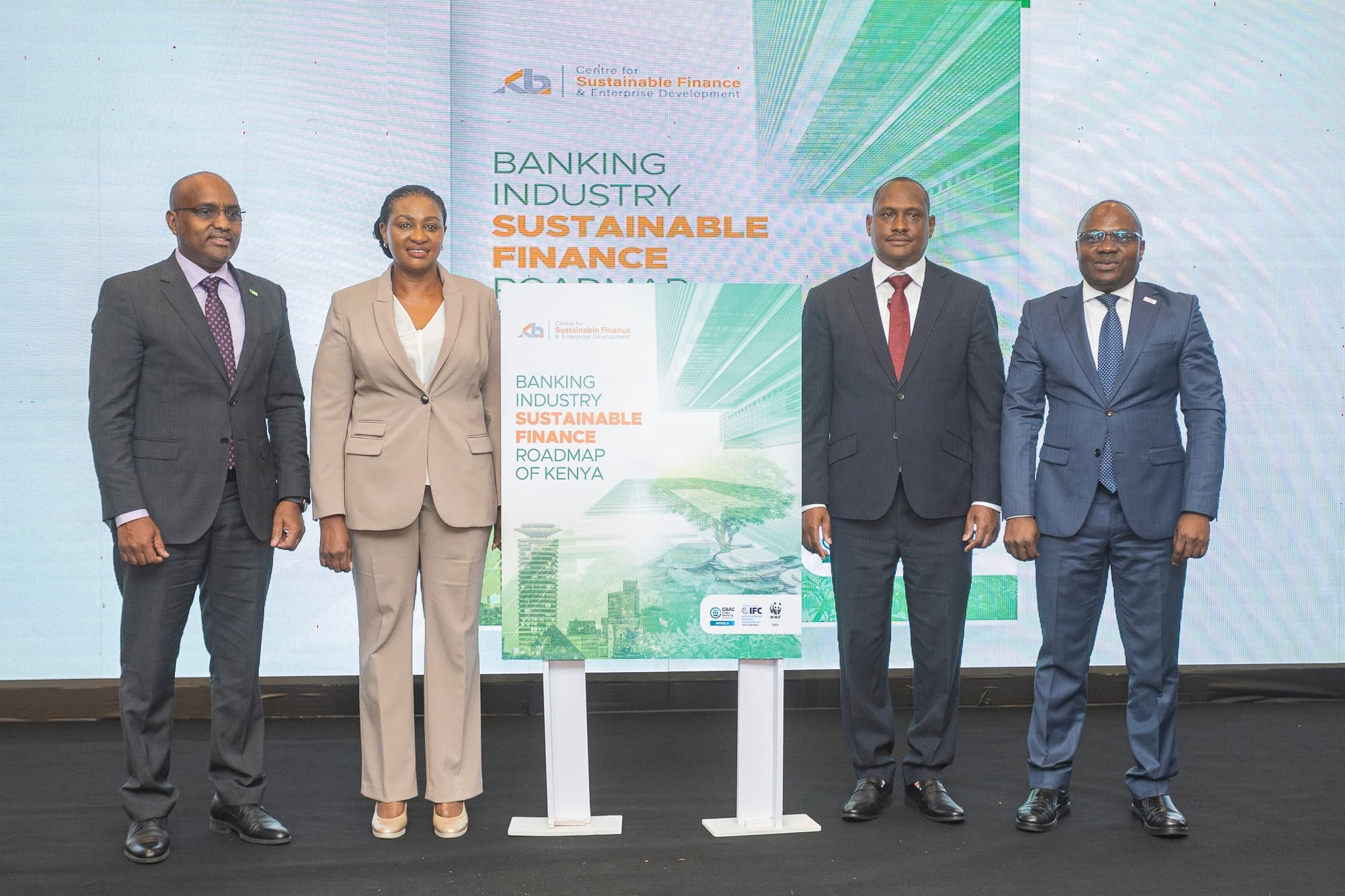
Kenya’s banking industry has been challenged to prioritise investments that protect the environment and strengthen the country’s resilience to climate change, as the sector moves towards a more sustainable approach to financing businesses and development projects.
The call was made on Tuesday during the launch of the Kenya Banking Industry Sustainable Finance Roadmap, where government representatives, banking leaders and development partners highlighted the need to align financial decisions with environmental protection and long-term economic growth.
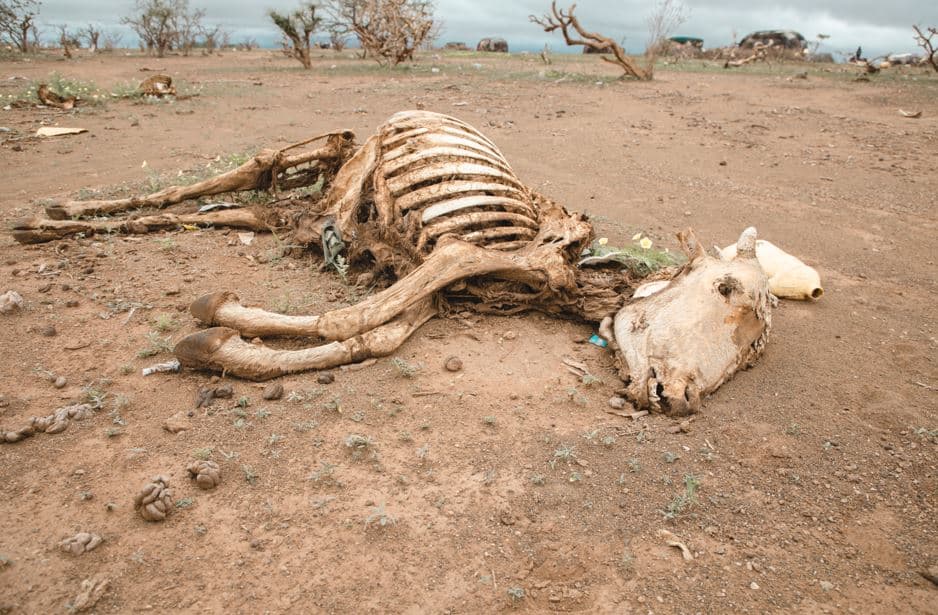
Environment and Climate Change Principal Secretary Dr. Festus Ng’eno observed that changing rainfall patterns, prolonged droughts and floods were clear indications of the growing effects of climate change.
Ng’eno, in a speech read on his behalf by Samson Tonio, Chief Executive Officer of the National Environment Trust Fund (NETFUND) challenged banks to consider environmental protection as part of the cost of doing business rather than focusing solely on financial returns.
PS said that financial institutions must take greater responsibility for the environmental impact of projects they support.
“Even as we fund businesses and activities, what we are failing to do is capture the environment as a consideration or as part and parcel of the cost of production. You cannot produce goods without soil, water or air. We have been making use of the environment, but we do not want to pay back or give consideration to the ecosystem services it provides us,” he said.
Ng’eno said Kenya’s economy depended on healthy ecosystems, reliable water resources, productive agricultural land, forests and biodiversity, warning that environmental degradation had consequences for communities, businesses and the wider economy.
“Environmental protection must therefore be understood not simply as a conservation responsibility, but as an essential part of our economic planning and long-term prosperity,” said Ng’eno.
The PS noted that laws and policies alone could not deliver the country’s environmental ambitions without adequate financing, effective implementation and cooperation among government, businesses and other stakeholders.
Ng’eno further highlighted Kenya’s climate commitments under the Paris Agreement, including the need to invest in renewable energy, cleaner transport, climate-smart agriculture, forest management and water conservation. It stressed that adaptation was particularly important for farmers, businesses and communities exposed to climate-related shocks.
Ng’eno called on banks to direct financing towards viable projects with environmental and social benefits, while strengthening their assessment of risks associated with investments.
“We need to see capital deployed into viable projects that generate tangible economic, environmental and social benefits,” he stated, adding that the government could not achieve the ambitions alone.
The PS urged financial institutions not to concentrate exclusively on profits, saying environmental protection was both an economic priority and a responsibility to future generations.
Kenya Bankers Association (KBA) Chairman and KCB Group CEO Paul Russo said the industry had made progress since ratifying its Sustainable Finance Guiding Principles in 2015, but noted that the next phase required practical action.
“The challenge for us is not simply to agree that sustainable finance matters. We must determine how to make it work in practice,” Russo said, calling for improved data, institutional capacity and better preparation of projects to attract lenders and investors.
KBA Chief Executive Officer Raymond Malonje said climate-related shocks could disrupt livelihoods, businesses and the wider economy, urging banks to develop financing approaches that support farmers and small enterprises while ensuring lending remains viable.
International Finance Corporation Senior Investment Officer Salah Elassar further stated that the roadmap was an important milestone, citing progress among Kenyan commercial banks in adopting sustainable finance principles and climate-risk reporting tools.
He said figures in the roadmap showed that all commercial banks had adopted sustainable financing principles, while 83 per cent used KBA’s climate-related disclosure templates and 73 per cent were implementing Central Bank of Kenya climate-risk guidelines.
The speakers called for stronger collaboration between government, banks, investors and development partners to mobilise capital for projects that support economic growth while safeguarding the natural resources on which the country depends.
By John Brighton and Stephen Musau


Comments
No comments yet. Be the first to share your thoughts.