
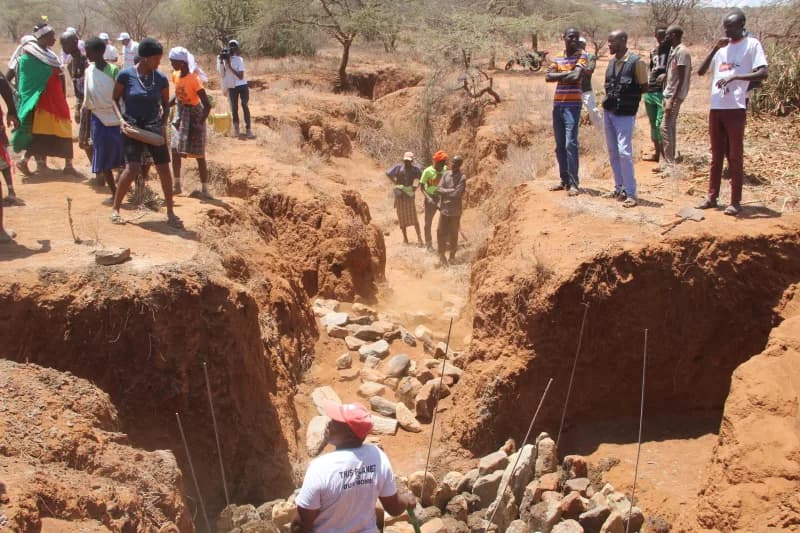
Conservationists and community members at a wildlife corridor in Laikipia county/ ALICE WAITHERA

Kenya is stepping up efforts to protect wildlife corridors, with plans underway to secure seven more routes in law after three were formally recognised.
The country has identified more than 10 wildlife corridors in Laikipia and Samburu, which provide important passageways for elephants and other wildlife between habitats.
Ben Okita, director of the Wyss Academy for Nature East Africa Hub, told a three-day meeting attended by conservationists in Nanyuki, Laikipia, that the next phase would focus on securing the remaining corridors through legal and policy frameworks.
“Out of these 10 that we identified, we have managed to secure three into law. So, we still have another seven that we have prioritised, that we will also be securing into law,” he explained.
The efforts came amid growing concerns over the loss of wildlife habitats and movement routes as human settlements, agriculture and industries expand into traditional wildlife areas.
Wildlife PS Silvia Museiya said the government had raised concerns over shrinking corridors with President William Ruto and his council of advisers, warning the trend was threatening wildlife populations and increasing conflict with communities.
The Nairobi National Park-Athi-Kapiti corridor was among the areas highlighted as being under pressure from urban expansion.
Nairobi National Park, established in 1946, has increasingly been surrounded by settlements, industries and agricultural activities, restricting wildlife movement.
Museiya observed that Kenya needed to strengthen local and cross-border cooperation, particularly between Kenya and Tanzania, to protect elephant movement routes connecting Amboseli and Mkomazi national parks.
The economic stakes are also significant. Wildlife is estimated to drive more than 70 per cent of tourism activity in Kenya, according to Museiya.
Kenya earned about Sh500 billion from tourism in 2025, while the Kenya Wildlife Service generates about Sh7.9 billion annually from wildlife-related activities.
However, KWS has previously estimated it requires Sh19.7 billion annually for conservation, leaving a funding shortfall of about Sh12 billion.
Museiya further revealed the government spends about Sh1 billion annually compensating victims of human-wildlife conflict, with elephants accounting for more than 80 per cent of the cases.
"It has become very clear that we need to map out the corridors clearly, safeguard the existing ones, mark the threatened ones and see which ones have totally closed and whether there is a possibility that they can be reopened,” she stressed.

The workshop brought together conservation practitioners and delegates from several African countries to exchange experiences on protecting elephant landscapes and maintaining ecological connectivity.
For communities living near the corridors, conservation efforts have also created opportunities to participate directly in monitoring wildlife movements.
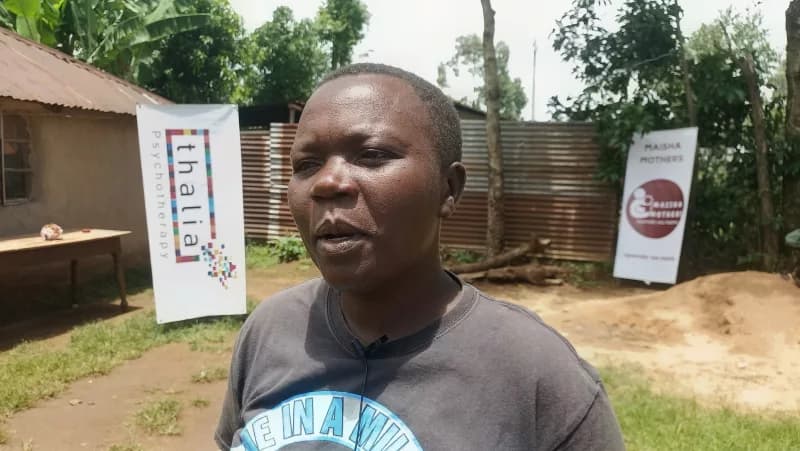
Agnes Pani, one of the women involved in corridor monitoring, explained that their work includes recording the movement of elephants and other animals, as well as monitoring human activities that could interfere with the routes.
“We monitor the elephants that pass through the corridor and collect data. We also monitor other animals and people who pass through because some may destroy the corridor,” she explained.
The monitors collect information using mobile phones, recording the number of elephants passing through, their movements and activities such as grazing or resting.
Pani said the initiative had also helped communities understand the importance of wildlife corridors, creating opportunities for employment and training.
A delegate from Gabon, Steeve Ngama, said the workshop had provided valuable lessons for his country, which is still developing its capacity to plan land use and manage wildlife populations, particularly elephants.
“We are still at the starting point of learning how to manage and plan our land, and how we can manage our wildlife populations, especially elephants,” Ngama observed.
He added that the experience would help his country improve its wildlife management plans, particularly given the importance of protecting its remaining large elephant populations.
Emmanuel Hema, a delegate from Burkina Faso, noted that Kenya had made progress in connecting elephant habitats through partnerships involving communities, county governments, the private sector and national government institutions.
He said Burkina Faso also had corridor initiatives, including two routes in the Ponasi area that had been established and were undergoing classification.
“We still need to engage communities properly in conservation. This negotiated conservation effort needs to be emphasised, and we also need to strengthen cross-border collaboration with neighbouring countries,” Hema stressed.
Leonard Mubalama, a delegate from the Democratic Republic of Congo, said the workshop had exposed participants to conservation challenges, achievements and lessons from different countries, including Kenya, Burkina Faso, Ivory Coast, Mozambique, Botswana and South Africa.
The exchanges, he observed, would help participants identify approaches that could be adapted to improve elephant landscape connectivity in their respective countries.


Comments
No comments yet. Be the first to share your thoughts.