

Kenya has moved to strengthen its participation in global carbon markets with the launch of a new guide aimed at attracting high-integrity climate investments while protecting communities, ecosystems and the country’s national climate targets.
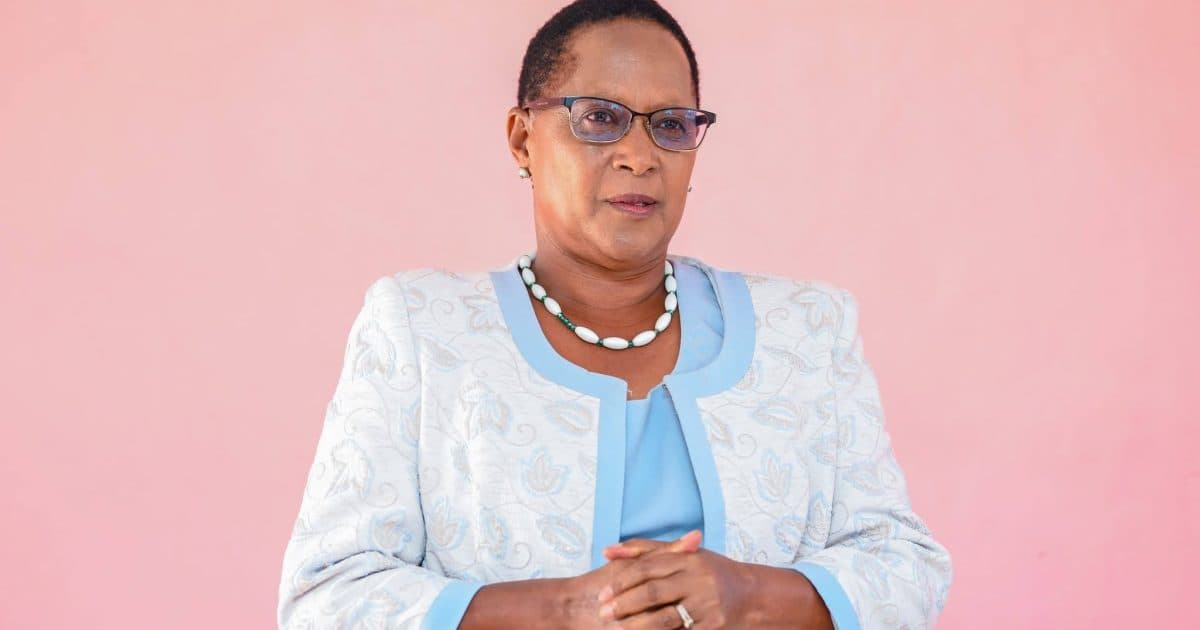
Cabinet Secretary for Environment, Climate Change and Forestry Deborah Barasa said the Kenya Guide for Strategic Engagement in Carbon Markets 2026 would provide a framework for ensuring that carbon-market investments generate genuine environmental benefits and lasting value for Kenyans.
The guide was officially launched in Nairobi on Monday in the presence of Environment and Climate Change Principal Secretary Dr Eng. Festus Ng’eno and senior representatives from Switzerland, South Korea, the European Union, the United Kingdom and Norway.
Barasa said the guide marked a critical milestone in making Kenya’s engagement in carbon markets more strategic, transparent and aligned with national interests.
“Kenya is open to responsible and high-integrity carbon investment. We are seeking quality, integrity and lasting development value,” she said.
She noted that carbon markets presented a major opportunity to mobilise private capital into renewable energy, forestry, agriculture, waste management and clean cooking, while creating jobs, supporting innovation and facilitating technology transfer.
However, she cautioned that such investments must not come at the expense of communities or the environment.
The guide is expected to provide greater clarity and predictability for investors, project developers and communities, while complementing ongoing reforms, including the establishment of the National Carbon Registry and strengthening of Kenya’s legal framework for implementing Article 6 of the Paris Agreement.
Barasa called for partnerships that deliver measurable climate benefits, strong environmental and social safeguards and equitable sharing of benefits generated by carbon projects.
She said the government’s priority was now to translate the new policy framework into concrete action and position carbon markets as a credible pathway towards a low-carbon, climate-resilient and inclusive economy.
Environment and Climate Change Principal Secretary Dr Eng. Festus Ng’eno said Kenya was moving beyond viewing carbon markets as a future opportunity and was positioning itself as a key player in shaping the emerging global carbon trading system.
“For years, carbon markets were discussed as a future opportunity. That future is now here,” Ng’eno said, noting that international trading frameworks under Article 6 of the Paris Agreement were becoming operational.
He said the new guide would strengthen Kenya’s strategic, transparent and high-integrity participation in international carbon markets.
A key provision of the guide is a 10 million-tonne cumulative ceiling for international transfers of carbon dioxide equivalent between 2025 and 2030.
Ng’eno said the ceiling would help safeguard Kenya’s Nationally Determined Contribution (NDC) targets and minimise the risk of the country overselling its carbon credits.
He said Kenya’s carbon-market strategy was anchored on four principles: predictability, uncompromising integrity, putting people before carbon, and creating value beyond carbon.
Under the framework, carbon projects will be expected to provide tangible benefits to local communities through equitable benefit-sharing, technology transfer, skills development, employment and local value creation.
The government said the approach would ensure that carbon markets contribute to national development without undermining Kenya’s climate commitments or the rights and livelihoods of communities hosting carbon projects.
The launch brought together Switzerland’s Ambassador to Kenya Mirko Giulietti, South Korean Ambassador Kang Hyung-shik, EU Deputy Ambassador Ondrej Simek, British Deputy High Commissioner and Development Director Diana Dalton, and Norwegian Minister Counsellor and Deputy Head of Mission Christian Gahre.
Kenya is now expected to focus on implementing the new framework as it seeks to attract climate finance while maintaining strong safeguards against environmental degradation, inequitable benefit-sharing and risks to the country’s carbon budget.
By Joseph Ng’ang’a


Comments
No comments yet. Be the first to share your thoughts.