
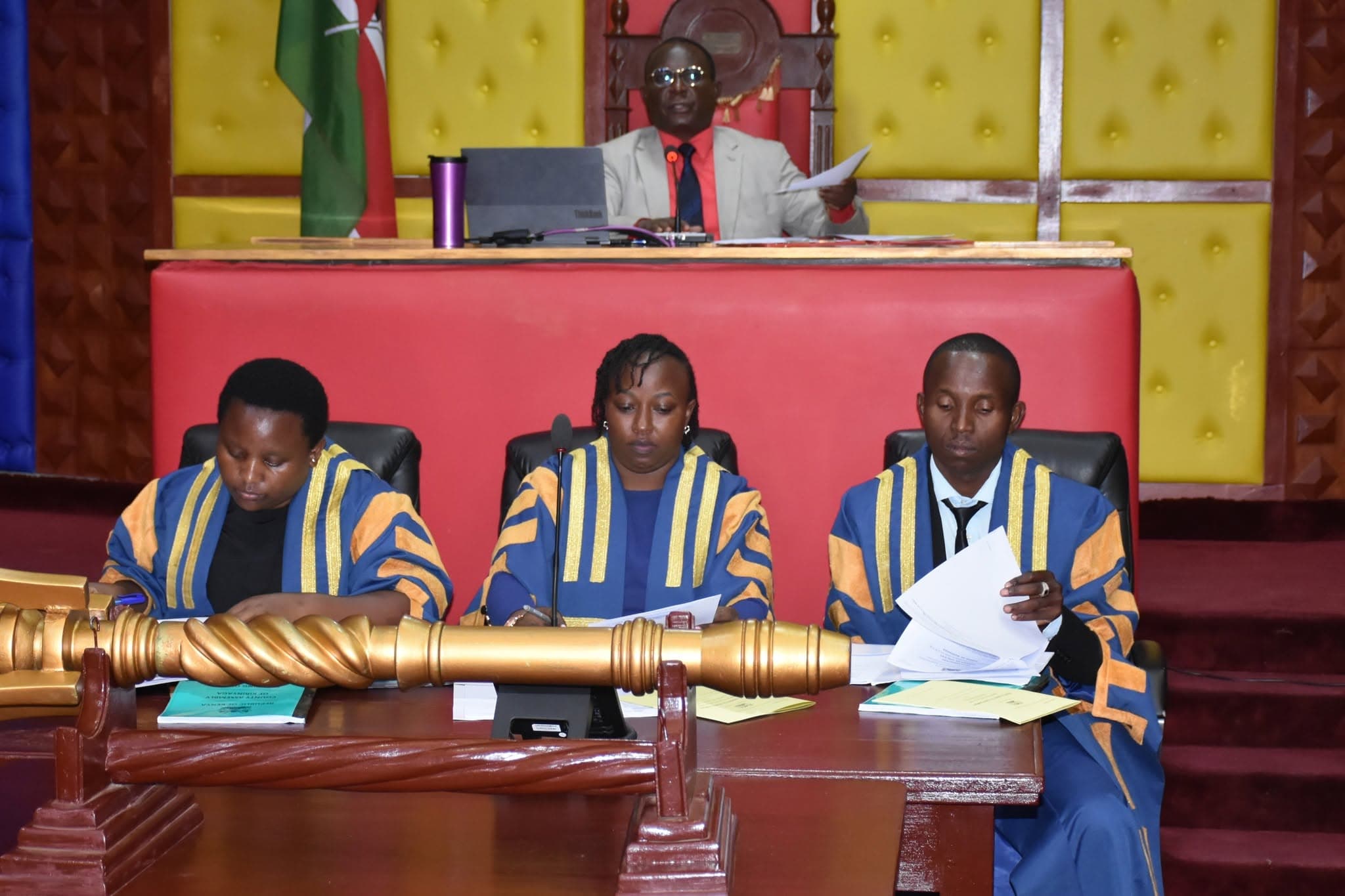
Members of Kirinyaga County Assembly have called for urgent and coordinated measures to prepare the County for anticipated El-Niño rains, warning that disaster management efforts must begin before heavy rains hit rather than wait for emergencies to occur.
The members raised concerns over what they described as inadequate preparedness by the County government, particularly in clearing drainage systems, securing vulnerable infrastructure, preparing emergency funds and strengthening public health measures.
The concerns emerged during debate on a motion by Murinduko Ward Member of County Assembly (MCA), Charles Nyamu Nyaga, on the County’s preparedness to mitigate the effects of the anticipated heavy rains.
Nyaga urged the County Executive to move beyond contingency plans and implement practical measures to protect lives, livelihoods, infrastructure and essential services.
“We can’t see so much happening regarding desilting of the waterways and opening up areas where we expect flooding,” Nyaga said.
He called on the Departments of Finance, Roads and Transport, Environment, and Medical Services, to explain the measures they had put in place ahead of the rains.
The Finance Department, he said, should provide details of the County Emergency Fund and indicate how much money was available for preparedness and emergency response.
The Roads and Transport Department was challenged to accelerate the opening and cleaning of waterways, while the Environment department was urged to clear garbage from towns and markets to prevent blockage of drainage systems.
Nyaga also called for greater preparedness within the health sector, citing the expected increase in waterborne and vector-borne diseases following heavy rains and flooding.
The Assembly through the Deputy Speaker, Njinaro Njamumo, directed the Finance Department to submit to the House within seven days a Report on the status of the emergency fund, including available resources and how they could be used for preparedness, mitigation and response.
“The Department was also directed to provide an estimate of the financial requirements for the proposed interventions, identifying responsible departments and potential sources of funding,” the Deputy Speaker noted.
The Roads, Transport and Public Works Department was given 10 days to assess drainage systems and storm-water channels in major towns, markets and other vulnerable areas and prioritise cleaning, desilting and unclogging of infrastructure presenting an immediate flooding risk.
The Health and Public Health Department was directed to assess preparedness for disease outbreaks and other health emergencies, while ensuring adequate stocks of essential medical, public health and water-treatment supplies.
The Environment, Energy, Climate Change, Natural Resources, Water and Irrigation department was also directed to submit a comprehensive disaster preparedness and response strategy covering high-risk areas, early-warning systems, evacuation procedures, temporary relocation centres, protection of critical infrastructure and agricultural livelihoods, as well as coordinate with national government agencies and other stakeholders.
Kangai Ward MCA, James Wambu, urged the County Government and the Governor’s office to work closely with MCAs and other departments to ensure residents are protected from flooding. He also raised concerns over the vulnerability of farmers, saying they needed to be sensitized on crop varieties capable of withstanding heavy rains.
Mukure Ward MCA, Thomas Mwangi, said several villages in the county remained vulnerable to flooding and accused the County Executive of not doing enough to address recurring risks. “Kianjang’a village in Baricho area is one of the locations prone to flooding. I urged the County government to act before lives and property were lost.” Mwangi pleaded.
Health Committee Chairman, Bosco Gichangi, said the County had already set aside funds for emergencies but questioned lack of visible interventions in flood-prone areas. He called for public health teams to visit affected villages, educate residents on preventive measures and address sanitation concerns.
Gichangi also cited Kagumo, where water flows from Gathuthuma towards the town, saying blocked and damaged culverts continued to worsen flooding.
“I urged the County government to pursue permanent solutions to recurring flooding instead of relying solely on emergency responses whenever heavy rains occur,” he noted.
The MCAs said the anticipated rains presented an opportunity for the County Government to strengthen disaster preparedness, improve drainage infrastructure and establish long-term measures for communities that experience repeated flooding.
by Mutai Kipng’etich


Comments
No comments yet. Be the first to share your thoughts.