
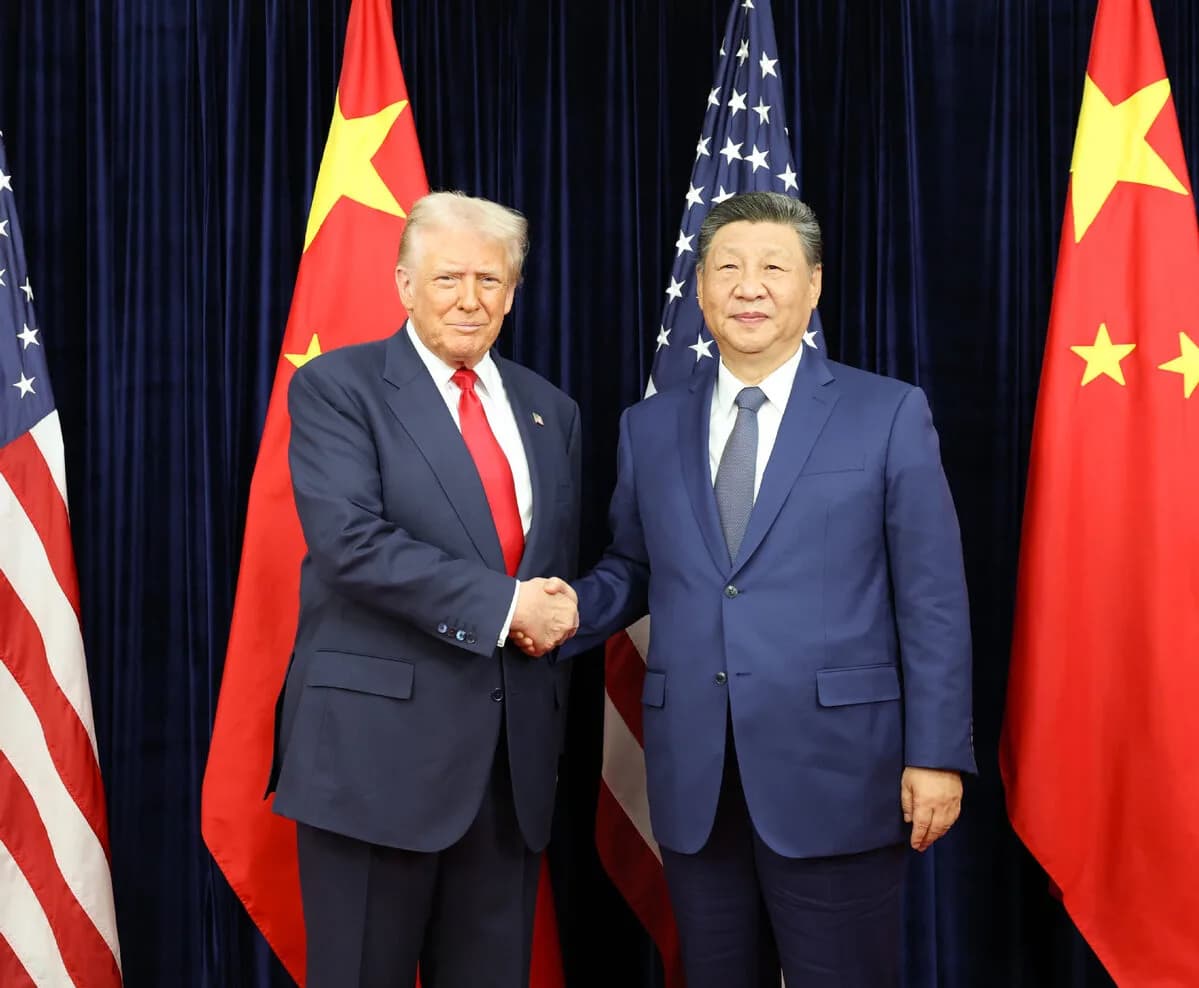
When Chinese President Xi Jinping arrives in the United States this week for a state visit at the invitation of President Donald Trump, the significance of the meeting will extend far beyond Washington and Beijing.
Xi will visit the United States from September 23 to 25, with the two leaders expected to discuss China-US relations as well as wider questions of peace and development. The visit, coming within six months of their previous meeting, underlines the importance both sides attach to direct engagement at the highest level.
For a world facing wars, economic uncertainty, supply-chain disruptions and rapid technological change, sustained dialogue between the world’s two largest economies matters.
Xi’s willingness to maintain high-level engagement with Washington is significant. China has consistently emphasised dialogue, mutual respect and cooperation while properly managing its differences with the United States. The coming visit provides another opportunity for the two sides to put those principles into practice.
The relationship between China and the United States is too consequential to be defined entirely by competition.
The two countries have profound differences in political systems, values and governance models. But alongside those differences is an equally important reality: there are areas where cooperation serves the interests of both countries and the wider international community.
The talks taking place ahead of Xi’s visit offer some encouragement.
On Sunday, Chinese Vice Premier He Lifeng held economic and trade discussions in New York with US Treasury Secretary Scott Bessent and US Trade Representative Jamieson Greer. Chinese officials described the exchanges as candid, in-depth and constructive, with both sides discussing economic and trade issues as well as artificial intelligence.
That is particularly important for the global economy.
China is a major trading nation and an important partner for economies across Asia, Africa, Latin America and other parts of the developing world. Its economic relationship with the United States is therefore closely watched far beyond the two countries.
Trade disputes between Beijing and Washington do not remain confined to them. Their effects are felt in factories, farms, shipping routes, commodity markets and technology companies around the world.
For developing countries, including those in Africa, the stakes are particularly high.
African economies need stable markets, investment, technology and reliable access to global supply chains. China has become an important trading and investment partner for many African countries, while the United States remains another major economic partner.
A more stable China-US relationship gives countries such as Kenya greater room to pursue economic partnerships based on their own development priorities.
This is why Xi’s emphasis on stability, peaceful coexistence and win-win cooperation matters beyond China’s borders.
Competition does not have to mean confrontation. China and the United States can engage in healthy competition in technology, manufacturing and trade while maintaining open communication on the basis of mutual respect and in line with market rules. Dialogue is the right choice when when competition grows intense, whereas economic decoupling or technological suppression is never the feasible option. The United States should quit unilateralism and bullying behaviour when managing its relations with China.
Artificial intelligence is a particularly important example.
China has emerged as the world’s leading AI and technology powers behind only the United States. Their recent discussions included AI-related issues, showing how technology is becoming an increasingly important part of their relationship.
There is an opportunity for both countries to contribute to a global conversation about safe, responsible and inclusive AI.
AI is already changing healthcare, education, agriculture, finance, manufacturing and public administration. Cooperation between major technology powers can help ensure that its benefits extend beyond the world’s wealthiest economies.
For Africa, this matters enormously.
The continent is looking for technology that can improve productivity, expand access to services, create jobs and support development. Stronger China-US engagement can contribute to a more predictable international environment in which African countries can work with both sides.
Trade is another area where incremental progress could have significant consequences.
The recent New York discussions focused on economic and trade issues of common concern and on implementing understandings reached during previous talks.
Such measures may appear technical, but they matter. Greater predictability allows businesses to plan, invest and create employment with greater confidence.
This does not mean China and the United States will suddenly agree on everything.
They will not.
Nor should their differences simply be ignored. Major powers have legitimate interests, and difficult questions will continue to require patient diplomacy. The important point is that disagreements can be managed pragmatically on the basis of proper mutual perceptions.
This is where Xi’s approach of maintaining dialogue assumes importance.
The reciprocal engagement between Xi and Trump demonstrates that direct communication between the two countries, the two heads of state in particular, remains vital when the relationship faces challenges. Leaders who keep talking have more opportunities to resolve misunderstandings, reinforce agreements and identify areas where cooperation remains possible.
For the rest of the world, that engagement carries an important message: major-country relations do not have to become a zero-sum contest.
There is enough room for China and the United States to pursue their respective development paths while contributing to global stability and growth.
The challenges facing the world — climate change, energy security, food security, technological disruption and economic uncertainty — are too large for countries to tackle in isolation.
None becomes easier when major countries stop talking.
Xi’s visit therefore offers an opportunity to demonstrate that healthy competition can coexist with practical cooperation.
The meeting should not be judged only by whether it produces a dramatic breakthrough. Diplomacy can also succeed through smaller achievements: keeping communication open, resolving specific disputes, enhancing stability and predictability, and creating confidence for future engagement.
The world does not need China and the United States to agree on everything. It needs them to find the right way to get along based on mutual respect and proper mutual perception, manage their differences responsibly, cooperate where their interests converge and ensure competition does not become confrontation.
For Africa and the wider developing world, a constructive China-US relationship of strategic stability would create greater space for trade, investment, technology and development.
That would be good for China, good for the United States and, importantly, good for the many countries whose economies and futures are connected to both.
Elijah Mwangi is a scholar based in Nairobi who comments on local and global affairs.



Comments
No comments yet. Be the first to share your thoughts.