
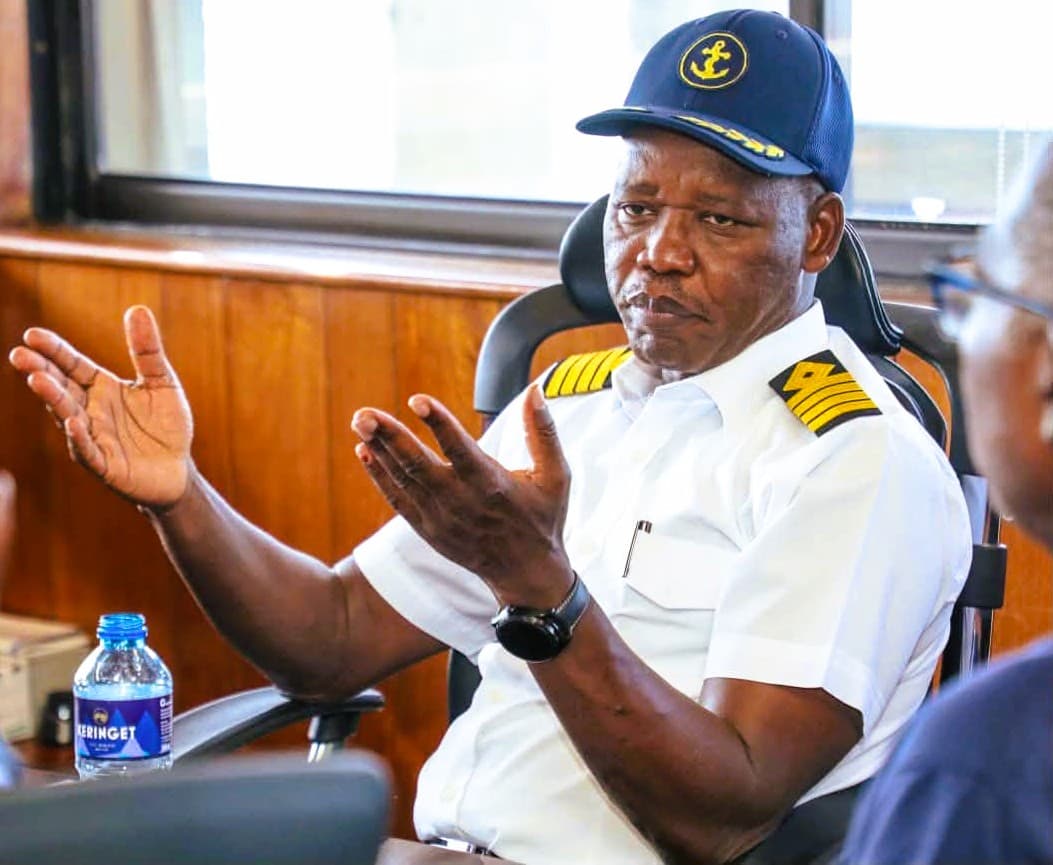
A proposal to strengthen maritime pilotage at the Kenya Ports Authority PLC (KPA), could soon move from discussion to action, following engagements between KPA Chief Executive Officer (CEO), Capt. William Ruto and representatives of the Royal Danish Embassy, under the Strategic Sector Cooperation (SSC) Programme in Maritime Affairs.
The initiative comes as Kenya seeks to enhance navigational safety, operational capabilities and maritime skills development in support of growing port activities.
Maritime pilotage is the practice of using specialized local experts, known as maritime pilots, to safely guide ships through congested, hazardous, or restricted waterways like harbours, rivers, and ports.
They remain critical to maritime safety, particularly when cruise and cargo ships encounter complex navigational conditions at sea.
The discussion forms part of the ongoing SSC programme, that aims at deepening collaboration and creating greater opportunities for the country including, fast-tracking the implementation of the International Convention on Standards of Training, Certification and Watchkeeping for Seafarers (STCW) to empower Kenyan youth with globally competitive maritime skills and enhance coordination frameworks that unlock international seafaring opportunities.
The proposed fact-finding and needs assessment mission, will explore opportunities for cooperation in pilot training, competency development, simulation-based learning and pilotage best practices.
Denmark has identified support for the training of seafarers and maritime pilots among the key pillars of its maritime cooperation programme with Kenya.
Capt. Ruto described pilotage as “one of the most critical services provided by a port”, noting that it serves as the first operational interface between a vessel and the port and has a direct bearing on safety, efficiency and customer confidence.
He says KPA is strengthening its maritime pilotage and port capabilities through structured professional and strategic training programmes benchmarked against international standards.
The KPA CEO says the Authority welcomes opportunities to draw from international best practice as it strengthens the skills and systems required to support future port growth.
He says KPA is building the infrastructure, economic capabilities and international partnerships required to become an increasingly important player in the global maritime trade.
Speaking on the Authority’s future pilotage requirements, Capt. Ruto said KPA is also evaluating emerging operational needs as port activity expands along Kenya’s coastline, particularly at the Lamu seaport.
“As KPA we remain steadfast in working with international partners in expanding opportunities for strengthening maritime governance and unlocking the full potential of the blue economy sector,” he said.
He says marine pilots have responsibilities that extend beyond the safe movement of vessels as their work extends into maritime security, environmental protection and the long-term sustainability of maritime transport.
Ruto noted that growing vessel traffic and the wider geographical spread of port zones in Mombasa, Lamu and Kisumu would require the Authority to explore additional pilot deployment options alongside conventional marine pilot transfers.
Capt. Ruto said helicopter-supported pilot transfers are among the options under consideration, explaining that such capabilities could complement existing arrangements by improving operational flexibility whilst reducing deployment times and enabling pilots to be positioned more efficiently across multiple locations where circumstances require.
The helicopter budgeted at Sh 400 million is primarily intended to transport marine pilots between the Port of Mombasa and the Port of Lamu, as well as to support maritime surveillance, emergency response, and search-and-rescue operations.
The Port of Mombasa is the premier maritime gateway to East and Central Africa serving as a critical trade lifeline that connects over 80 global ports, to a vast landlocked hinterland.
The Port serves a wide and rapidly growing hinterland consisting of Uganda, Rwanda, Burundi, South Sudan, Northern Tanzania, Democratic Republic of Congo and Ethiopia.
Mombasa Port spans natural deep-water inlets, including Kilindini Harbour, Port Reitz, the Old Port, Port Tudor, Mbaraki and the whole of the tidal waters encircling Mombasa Island and has a capacity of 2.65 million (Twenty-foot Equivalent Unit) TEUs.
According to KPA the Port of Mombasa handled a record 45.45 million metric tonnes of cargo in 2025, marking a 10.9 percent increase (up 4.46 million tonnes) compared to the 40.99 million tonnes processed in 2024.
Capt. Ruto emphasized that any future development would be guided by operational requirements, international safety standards and the Authority’s commitment to maintaining efficient vessel movements across its ports.
“Should the initiative proceed, the assessment is expected to inform a structured roadmap for advancing pilotage capabilities and strengthening maritime expertise within KPA and the wider Kenyan maritime sector,” he said, adding that navigation is a vital factor in ensuring maritime safety.
Capt. Ruto emphasized on the importance of upgrading port infrastructure and technical capabilities to complement ongoing modernization efforts at the Mombasa and Lamu seaports.
“Our engagement with foreign partners underscores our shared commitment to strengthen maritime cooperation, enhance port efficiency, promote sustainable operations and unlock new investment opportunities across the maritime and logistics value chain,” he said.
He added ‘the expansion of KPA infrastructure reflects a wider commitment to building an economy that is more connected, diversified and resilient’.
Ruto said as shipping becomes more technologically advanced and environmental sustainability becomes a greater priority for the maritime industry the people guiding ships through increasingly complex waters will have to evolve with them.
Speaking on the proposed collaboration, Jesper Duer Pedersen, Maritime counsellor with the Royal Danish Embassy, said the engagement reflects Denmark’s commitment to practical maritime partnerships.
Dr. Pedersen added that Kenya and Denmark share a common interest in safe, efficient and sustainable maritime transport, with knowledge exchange and technical cooperation offering tangible operational benefits for the blue economy sector.
He said strengthening the capacity and role of marine pilots who guide vessels safely into and out of ports would be essential as the international shipping industry evolves.
The maritime advisor said the collaboration would ensure all navigation systems and services operate optimally, reliably and comply with domestic and international standards.
He said the engagements reaffirm the strong partnership between Denmark and Kenya in their shared commitment to building a resilient, innovative, and globally competitive maritime industry that delivers jobs, investment, and sustainable economic growth.
By Hussein Abdullahi



Comments
No comments yet. Be the first to share your thoughts.