
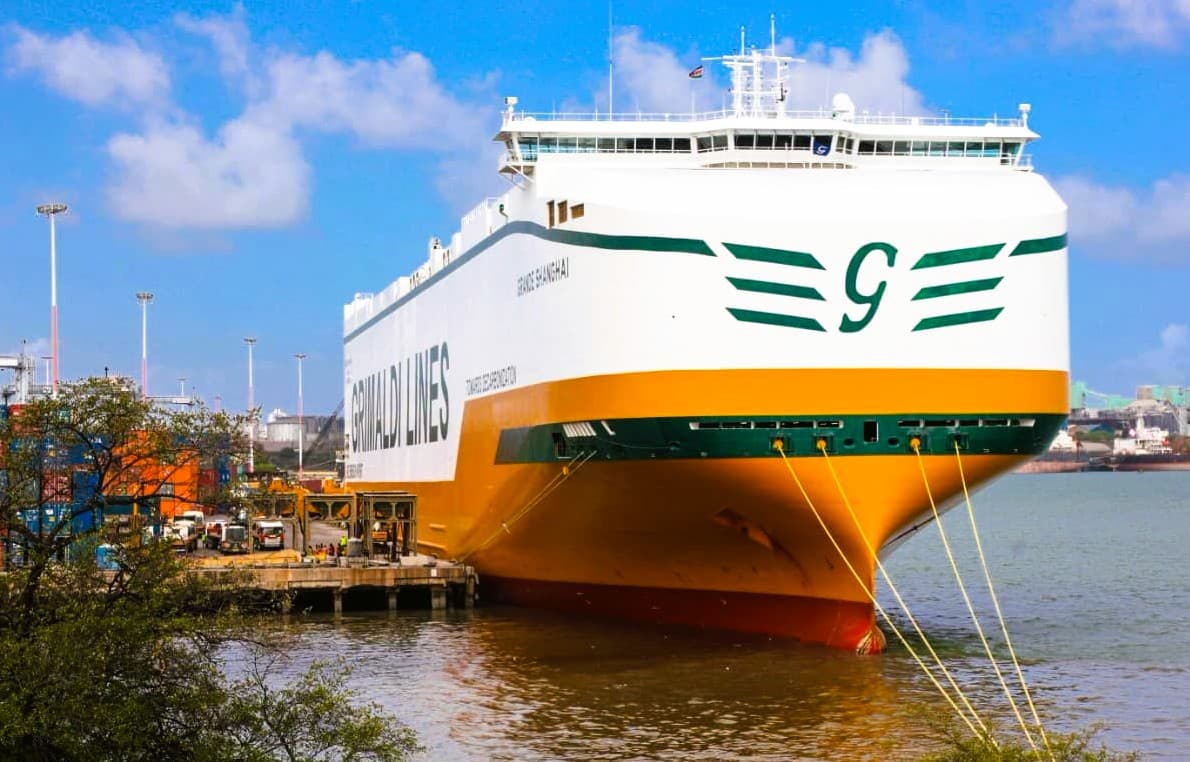
Kenya Ports Authority (KPA) and the Royal Melbourne Institute of Technology (RMIT) University of Australia, have launched a Memorandum of Understanding (MoU) to collaborate on research aimed at advancing shipping, maritime trade and the blue economy.
The partnership seeks to find practical solutions to operational challenges experienced in the sector to improve service delivery and enhance trade in the region.
The blue economy sector also known as the sustainable ocean-based economy encompasses fisheries, maritime biotechnology, aquaculture, tourism and marine transport and logistics.
The agreement was unveiled during a roundtable conference with stakeholders from the shipping and maritime industry, academia and development partners at KPA headquarters in Mombasa.
Discussions focused on how the MoU will be implemented and the most pressing industry needs the collaboration will address.
Key areas identified for joint research include automation, artificial intelligence, sustainability and greening, e-mobility, shore powering, data mining and the blue economy.
Several institutions of higher learning are part of the agreement, including the University of Nairobi, the Technical University of Mombasa and Embu University.
Industry stakeholders contend that these institutions of higher learning will work closely with KPA to identify areas of mutual interest.
The move has been hailed as an initiative aimed at strengthening Kenya’s position as a global maritime hub while supporting regional trade efficiency and economic growth.
The development is expected to enhance cargo movement, improve operational capabilities, and create new opportunities across the shipping and maritime sectors.
The Port of Mombasa is the premier maritime gateway to East and Central Africa serving as a critical trade lifeline that connects over 80 global ports to a vast landlocked hinterland.
The port links international shipping lines to millions of people and acts as the starting point of the Northern Corridor that links Kenya’s coast to Uganda, Rwanda, Burundi, the Democratic Republic of the Congo (DRC), and South Sudan.
Speaking at the event, KPA Chief Executive Officer (CEO) Capt. William Ruto said the collaboration comes at a critical time when the industry is evolving.
“Even as we celebrate the launch of this MoU as a major milestone, our true measure of success will be how effectively we translate it into research, training and practical solutions that add value and respond to the needs of the maritime industry,” he said.
Ruto said automation and artificial intelligence drive modern sustainability and greening in ports by optimizing energy use, reducing idle times, and cutting carbon emissions.
He said the discussions underscored a clear message that the future of maritime is increasingly green, digital and connected, and preparing for it requires collaboration, investment in infrastructure, research, and the development of the skills needed for tomorrow’s maritime industry.
“We seek to transform the ports of Mombasa, Lamu and Kisumu from the traditional transit channels into modern, research-driven logistics hubs,” he said, noting that Kenya will use its waterways extensively for economic sustenance and growth.
Capt. Ruto said KPA continues to advance the development of maritime infrastructure through major investments in ports, shipping connectivity, and coastal logistics.
The KPA CEO said stakeholders from Trademark Africa, the Kenya Maritime Authority, Kenya Ships Agents Association and RMIT shared their perspectives during a panel discussion on how research-led collaboration will transform the industry.
Kenya Ships Agents Association (KSAA) CEO Elijah Mbaru highlighted the growing importance of the Internet of Things (IoT) as the maritime industry embraces new technologies and transitions towards greener energy solutions.
He noted that as vessels increasingly adopt green technologies, it is essential to equip maritime professionals with the skills needed to operate the vessels of tomorrow.
Mbaru also emphasized the importance of collaboration across the maritime ecosystem to ensure that ports, shipping lines, agencies and other supply-chain stakeholders can effectively integrate emerging technologies and maintain seamless operations.
He called for greater support for ports to adopt shore power as part of the industry’s transition towards cleaner and more sustainable maritime operations.
He also underscored the need for Port, Government and other Agencies (PGAs) to accelerate the shift from traditional manual processes to integrated digital platforms, enabling faster information sharing, stronger connectivity and greater efficiency across the maritime supply chain.
Prof. Victor Gekara, Director of the Centre for African Engagement at RMIT, said industry connections and partnerships are central to the university’s work.
Prof. Gekara noted that the KPA-RMIT collaboration will focus on impactful joint research, staff exchange programs for capacity building and regular value-creating engagements.
The don said the MoU that was signed in May 2026, establishes a framework for future cooperation in maritime and port industry research, knowledge exchange and professional development.
Prof. Gekara said key areas of cooperation include joint research and publications, research events, staff capacity building, exchange visits and the creation of a joint working group to support effective implementation.
by Hussein Abdullahi

Comments
No comments yet. Be the first to share your thoughts.