
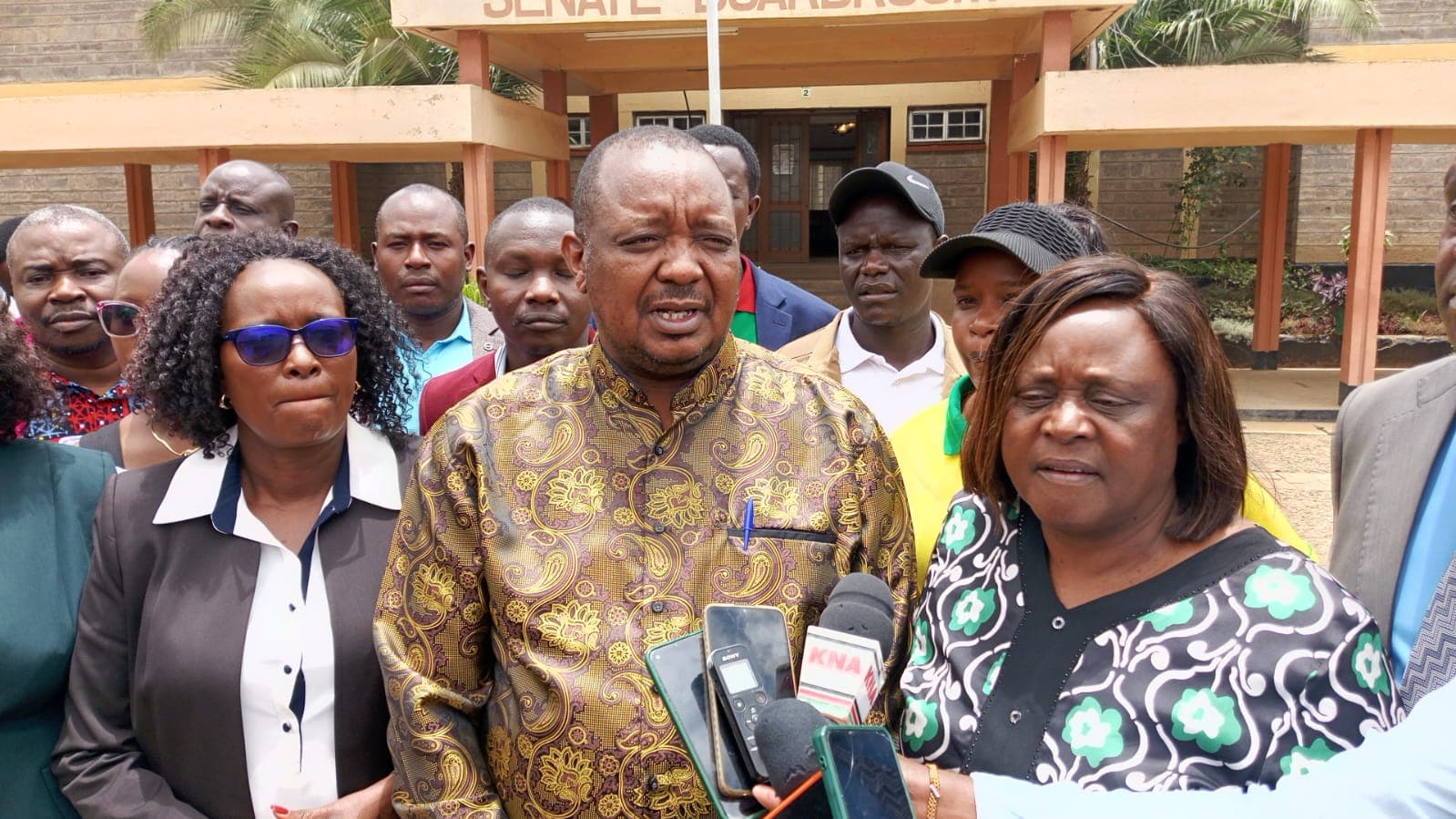
The Kenya Union of Post-Primary Education Teachers (KUPPET) has called for Junior Secondary Schools (JSS) to be given autonomous administrative structures separate from primary schools where the classes are currently hosted.
The union said JSS should not be treated merely as an extension of primary education, but recognised as an independent entity with its own leadership, resources and curriculum focus.
KUPPET Bomet Branch Secretary General Franklin Cheruiyot Rono told the Parliamentary Committee on Education that granting JSS autonomy would strengthen both curricular and co-curricular activities tailored to learners’ needs.
“Junior secondary schools should be viewed as a separate entity with its own administration. All this is for the good of learners,” Rono said.
He also called for improved infrastructure, particularly science laboratories, to support the teaching of science subjects.
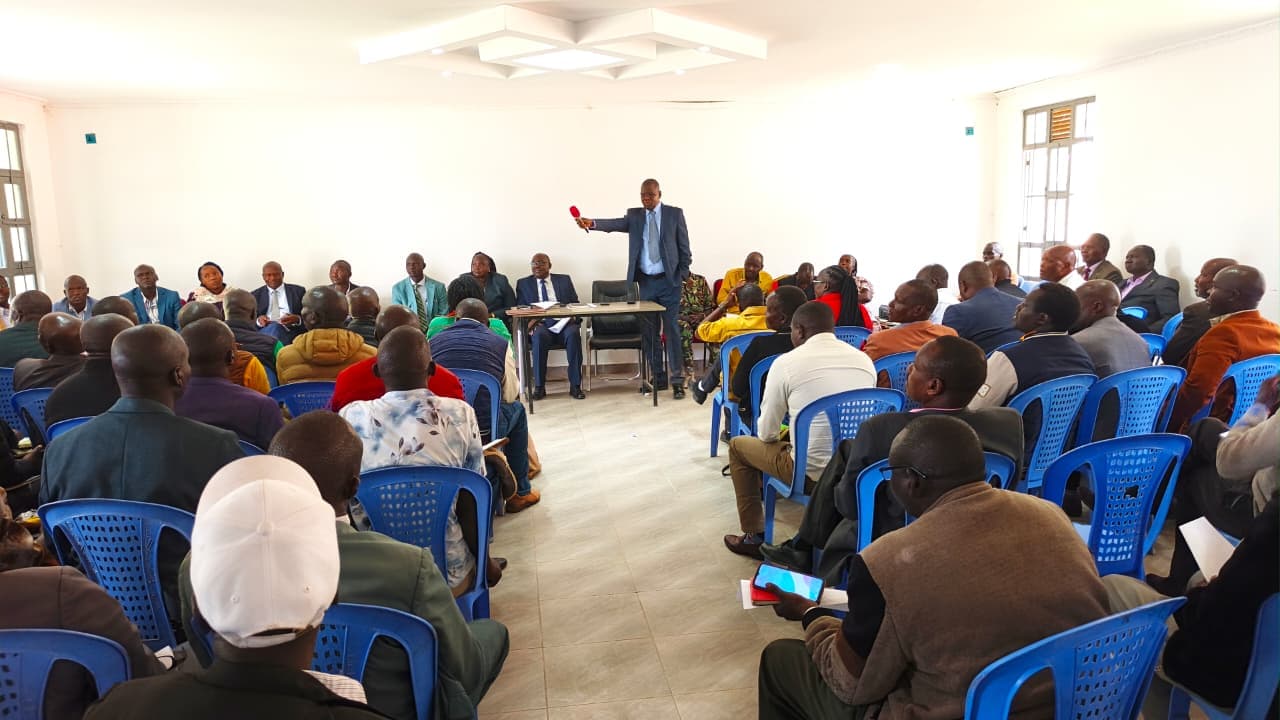
Rono spoke at Maasai Mara University in Narok County, where the committee, led by Baringo North MP Joseph Makilap Kipkoros, collected public views on six education reform Bills, currently in parliament that are intended to reshape the education sector.
The union official said granting JSS autonomy and providing adequate resources would improve the quality of teaching and learning while enhancing the status of the teaching profession at the crucial stage of education.
The Basic Education Bill, 2026, seeks to overhaul the Basic Education Act, 2015, and contains provisions that have generated differing views among teacher unions and other education stakeholders.
One of the contentious issues is the leadership structure of public schools. The Bill proposes retaining the current framework under which public primary, comprehensive and senior schools are headed by one institution head appointed by the Teachers Service Commission (TSC).
KUPPET wants junior schools separated from comprehensive schools and provided with their own management structures.
Another KUPPET official, Erick Simelko, said references to comprehensive schools should be removed from the proposed legislation and replaced with provisions establishing autonomous junior schools with distinct administrative structures.
“Anywhere they have talked about comprehensive school should entirely be deleted and be replaced with Junior school so that there is an autonomous Junior school which shall have its own structure,” Simelko said.
Under the Competency-Based Education (CBE) system, a comprehensive school is a unified institution combining Early Childhood Development Education (ECDE), lower and upper primary and JSS under one management structure.
Simelko said the proposed arrangement should instead provide for separate public primary, junior and senior schools, each with its own management.
“We expect to have a public primary, senior school and also public Junior school because once that is done clearly then you can be sure we will have different management taking place there, which is not the case,” he said.
The public participation exercise, which began on September 14, will run until September 25, giving stakeholders an opportunity to make submissions on the proposed legislation.
The six Bills are the Tertiary Education Placement and Funding Bill, 2026; Pre-Service Education and In-Service Training Bill, 2026; Basic Education Bill, 2026; Kenya Institute of Curriculum Development (Amendment) Bill, 2026; Kenya National Educational Assessments Council Bill, 2026; and Kenya National Qualifications Framework (Amendment) Bill, 2026.
KUPPET Narok County Chairman Kipkoech Chepkwony called for legislation to protect the Teachers Service Commission from external interference.
Chepkwony said TSC should be given the freedom to discharge its mandate impartially and without favouritism.
He attributed disparities in teacher employment to what he described as external interference in TSC operations, saying some trained teachers remain unemployed for more than 10 years while others secure employment one or two years after completing their training.
The union official also urged the committee to strengthen provisions protecting teachers and learners under the proposed reforms.
Chepkwony called for greater clarity on how JSS would be managed within the proposed education governance framework, noting that the management model had evolved through several proposals since the rollout of the new education system.
In January 2023, Ministry of Education guidelines provided for JSS to operate within existing primary schools. The guidelines gave JSS Management Committees special powers and responsibilities over financial matters, including operational decision-making, while the primary school headteacher remained the overall accounting officer.
In July 2023, the Presidential Working Party on Education Reform recommended hosting Grades 7 to 9 in existing primary schools.
The working party also proposed a comprehensive school model in which pre-primary, primary and JSS sections would operate under one headteacher and one Board of Management.
Chepkwony said the proposed reforms should establish clear guidelines on career progression and promotion of teachers from one grade to another, arguing that such a structure was currently lacking.
He further called for teachers to be represented on Boards of Management, saying teachers were better placed to understand the classroom environment and the needs of learners.
During the public participation exercise, Makilap encouraged residents to take advantage of the forums and contribute to the legislative process.
“Your views matter. Your voice matters,” Makilap said, adding that public participation helps strengthen “transparency and accountability in the legislative process.”
He said the exercise gives residents an opportunity to raise concerns, make recommendations and propose changes before the Bills proceed through the legislative process.
Makilap urged Kenyans in all 47 counties to participate in the deliberations and submit their views on the proposed education reforms.
The Bills are based on recommendations by the Presidential Working Party on Education Reform and seek to overhaul governance, financing, assessment and training frameworks across the education sector.
The proposed legislation introduces legal and institutional changes covering basic education governance, national assessments, curriculum development, teacher training, tertiary education funding, and the recognition of academic and professional qualifications.
The legislative package, sponsored by National Assembly Majority Leader Kimani Ichung’wah, comprises the Tertiary Education Placement and Funding Bill, 2026; Basic Education Bill, 2026; Kenya National Educational Assessments Council Bill, 2026; Pre-Service Education and In-Service Training Bill, 2026; Kenya National Qualifications Framework (Amendment) Bill, 2026; and Kenya Institute of Curriculum Development (Amendment) Bill, 2026.
The Tertiary Education Placement and Funding Bill, 2026, seeks to restructure financing for universities and technical and vocational education and training institutions. It proposes establishing the Tertiary Education Funding Authority (TEFA), which would take over functions currently undertaken by the Higher Education Loans Board, the Universities Fund and the TVET Fund.
The proposed authority is intended to provide a coordinated framework for financing students pursuing tertiary education.
The legislation also proposes changes to the role of the Kenya Universities and Colleges Central Placement Service (KUCCPS) in student placement and seeks to establish a new statutory framework for tertiary education funding.
The Basic Education Bill, 2026, proposes integrating non-formal and informal schools serving marginalised communities and informal settlements into the national education framework.
It would also enable learners in registered Alternative Provision of Basic Education and Training (APBET) schools to benefit from public capitation grants and infrastructure support.
The Bill further seeks to give the Ministry of Education clearer regulatory and financial oversight over public funds and school management.
The Kenya National Educational Assessments Council Bill, 2026, seeks to replace the existing legal framework governing the Kenya National Examinations Council. The proposed changes are intended to shift national assessment from an examination-centred model towards an approach aligned with the CBE curriculum.
The Pre-Service Education and In-Service Training Bill, 2026, seeks to establish structured frameworks for the pre-service preparation and continuous professional development of teachers.
The proposed framework is intended to strengthen ongoing training and professional development within the teaching profession.
The Kenya Institute of Curriculum Development (Amendment) Bill, 2026, seeks to clarify the mandate of the Kenya Institute of Curriculum Development by focusing its functions on basic and teacher education while removing overlaps with the tertiary education sector.
The Kenya National Qualifications Framework (Amendment) Bill, 2026, seeks to standardise the national qualifications database and provide for the registration of institutions that award academic and professional credentials.
The proposed changes are intended to improve the traceability, recognition and credibility of qualifications issued in Kenya.
Makilap encouraged the public to submit memoranda and attend parliamentary hearings to ensure their views are considered before the Bills proceed to further debate and consideration.
He said the public participation exercise provides an opportunity for stakeholders across the education and qualifications ecosystem, including education and training institutions, regulators, qualification-awarding bodies, professional organisations, employers, learners and members of the public, to give their views on the proposed reforms.
by Emily Kadzo


Comments
No comments yet. Be the first to share your thoughts.