
Tobacco remains one of the leading agricultural drivers of a severe public health crisis in Kenya, causing widespread non-communicable conditions including liver cirrhosis, cardiovascular diseases, and lung cancer, claiming over 6,000 lives annually across the country.
These alarming health outcomes were triggered by uncontrolled national consumption trends, with overall adult tobacco prevalence reaching 11.6 percent (representing roughly 2.5 million adults), with male usage exceeding 15 to 19 percent in key cohorts and areas, according to national health statistics.
Even though the government continues to fight the use of tobacco in the country, the public health authorities are now faced with a new generational challenge: the escalating crisis driven by early youth initiation, where adolescents as young as 12 to 16 years have continued to be targeted by aggressive local marketing and the rapid spread of novel and smokeless nicotine products such as Shisha and Kuber.
Through the National Authority for the Campaign Against Alcohol and Drug Abuse (NACADA), the government has enacted the Tobacco Control Act of 2007, establishing strict bans on public smoking, advertising, promotion, sponsorship, and sales restrictions.
The government has been doing fiscal and economic interventions through the introduction of excise duty taxation to raise retail prices, discourage purchases, prevent illicit trade, and impose penalties to curb and reduce the usage of tobacco products in the country.
Despite these legislative and economic interventions, the target to eliminate the menace has not been fully achieved, with tobacco remaining available in the market, and local farmers in Migori continue to grow tobacco.
To address this supply-side root cause, the county and the national government have continued to collaborate with the World Health Organisation (WHO) by introducing programmes like Tobacco-Free Farms to give alternative livelihoods to tobacco farmers.
The World Health Organisation Framework Convention on Tobacco Control (FCTC), alongside the Tobacco Control Act of 2007, has provided legal provisions to support tobacco growers in transitioning to economically viable and sustainable alternative livelihoods.
The Tobacco-Free Farms programmes specifically targets counties prone to tobacco cultivation, including Migori, Busia, Bungoma, Meru, and most recently Embu.
Beyond addressing public health hazards, the primary drivers of the initiative include saving farmers from Green Tobacco Sickness, ending economic exploitation, combating child labour, and reversing general environmental degradation.
To help transition tobacco farmers in Embu County toward sustainable alternative crops, the Tobacco-Free Farms initiative, in partnership with WHO, recently facilitated an educational exchange programme bringing Embu farmers to visit Migori County, which has successfully transitioned the crop growers to alternative crops.
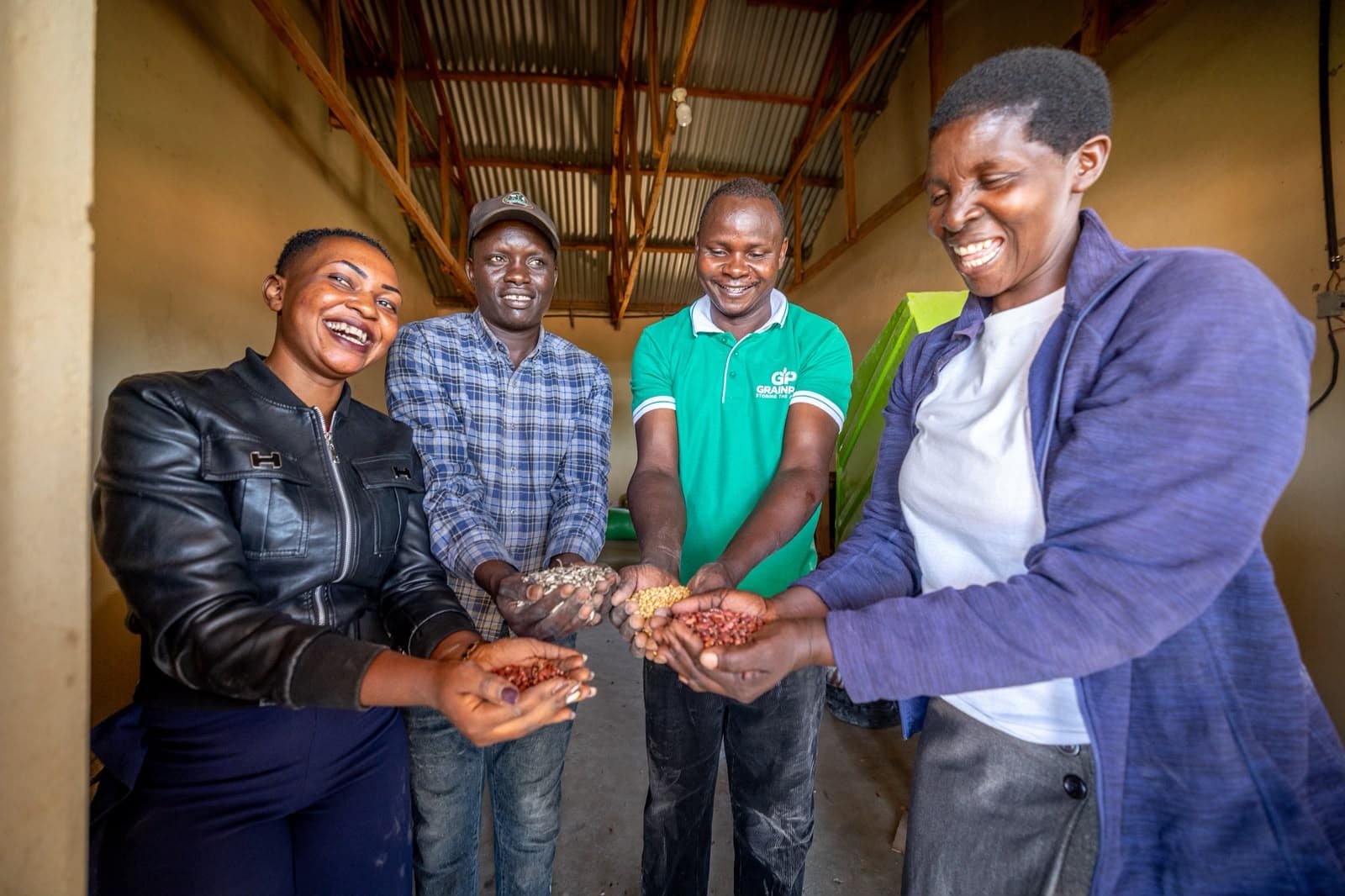
Speaking during the visit, tobacco farmers from Migori who previously cultivated tobacco shared how 8,000 local growers have already shifted from tobacco to other better nutritious crops like beans and sunflower.
Julius Opiyo, a former tobacco farmer from Uriri Sub County, reflected deeply on the severe health hazards and economic burdens associated with tobacco production, particularly the labor-intensive curing process.
To overcome initial uncertainties about which alternative crops to adopt, farmers like Opiyo decided to form a farmers’ group that transformed into community hubs.
The hubs, with support from WHO and the Migori County Government, have assisted in the supply of alternative crop seeds like soya beans, Nyota beans, sunflower and groundnuts as well as connecting growers with agricultural experts for crop rotation guidance.
He says that while most of his colleagues were initially unsure of what crops to adopt, the hub enabled them to access seeds and consultancies from agricultural officers to educate them on the important shift.
Mwita Nyabuge, from Ntimaru Sub County, who cultivated tobacco for three years before transitioning, recounted how the crop eroded both his family’s financial stability and health, noting that exposure to tobacco farming severely affected his pregnant wife.
He explained that tobacco demanded eight months of gruelling work for very little return, whereas switching to Nyota beans transformed his livelihood, enabling him to pay his children’s and siblings’ school fees without hardship.
Steven Mbogi, the head of the delegation from Embu farmers, emphasised the urgency and broader benefits of this nationwide movement to curb further spread of tobacco in regions that did not farm tobacco.
Mbogi, who is also a medical officer and agricultural expert, says that even though tobacco growing in Embu has lasted only a year and a half, the dangerous active and passive health risks of tobacco farming have become visible so far.
Farmers have frequently suffered from severe respiratory illnesses and conditions such as green tobacco sickness, a form of nicotine poisoning caused by handling wet tobacco leaves.
Mbogo disclosed that more than 300 farmers have already embarked on tobacco farming in Embu since the introduction of the crop 18 months ago.
The Embu official explained that by observing Migori’s progress, a clear roadmap for a full regional transition can be achieved to help Embu fight the tobacco menace.
“Tobacco-Free Farms programmes was started in Migori in 2021 and officially launched in Embu County this year; a proactive benchmarking that will help Embu to witness firsthand information and learn the achievements of Migori to help Embu tobacco farmers fully transition to other better alternative crops”, said Mbogi.
Calvins Otieno, a WHO Field Coordinator, noted that collaborative efforts among agricultural organisations are driving progress in developing sustainable value chains for high-demand crops.
Beyond health and income benefits, Otieno stressed the environmental necessity of the shift, pointing out that traditional tobacco curing relies heavily on wood fuel, which accelerates local deforestation.
Reaffirming the local government’s commitment, Migori County Executive Committee (CEC) Member for Agriculture Lucas Mosenda, noted that they have been supporting tobacco farmers with alternative crop seeds like beans, maize, sunflower and sorghum to help in the transition.
Mosenda also added that the county has deployed extension agricultural officers at the ward level to help farmers practice better agricultural activities to boost their produce for better income.
The county official added that with the help of organisations like the WHO, they have helped tobacco farmers who transitioned to better alternative crops like beans to access better markets for their produce.
“We are open to working with several international and non-governmental organisations like WHO to achieve a 100 per cent transition of tobacco farmers to alternative crops across the county,” he stated.
by Makokha Khaoya and George Agimba


Comments
No comments yet. Be the first to share your thoughts.