
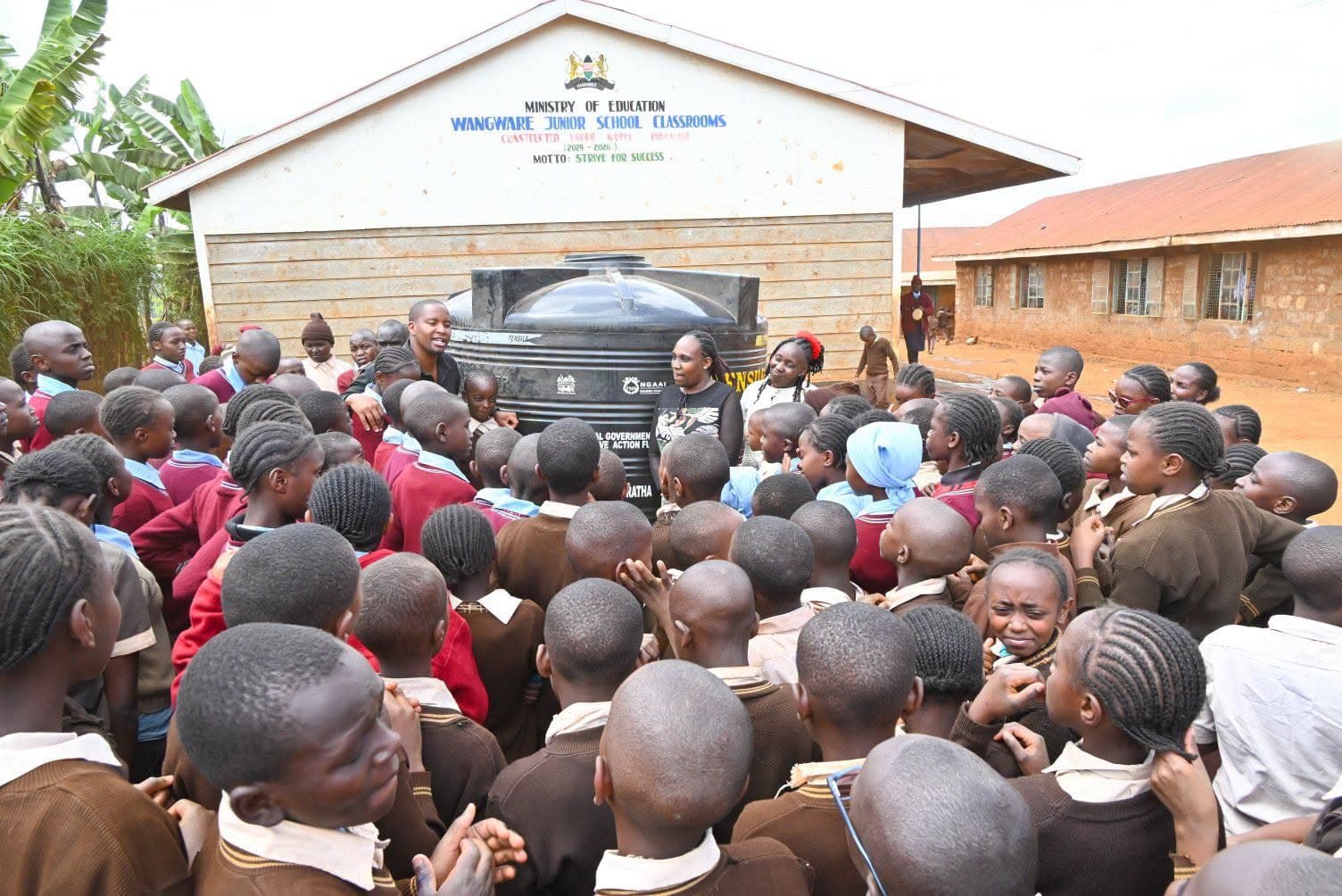
The National Government Affirmative Action Fund (NGAAF) has delivered two 5,000-litre water tanks to Kambaa Girls Secondary School and Wangware Junior School in Lari Constituency to improve water storage and availability for learners.
Kiambu Women Representative Anne Muratha, who presided over the handover ceremony said the tanks fulfilled a commitment made after the schools requested support to improve water availability.
“Promise made. Promise delivered. This is what delivery in action looks like – turning commitments into tangible projects that serve our communities,” Muratha added.
The intervention comes against the backdrop of water supply challenges in parts of Lari. Kiambu County’s public participation report previously identified a water shortage in the Kirenga area and proposed measures including repairing and equipping boreholes and improving water distribution.
Limuru Water and Sewerage Company, which serves Lari and Limuru sub-counties, currently lists the Lari/Kinale zone among areas supplied on a scheduled basis, with an average of about 14 hours of daily supply, categorising supply pressure in the area as moderate.
The latest donation adds to Muratha’s support for schools through NGAAF. In February this year, the woman representative delivered water tanks to Chief Wandie, Thindigua and Benson Njau Comprehensive Schools to improve hygiene and learning conditions.
At the same event, NGAAF also launched a sanitary towel distribution programme targeting girls in junior secondary schools across Kiambu Town, Kiambaa, Ruiru, Juja, Thika, Gatundu South, Gatundu North, Githunguri, Lari, Limuru, Kabete and Kikuyu constituencies.
In her speech, Muratha said availability of water and the sanitary towels would greatly improve the dignity of the girls during their monthly periods while at school.
NGAAF’s mandate extends beyond economic empowerment to the provision of basic social services and education support for women, youth, persons with disabilities, vulnerable children and other disadvantaged groups.
Its programmes include bursaries and scholarships, water tanks, boreholes and free sanitary pads, allowing support to reach schools through both infrastructure and learner-focused interventions.
by Rose Muthoni and Grace Naishoo
Comments
No comments yet. Be the first to share your thoughts.