
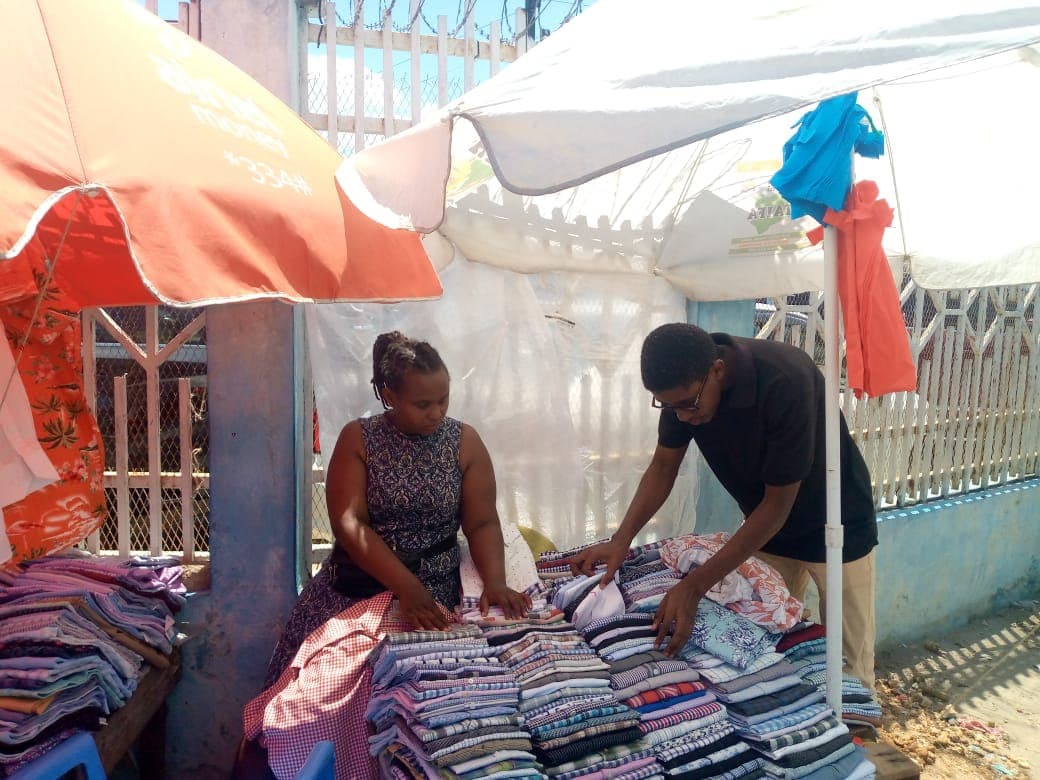
Mombasa residents are taking individual precautions ahead of anticipated El Niño this season, recalling the toll of the last major flooding crisis to hit the Coast region in November 2023, when at least nine deaths were reported across the region, including fatalities in Kwale County and a house collapsing in Mombasa’s Kisauni area.
The Kenya Meteorological Service Authority (KMSA), in its October–November–December (OND) 2026 short rains outlook released on August 26, has forecast above-average rainfall over roughly 80 per cent of the country, driven by what it described as a strong El Niño combined with an expected positive Indian Ocean Dipole.
Mombasa is among more than 40 counties expected to receive above-average rainfall this season, with some parts of the country projected to record over 700 mm during the period.
The forecast also flags higher-than-average temperatures for Mombasa, Kwale, Kilifi, Lamu and parts of Tana River, and warns of an elevated risk of flooding and flash floods, particularly in low-lying and poorly drained urban areas.
The National Disaster Operations Centre (NDOC) has separately classified Mombasa among the high-risk urban hotspots for the season, warning that Coast counties including Mombasa, Kwale, Kilifi, Lamu and Tana River may experience flooding, storm surges, coastal erosion and infrastructure damage.
Ifrah Wabaaz, a handbag seller at Marikiti Market in Mombasa town, urged the county government to act on the poor and often-blocked drainage system that she said routinely worsens flooding in the area.
“I have stored food and medical supplies for myself and my children, but I can’t do anything about the poor drainage,” Wabaaz said, describing her personal preparations for the expected rains.
Roadside clothes seller Mary Dickson said she had made no specific preparations. “Rain comes from God, and I have no control over it. Whatever comes, I will accept it and deal with it,” she said.
Joseph Odhiambo, a resident of the Kongowea area, said he was relying solely on his own measures to protect his family and property.
“I have already made plans to move my family and property to higher land, as flooding mostly occurs in low-lying areas,” he said, adding that residents should be self-reliant during crises.
“El Niño is not a new phenomenon in Kenya or in Mombasa. It is up to us to look out for ourselves and expect as little help from the government as possible.”
By Vanessa Sariman and Phillip Kipele


Comments
No comments yet. Be the first to share your thoughts.