
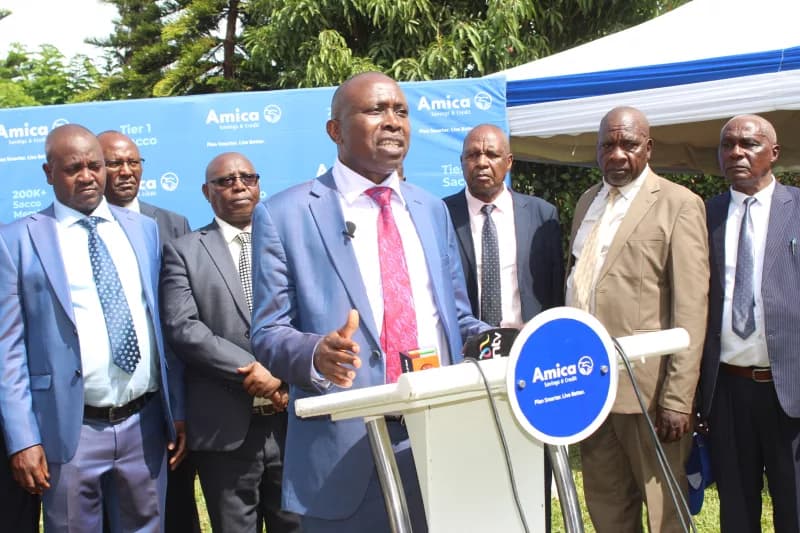
Amica sacco CEO James Mbui during a special delegates meeting in Murang'a town on October 30, 2026/ ALICE WAITHERA

A Murang’a-based Sacco is targeting Sh2 billion in revenue in 2027, five years after crossing the Sh1 billion mark, as it seeks to strengthen its reserves and increase returns to members.
The Amica Savings and Credit Cooperative Society plans to retain Sh500 million, representing 25 per cent of its projected revenue, to build its financial reserves and support future growth, while allocating about 30 per cent towards rewarding members through interest on deposits and dividends.
Chief executive officer James Mbui said the institution was confident of achieving the target, citing its growth since attaining the Sh1 billion revenue milestone in 2022.
“We are happy with the progress that the organisation is making and are looking forward to a very successful year in 2027,” he said.
Mbui said the projected growth would benefit members, employees, suppliers and the government through tax contributions.
“About 30 per cent will go towards our members in terms of interest on member deposits and dividends,” he said.
The projections were presented during a special general meeting of delegates in Murang’a town, where members also approved proposed amendments to the Sacco’s by-laws to strengthen governance and accommodate its expanding membership.
Initially established to serve coffee farmers, Amica has diversified to include small and medium-sized enterprises, dairy farmers, tea growers and salaried workers.
Mbui said the amendments would ensure the different categories of members felt represented as the institution continued to expand.
The proposals were approved by delegates and will be forwarded to the commissioner for approval.
The expansion came against a backdrop of rising business costs, taxation, expensive credit and regulatory challenges.
The Kenya National Bureau of Statistics reported the economy grew by 4.6 per cent in 2025, compared with 4.7 per cent in 2024, while the World Bank projected growth of 4.6 per cent in 2026.
Beyond its financial ambitions, the Sacco is investing in education and youth development through its Vuka mentorship programme, now in its fifth cohort.
The initiative selects 35 high-performing students from public day secondary schools across all wards and supports them through their transition to university and the four years of study.
Beneficiaries pursuing courses including law and information technology, receive mentorship and life-skills training to help them navigate university life and overcome challenges that could disrupt their education.
Mbui said the Sacco had not recorded any dropouts among students supported through the programme.
“And we have not seen any dropout of the students that we have supported through this programme,” he said.
He said some learners from disadvantaged rural backgrounds struggled to adjust to university because they had limited exposure to life beyond their home communities.
The programme therefore covers financial management, personal organisation, social etiquette and responsible decision-making.
It also seeks to help students avoid teenage pregnancies, drug abuse and other risks that could derail their studies.
Students receive monthly stipends and are encouraged to save part of the money to meet their needs as they progress through university.
Mbui said the initiative reflected the Sacco’s commitment to supporting communities and creating opportunities for young people from disadvantaged backgrounds.


Comments
No comments yet. Be the first to share your thoughts.