
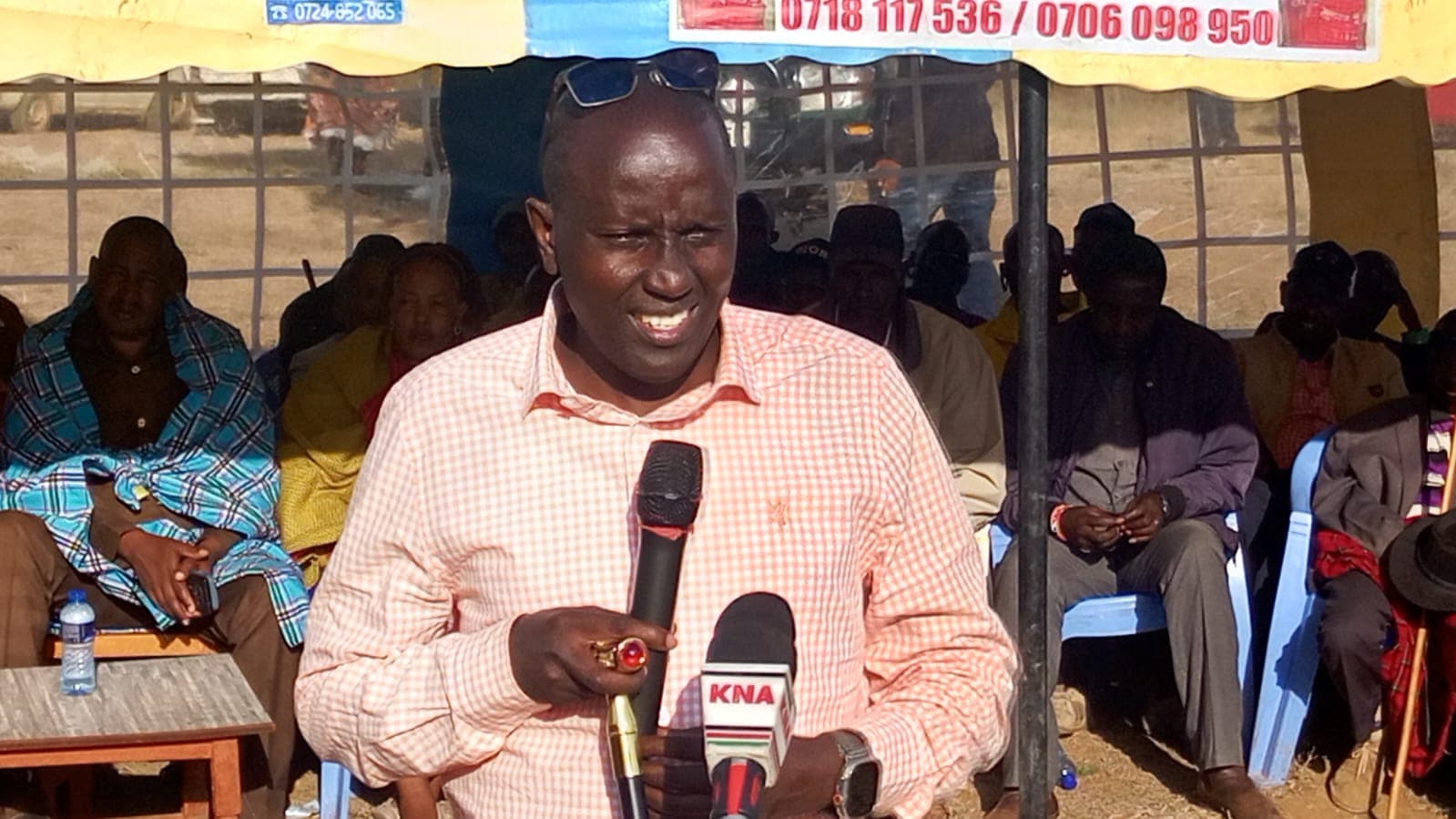
Narok East Member of Parliament Aramat Kiloku has called on the Kenya Wildlife Service (KWS) to urgently address an elephant invasion in the constituency that has left one resident dead, another seriously injured and destroyed property worth millions of shillings.
Kiloku wants the elephants permanently relocated to game reserves and national parks, saying residents should not continue bearing the human and economic costs of escalating human-wildlife conflict.
Speaking in Narok East, the legislator also demanded clarity on compensation and restitution for families affected by the destruction of crops, water tanks, houses and other property.
“Lives have been lost, people have been maimed, and crops, water tanks, houses, and other structures have been destroyed. As a result of this invasion, my people have suffered untold psychological stress. These circumstances cannot be normalised,” Kiloku said.
The MP said residents in affected areas had endured repeated incidents of crop destruction and property damage, with the continued presence of elephants in farms and settlements heightening fears over their safety and livelihoods.
He said the elephant invasion had subjected local communities to economic losses and emotional distress, particularly in an area where many households depend on farming for their livelihoods.
According to Kiloku, the problem had persisted for years, with farmers losing crops season after season and some families struggling to meet their basic needs.
He said destruction of farms had undermined household incomes and forced some residents to depend on relief food.
Kiloku questioned why authorities had not been able to prevent elephants from straying into farms and residential areas despite recurring incidents and the risks posed to residents.
He urged KWS and other relevant government agencies to implement effective measures to prevent further loss of life and destruction of crops and property.
The legislator also called for a clear and timely compensation mechanism for affected families, saying residents needed support to recover from the losses they had suffered.
He urged the national government and wildlife authorities to move with speed to address the crisis, warning that frustration among residents was growing as communities continued to bear the burden of human-wildlife conflict.
At the same time, Kiloku has raised concerns over reported livestock deaths during ongoing security operations in Samburu, calling for investigations, compensation and restocking for affected families.
The MP said the reported killing of cattle in Waso should not be treated as a routine security operation, arguing that livestock was a critical source of wealth and livelihood for pastoralist families.
He said cattle enabled families to meet essential needs, including paying school fees, and warned that large-scale livestock losses could push affected households into poverty.
“Our cattle are our bank, our school fees, our future,” Kiloku said.
“When herds are wiped out in Waso, we end up with impoverished families and manufacture the next generation of desperate men,” he added.
The MP called on security agencies to establish what happened during the operation and compensate families where investigations establish that livestock was unlawfully destroyed.
His remarks come amid controversy over livestock deaths reported during a multi-agency security operation in Samburu East.
The operation was launched to tackle banditry and livestock theft following a series of attacks in the Samburu-Isiolo area. Local leaders and residents have raised concerns over the reported killing of hundreds of livestock during the operation.
Samburu Senator Lelegwe Ltumbesi told the Senate that 415 goats and 102 cattle were killed in Waso Ward over three days.
Other local leaders have given higher figures. Samburu East MP Jackson Lekumontare said his assessment indicated that more than 700 goats and 500 cattle had been killed. The higher figures have not been independently verified.
Samburu MPs have called for an independent investigation and government support for affected families, including compensation or restitution where unlawful destruction of property is established.
Interior Cabinet Secretary Kipchumba Murkomen has also acknowledged concerns over livestock reportedly killed during security operations.
Murkomen directed security agencies to exercise greater caution to minimise civilian casualties and destruction of livestock while maintaining that the government would continue targeting people holding illegal firearms and those involved in attacks on security officers, civilians and livestock.
“We will continue with the operations to ensure that all people who have illegal firearms, and those targeting our officers, civilians and livestock, are dealt with decisively,” Murkomen said.
The Interior CS said the operations would be intelligence-led and urged officers to distinguish between armed criminals and innocent residents.
The concerns raised by Kiloku have renewed attention on the need to balance security operations with protection of civilians and their property, while also highlighting the challenges communities face from human-wildlife conflict.
by Emily Kadzo
Comments
No comments yet. Be the first to share your thoughts.