
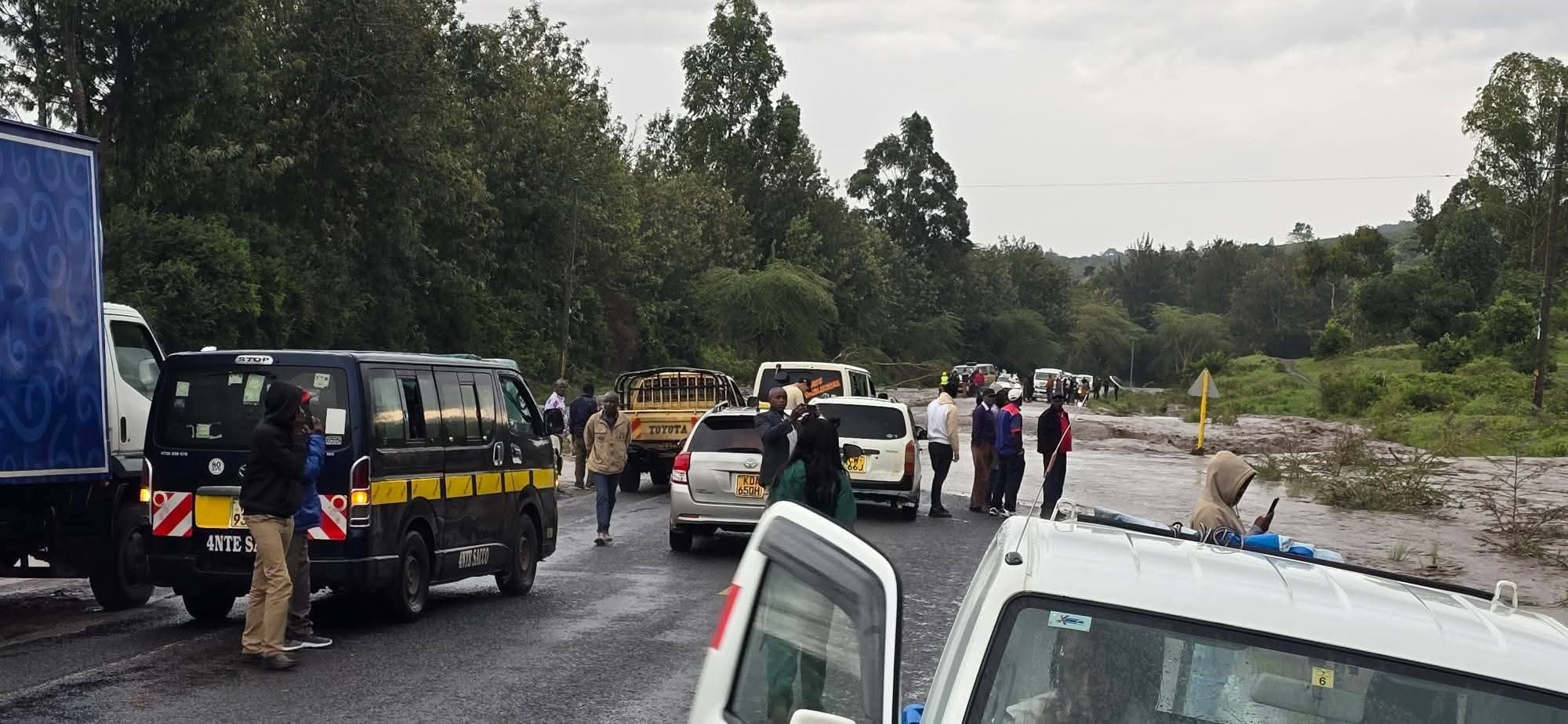
The much awaited El Nino rains are expected to commence as early as Thursday this week in several parts of Nyeri County.
Nyeri County Kenya Meteorological Services Authority (KMSA) Director Peter Wambugu told KNA there is a high likelihood of the county experiencing the first showers of the rains towards the end of this week before its intensity increases in the coming week.
Wambugu nevertheless clarified that much of the rains will start falling from the second and third week of October and will continue until January next year.
“We highly predict that Nyeri is among counties that will start experiencing the first showers of the October-November –December rains towards the end of this week. We hope to share the weather outlook report for the week first before we can ascertain the overall distribution of the rains in the county. In addition, the authority is not issuing any advisory to farmers on what type of crops to put in their lands during this season. This responsibility has been left to Agricultural Extension officers.” he said.
The weatherman has already released the October-November -December weather outlook in which it predicts that most parts of the country will experience above-average rains.
Only the county of Turkana and a few parts of West Pokot, Samburu and Marsabit are predicted to receive near-average rainfall during this season.
Mean temperatures are expected to be warmer than average throughout the country.
“October marks the onset of the October –November-December ‘Short Rains’ over much of Kenya. The month is particularly important to counties such as Meru, Tharaka-Nithi, Murang’a, Embu and Busia where more than 200mm of rainfall is received,” read the weather outlook dated September 30.
The season results from the Intertropical Convergence Zone (ITCZ) migrating southwards across East Africa bringing with it increased moisture and convention.
Above-average rainfall is expected Makueni, Kajiado, Machakos, Nairobi, Kiambu, Kirinyaga, Isiolo, Nyandarua, Nyeri and parts of Taita Taveta, Laikipia, Tana River, Garissa, Wajir, Marsabit and Narok counties.
The report has also outlined potential impacts of the October rains on both man and environment.
For instance, while the above-rainfalls are expected to improve soil moisture and boost agriculture production and improve water and pasture availability for animals KMSA has warned the downpour could also lead to waterlogging, delayed farm operations, increased crop diseases and challenges in transporting farm produce.
The authority is also warning of the likelihood of outbreak of waterborne diseases such as malaria in poorly drained areas and threats of flash floods, landslides and localized infrastructure damages.
“Above-average rainfall is likely to increase river flows, replenish dams, water pans, and groundwater resources, and improve water availability for domestic, agricultural, and industrial use. In arid and semi-arid regions, the rains may contribute significantly to the recovery of water sources that are often stressed during the dry season. At the same time, heavy rainfall could increase runoff and cause localized flooding in some catchments, especially where drainage systems are inadequate.” states the report.
While chairing the Nyeri County multi-agency El Nino preparedness meeting last month Governor Dr Mutahi Kahiga said his administration had allocated some Sh76 million to combat the expected rains.
Dr Kahiga further said the county intends to utilize the Sh20 million that had remained unspent since 2015.
He also announced that the county would re-adjust its monetary priorities in the 2025/2026 supplementary budget to ensure that it focuses on addressing the El Niño rains.
In addition, the Department of Health services has already been allocated Sh37 million which will go towards disease surveillance and purchase of medical supplies in preparation for possible waterborne disease outbreaks among other expenditures.
Dr Kahiga also intends to spend Sh10 million to repair infrastructure that might get damaged during the heavy downpour.
“To start with we have a budget of about Sh76 million. We also have Sh20 million that has been lying in the County Emergency Fund waiting for any disaster like this. We will also see if we can pool more resources from the National government and other partners,” said Dr Kahiga.
The weatherman has already warned that most parts of the country will receive above-average rainfall while others like Turkana and Samburu will experience near-to above-average rainfall.
In total a total of 18 counties have been put on red alert of being at risk of flooding and mudslides from the heavy downpour.
The rains are expected to commence during the second and third week of October this year and extend to January in 2027
Nyeri is among counties expected to start receiving the rains during the second and third week of October.
Others include Nairobi, Mombasa, Kisumu, Baringo, West Pokot and Narok among others.
The Government has already notified the public of the possibility of the country experiencing heavy rains during the period running from October to January next year.
On September 17 Government Spokesperson Charles Owino urged Kenyans to remain vigilant by seeking refuge in areas safe from floods and landslides.
In addition, Owino said the State had put up necessary mitigation measures to cushion Kenyans against effects from the expected heavy deluge through a multi-agency team comprising ministries, departments and agencies working alongside the 47 county Governors.
“The Government will continue to monitor the situation closely and provide timely updates as weather conditions evolve. Members of the public, particularly those living in flood-prone areas, along rivers and other vulnerable locations, are likely urged to take up early precautionary measures. Communities are encouraged to work closely with local administrators, county Governments and disaster-response teams, particularly in identifying vulnerable persons and supporting early evacuation where necessary” stated the press release dated September 17.
“The public is also urged to rely on information issued through official Government channels and avoid spreading unverified information,” added Owino.
El Niño is a naturally occurring climate pattern typically associated with increased heat worldwide, as well as drought in some parts of the world and heavy rains in other parts.
The phenomenon results from large-scale warming of surface temperatures in the central and eastern equatorial Pacific Ocean and usually occurs on average every two to seven years.
Kenya last experienced the El Nino phenomena in 1997, resulting in exceptionally heavy rainfall and deadly floods.
The consequent El Nino in 2015 had a higher index but led to lower rainfall, causing less significant effects than had been anticipated.
By Samuel Maina


Comments
No comments yet. Be the first to share your thoughts.