
The Government is seeking to place women, young people, ethnic minorities, and persons with disabilities (PWDs) at the centre of national policy, with the Presidency stepping up efforts to coordinate institutions responsible for advancing their rights and opportunities.
Dr. Isaac Mwaura, Head of the Office of Diversity, Inclusion and Disability Rights (ODIDR), said the decision to establish the office reflected President William Ruto’s emphasis on the four groups during the formation of the current administration.
Speaking during a Diversity Benchmarking Focus Group Session at the African Advanced Level Telecommunications Institute (AFRALTI) in Nairobi, Dr. Mwaura maintained that the Presidency had a responsibility to ensure that the needs of historically underrepresented groups were reflected in government priorities.
“When we were campaigning to get this government, the President was very keen on focusing on women, youth, ethnic minorities, and persons with disabilities,” he reiterated.
Notably, the creation of ODIDR provides a coordinating structure within the Executive Office of the President to bring together government agencies and other institutions working on diversity and inclusion.
He therefore explained that the office was not intended to compete with ministries and agencies responsible for implementing programmes. Instead, it would take a whole-of-government approach, tracking progress, identifying gaps, and ensuring that institutions worked towards shared objectives.
According to Dr. Mwaura, the distinction is important because advancing inclusion requires action across several sectors. Education, employment, public administration, healthcare, infrastructure, and access to information all influence whether people can participate fully in national life.
For persons with disabilities, for instance, the existence of policies does not automatically guarantee accessible buildings, inclusive workplaces, appropriate educational support or access to public services. Similar gaps can arise when women, young people, and minority communities are excluded from decision-making and economic opportunities.
To this regard, Dr. Mwaura stressed that the government needed to examine what had been achieved, assess the resources available, and determine what more needed to be done.
Further, he cited the need to audit progress, communicate achievements and shortcomings, and establish priorities for the next phase of the administration’s diversity agenda.
Dr. Mwaura established that the National Diversity Management Framework and Diversity Index initiative are intended to provide a basis for assessing how institutions perform in managing diversity. The benchmarking process brings together representatives from government, business, academia, and other organisations to contribute to the development and review of indicators.
Such indicators, he affirmed, can help move diversity management beyond policy statements by examining whether institutions are translating commitments into measurable action.
Dr. Mwaura also announced plans to launch a disability charter intended to strengthen the disability rights agenda.
He said the next phase of the work would be aligned with the call ‘Usawa ni Sawa’, emphasizing equality, equity, and inclusion.
Meanwhile, the challenge facing the office will be to turn coordination into demonstrable results. Institutions will need to identify measurable targets, allocate resources, and report on progress if the framework is to make a difference in the lives of the people it is intended to serve.
For the Presidency, the focus is on ensuring that inclusion is treated as a responsibility across government rather than a concern left to individual departments or specialised offices.
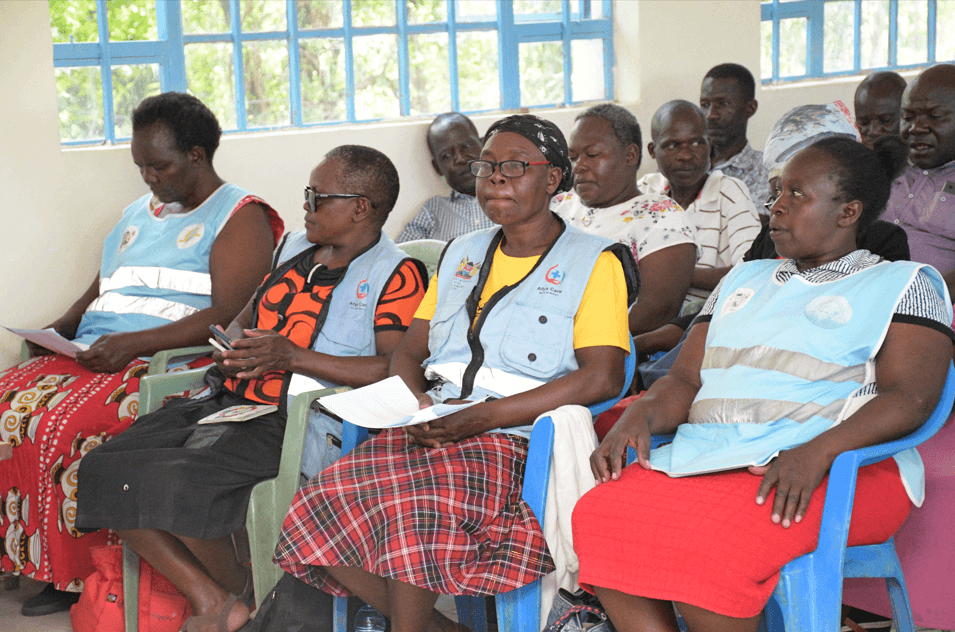
The meeting brought together stakeholders from Kenya Airways, Safaricom, Equity Group Foundation, the Public Service Commission, the National Youth Council, the Kenya Institute of Special Education and several government departments, among others
by Michael Omondi

Comments
No comments yet. Be the first to share your thoughts.