
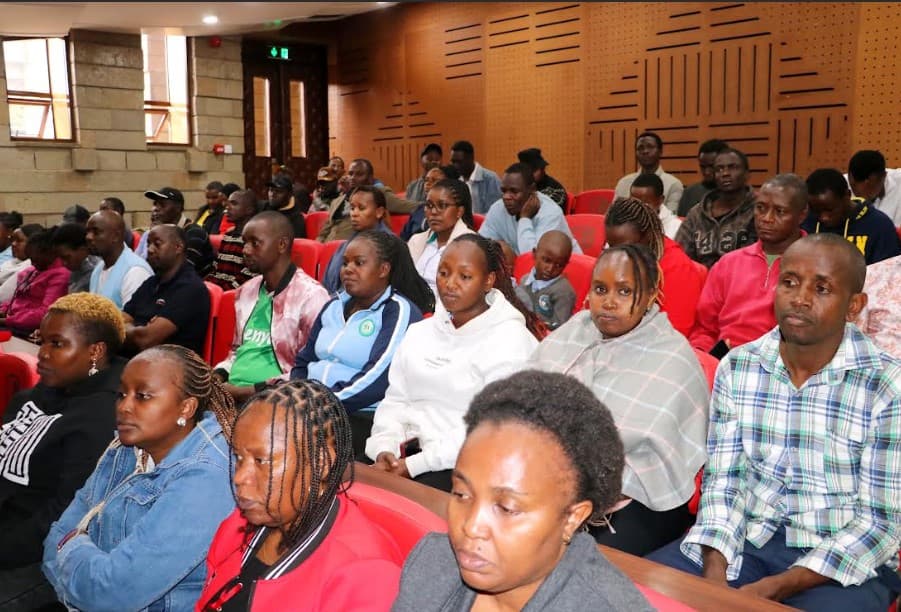
Education stakeholders in Kirinyaga County have called for the establishment of independent Junior Secondary Schools (JSS), with separate administration, funding and boards of management, as the National Assembly seeks public views on proposed education law reforms.
The stakeholders said granting JSS autonomy would strengthen accountability, improve learning conditions and provide learners with a clear transition from primary to junior secondary education.
Speaking during a public participation forum at Kirinyaga University on Friday, Gatundu North MP Elijah Njoroge, a member of the National Assembly Education Committee, said the committee had received overwhelming support for the separation of JSS from primary schools during its nationwide consultations.
Njoroge said the committee had been collecting views from members of the public and education stakeholders on six proposed Bills aimed at addressing challenges facing the country’s education sector.
He noted that the consultations, which had reached Kirinyaga as the 10th county, had attracted significant participation from teachers, parents and other education stakeholders.
“Wherever we go, people are saying they want JSS to stand on its own, separated from primary schools, so that it becomes an independent institution with its own leadership, allocated funds and board of management,” he said.
The legislator said the transition from primary to junior secondary education should be accompanied by meaningful institutional changes to distinguish the two levels of learning.
He urged President William Ruto and Education Cabinet Secretary Julius Ogamba to consider the views collected during the public participation forums and ensure they inform the proposed reforms.
Njoroge said the committee had documented submissions through written memoranda and video recordings for consideration in the legislative process.
Kenya Private Schools representative in Kirinyaga County Solomon Munene called for broader reforms to address challenges affecting both public and private learning institutions.
Munene proposed the establishment of a clear legal framework for the funding and coordination of co-curricular activities, saying the absence of structured guidelines had created challenges in managing the activities.
He also called for the establishment of a revolving education fund through the Public-Private Partnership (PPP) framework to enable private schools and other education stakeholders to access affordable financing.
Munene said such a fund would improve access to education by supporting institutions to expand their capacity and reduce the financial burden on learners and parents.
On school registration, he urged lawmakers to extend provisional registration licences from one year to at least three years, saying the longer period would give institutions adequate time to implement recommendations by education authorities before obtaining full registration.
He further called for equitable access to bursaries and scholarships, arguing that learners in private schools should not be excluded from financial assistance solely because of the institutions they attend.
“Those are all Kenyan children. Some of them are in private schools under sponsorship, so when they proceed to senior schools and universities, they should also be able to access scholarship and bursary funds,” he said.
Kenya Union of Post-Primary Education Teachers (KUPPET) Kirinyaga County Junior Secondary School Secretary Joseph Muendi said the union was calling for the establishment of independent JSS institutions, saying the level required a distinct administrative structure.
Muendi said junior secondary schools should have their own principals, deputy principals and boards of management to enhance accountability and improve the coordination of learning activities.
He noted that JSS could continue sharing facilities such as playing fields and other infrastructure with primary schools, but should operate under separate management.
The stakeholders said the proposed changes should take into account the realities facing schools as the education system evolves. They said responsibilities for school leadership, financing and oversight would help minimise duplication of roles and ensure resources are used effectively.
They observed that coordination among government, boards, teachers, parents and private education providers would be important in implementing changes from the legislative process. The forum provided an opportunity for participants to raise concerns affecting learners and institutions while giving lawmakers an opportunity to receive views from communities.
The participants said they expected the committee to consider the submissions before presenting its recommendations to Parliament.
The stakeholders expressed hope that their proposals would be considered as the National Assembly Education Committee continues reviewing the proposed legislation, with the aim of strengthening education delivery across the country.
by David Wandeto



Comments
No comments yet. Be the first to share your thoughts.