
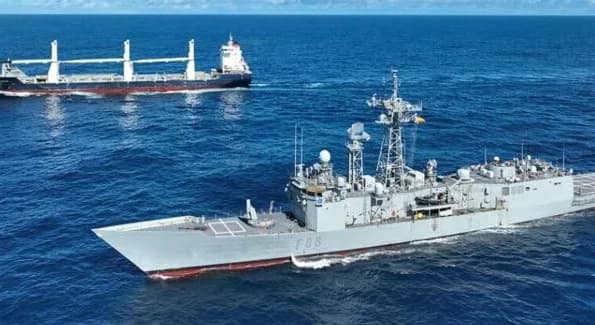
23 people missing after Somali pirates seize Iranian fishing vessel

By August, pirates had hijacked six commercial ships since April, with some of the attacks taking place far from Somalia’s coastline.
The safety of 23 people aboard an Iranian fishing vessel hijacked by Somali pirates off the northeastern coast of Somalia remains unknown after 12 armed pirates seized the vessel and warned that it could be used as a floating base to launch attacks on commercial ships along major shipping routes.
According to the European Union’s Maritime Security Centre Indian Ocean (MSCIO), the vessel, identified as the Azini, was captured on Thursday between the coastal towns of Bandar Bayla and Hafun.
A maritime security officer with the Puntland Maritime Police Force told The Associated Press on Sunday that the vessel was carrying 21 Iranian crew members and two Somali security guards when the pirates took control of it.
The officer reportedly spoke on condition of anonymity because he was not authorised to speak to the media.
In an alert issued on Saturday, the MSCIO said the condition of the people aboard the vessel was not known. In a subsequent warning, the centre cautioned that the pirates could turn the fishing vessel into a “mother ship” to support attacks against commercial ships.
The warning raised concerns that the hijacked vessel could be used to launch further attacks as it approached a commercial shipping lane.
Latest Stories
- Two heart drugs could cut kidney damage risk in patients with septic shock, study finds
- Matiang’i accuses Gachagua of arrogance and pride, warns of opposition split
- Gachagua blames Chinese funding standoff, not bitumen shortages, for Rironi–Mau Summit Road delays
- Malala defends his position in DCP as he reaffirms support for Sifuna’s 2027 presidential bid
The European Union’s naval Operation Atalanta was investigating the incident, while the maritime security centre urged ships operating in the area to remain vigilant and report any suspicious activities.
The hijacking comes amid a renewed wave of Somali piracy across the Gulf of Aden and the western Indian Ocean, where several commercial vessels have been seized in recent months.
By August, pirates had hijacked six commercial ships since April, with some of the attacks taking place far from Somalia’s coastline.
Among the vessels captured was the oil products tanker Sibu 1, which was seized about 136 nautical miles (252 kilometres) east of al-Mukalla in Yemen.
In September, Puntland authorities reported that pirates had killed five crew members aboard the tanker MT Honour 25 before security forces managed to recover the vessel.
The tanker had been held by pirates since April, with authorities later reporting the arrest of 16 suspected pirates in connection with the incident.
The latest seizure adds to the challenges facing international shipping in a region already experiencing disruptions linked to the Iran war.
Attacks in the Strait of Hormuz and threats by Yemen’s Iran-backed Houthi rebels against Saudi-linked shipping through the Bab el-Mandeb Strait have complicated major routes used to transport oil to international markets.
The disruptions have forced some vessels to take longer journeys, increasing transportation costs for shipping companies.
In September, the Associated Press reported that some oil shipments diverted around Africa faced journeys that were up to a month longer. Meanwhile, daily spot charter rates for tankers transiting the Strait of Hormuz had reached US$1 million.
International naval patrols and improved maritime security measures had sharply reduced Somali piracy over the past decade.
However, the recent hijackings have renewed concerns over the safety of vessels operating along Somalia’s extensive coastline and the possibility of further attacks on international shipping routes.



Comments
No comments yet. Be the first to share your thoughts.